Showing posts with label Aged Care. Show all posts

Wednesday, March 20, 2024

Commentary: Higher CPF monthly salary ceiling is good news for your retirement plan - provided you make the most of it

Amid the debate over the higher CPF monthly salary ceiling, Endowus’ chief investment officer looks at what the changes mean for your retirement income in dollars and cents.

File photo. The long-term impact of a raised CPF salary ceiling has far-reaching benefits that are important to remember.
(Photo: iStock/joyt)


Samuel Rhee

25 Feb 2023


SINGAPORE: Since the announcement of a staggered increase in the Central Provident Fund (CPF) monthly salary ceiling, I’ve had many conversations about what it means for Singapore residents and businesses. Those who fall within the S$6,000 to S$8,000 income bracket are worried about the impact on their take-home pay, while business owners are, of course, fretting over the increase in manpower costs.

In the short term, it’s understandable that seeing a drop in one’s monthly take-home pay (assuming the wages stay the same) can feel unsettling - even if that money is going to one’s own CPF. This is especially so if the individual is the sole income earner in the household.

Comment: Public Housing in Singapore - One big disguised Ponzi scheme?

[From a FB post in Sept 2009]

There has been a raft of letters to the press about how the surging prices of public housing is making it impossible for young couples and families to afford housing in Singapore.
In particular, house-hunters have pointed fingers at the Cash-Over-Valuation (COV) that sellers are demanding. HDB has replied to say that they strive to provide affordable housing, and COV are an instrument of the market over which HDB has no control.

So a flurry of letter followed about how HDB might tweak the system (to the benefit of the young house hunters of course). Such as banning COV, and increasing the supply of new flats.
http://heresthenews.blogspot.com/2009/09/cash-over-valuation.html


Monday, July 3, 2023

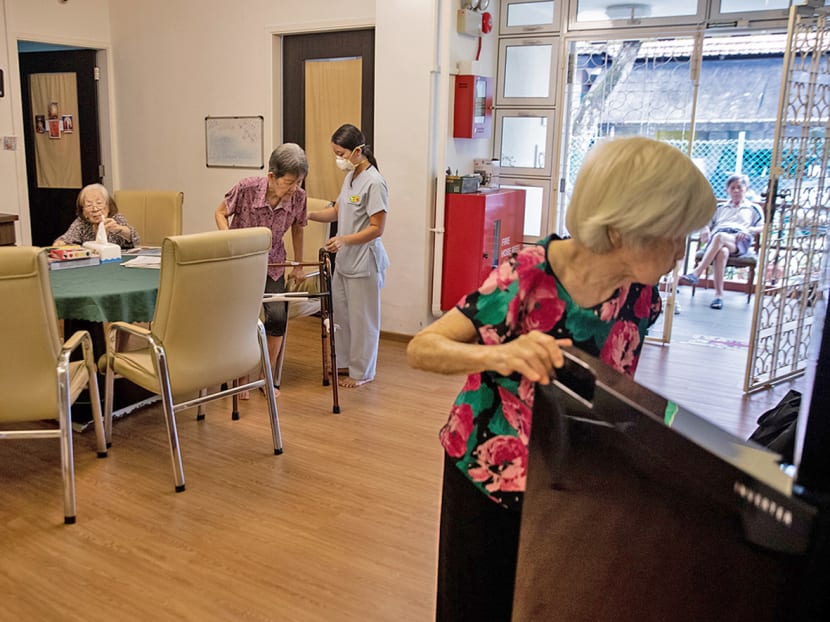
The Big Read: With more seniors needing care, is assisted living the answer for S'pore's 'missing middle' and their caregivers?

Experts interviewed by TODAY said that the issue of caregiving options has become even more pronounced in light of
Singapore's rapidly ageing population. 
Ili Nadhirah Mansor/TODAY
  • With Singapore society ageing rapidly, one particular eldercare option has sprung up in recent years — community or assisted living to help seniors with basic daily activities 
  • It is touted as a possible solution for the “missing middle” — seniors who cannot live independently but are not too ill to be cared for in nursing homes
  • But experts, industry players and caregivers pointed to various factors on why assisted living services has not taken off faster, including costs, regulatory ambiguities and manpower shortages
  • At the same time, there are different challenges in expanding other caregiving services such as foreign domestic helpers and day care centres 
  • Experts believe that the right way forward is a shift in approach from reactive to preventive measures in eldercare, and more sustainable public-private partnerships

Wednesday, February 15, 2023

Snap Insight: Raising CPF monthly salary ceiling will reduce take-home pay for some, but there are payoffs


The increase of the Central Provident Fund (CPF) monthly salary ceiling is part of a slew of initiatives to address retirement adequacy in Singapore, says Christopher Gee of the Institute of Policy Studies.


Christopher Gee

14 Feb 2023


SINGAPORE: The announcement of a staggered increase in the Central Provident Fund (CPF) monthly salary ceiling, from S$6,000 per month now to S$8,000 by 2026, in this year’s Budget is hugely significant.

It will have major long-term effects on Singaporean workers’ retirement savings contributions and therefore accumulation. More will be able to reach their Full or Enhanced Retirement Sums by the time they retire.

The increase in salary ceiling will also mean that CPF savings will keep pace with wage inflation, so that the system continues to cater for the needs of workers up to the 80th percentile of the monthly income distribution. 

Wednesday, January 18, 2023

What China's shrinking population means for its future

China’s population fell last year for the first time in six decades, a historic turn that some believe is likely to bring big implications for the world’s second largest economy.

China ended its strict one-child policy, imposed due to fears of overpopulation, in 2016. It began allowing couples to have
three children in 2021. (Photo: AFP/File/STR)


Calvin Yang

17 Jan 2023 


SINGAPORE: China’s population is shrinking sooner than expected, but the demographic shift - while a big issue psychologically - is unlikely to affect its economic growth in the short term, said observers on Tuesday (Jan 17).

China’s population fell last year for the first time in six decades, a historic turn that is likely to mark the start of a long period of decline in its citizen numbers.

The drop is the worst since 1961, and gives weight to predictions that India will overtake China this year to become the world's most populous country.

Sunday, October 17, 2021

Commentary: Japan’s baby bust should force a rethink about demanding jobs and never-ending growth

Efforts to boost Japan’s low fertility rate will not solve near term labour shortages and other pressing burdens without embracing a new mindset, says a professor.

Rapidly-greying Japan has one of the world's lowest birth rates (Photo: AFP/KAZUHIRO NOGI)


Chelsea Szendi Schieder

17 Oct 2021 


TOKYO: Japan has been declared the world’s first super-aged society and a pioneer shrinking society, rapidly inverting the demographic pyramid upon which the modern state has been built.

Since 1989, when the low fertility rate of 1.57 became a major social concern, numbers have continued to trend downward. In June 2020, the Japanese government announced the preliminary results of the 2020 census, revealing that the number of births in that year was the lowest on record.

Sunday, August 29, 2021

3 more seniors die from COVID-19 complications in Singapore; 120 new locally transmitted cases

27 Aug 2021 

SINGAPORE: Three more senior citizens have died of complications from COVID-19, bringing Singapore's death toll from the virus this month to 18.

All three cases were not vaccinated against COVID-19, said the Ministry of Health (MOH) in its daily update on Friday (Aug 27).

Two of the cases died on Thursday.

Thursday, January 7, 2021

440,000 Singaporeans eligible for matched CPF savings scheme

A total of 440,000 Singaporeans aged 55 to 70 are eligible for a new savings scheme this year where the Government will match cash top-ups made to their Central Provident Fund (CPF) Retirement Accounts.

06 Jan 2021


SINGAPORE: A total of 440,000 Singaporeans aged 55 to 70 are eligible for a new savings scheme this year where the Government will match cash top-ups made to their Central Provident Fund (CPF) Retirement Accounts.

To qualify for the Matched Retirement Savings Scheme, the CPF members must have less than the prevailing Basic Retirement Sum in their accounts, said the CPF Board in a media release on Wednesday (Jan 6).

The Basic Retirement Sum this year is S$93,000.

Other eligibility criteria are: An average monthly income of not more than S$4,000, an annual value of residence of up to S$13,000 – which covers all Housing Board flats – and ownership of not more than one property.

About 53 per cent of CPF members between 55 and 70 years old are eligible for the grant, the CPF Board said.

Wednesday, January 1, 2020

Happily married for 60 years. Then Alzheimer’s. And a gun.

01 January, 2020

NEW YORK — It began almost playfully, like tiny hiccups in her mind. She would forget she had already changed the sheets and change them again, or repeat a thought in the same breath.

Then the illness amplified.

She grew confused by everyday tasks. Later, she became convinced her parents were still alive and insisted upon a visit. At social gatherings, she was anxious and fearful. She forgot how to sew and cross-stitch. She forgot the faces of her children.

She did remember her name. Alma Shaver. But not her age. Eighty.

And sometimes, she did not know her husband.

He was Mr Richard Shaver, a man whose wife of 60 years had been found by dementia, that thief that robs the minds of 50 million people worldwide. So common, yet so personally cruel — it comes with no road map for those tending to the afflicted.

Wednesday, September 18, 2019

S’pore ‘most resilient’ in Asia against threats of ageing workforce, automation, but pales against West: Study

By Kenneth Cheng

18 September, 2019

SINGAPORE — Singapore came in the bottom half (13 out of 20) in an index ranking the major global economies' resilience against the threats of an ageing workforce and job automation.

Yet, in Asia, the city state came out on top, eclipsing regional powerhouses Japan, China and South Korea in the Ageing and Automation Resilience Index.

Sunday, September 15, 2019

Playing video games with robots – just one way that technology is reshaping elderly healthcare in China

15 September, 2019

SHANGHAI — Ms Wang Lingmei is sitting in front of a rehab training machine in an elderly care centre in China and playing an electronic game.

Using a machine that looks a bit like an electronic piano with a TV screen attached instead of a music score, the 84-year-old is reaching out to touch virtual fruits by moving a handle as part of a daily exercise routine to recover mobility after fracturing her right arm and leg in a fall a year ago.

“The game is interesting and makes me feel happy,” she says in a Shanghai dialect. “We have a therapist to monitor our condition while using it, so I am not afraid of this technology and machine. After all, it’s a new thing for me.”

Wednesday, July 31, 2019

Most Singaporeans want a 'good death', but majority don't get their wish: Study

By Navene Elangovan

13 July, 2019


SINGAPORE — When Singaporeans think about a “good death”, an overwhelming majority imagine dying at home surrounded by loved ones.

But a new report released on Friday (July 12) notes that this ideal scenario is rarely the reality — and argues that much needs to be done to change the way end-of-life care is administered.

The report, titled “Leaving Well: End-of-Life Care Policies in Singapore”, published by the Institute of Policy Studies (IPS), calls for an urgent look at this reality gap.

“With over 200,000 Singapore residents currently aged 75 and above and hundreds of thousands of family members having to soon contend with the complex issue that is the end of life, this gap between preferences and reality must be addressed,” the authors stated.

Wednesday, June 26, 2019

Raise CPF contribution rates for older workers to be on a par with younger workers: Study

By Faris Mokhtar

26 June, 2019

SINGAPORE — Central Provident Fund (CPF) contribution rates for older workers in Singapore should be raised so that they are on a par with the rates for younger workers, a new local study published on Wednesday (June 26) has recommended.

The aim of the move — lifting both employee and employer contribution rates — would be to encourage older workers to remain employed and to lift their savings for retirement, said the study from local think-tank, the Institute of Policy Studies (IPS).

The question of contribution rates for older workers has been in the spotlight this year, with the Manpower Ministry set to unveil details of a review of raising the retirement and re-employment ages as well as the contribution rates in September.

Thursday, June 6, 2019

Seniors each need at least S$1,379 monthly to meet basic needs: Study

Singapore

By JANICE LIM

23 MAY, 2019

SINGAPORE — A Singaporean senior citizen aged 65 and above and living alone needs about S$1,379 a month to meet basic standards of living.

The amount increases to S$1,721 for those aged between 55 and 64.

As for couples aged 65 and older, they need S$2,351 a month.

That is what a team of researchers found after conducting focus-group discussions with more than 100 people who come from various ethnic groups, housing types and educational levels. Almost nine in 10 (89 per cent) were aged 55 and above.

Led by Assistant Professor Ng Koe Hoe from the National University of Singapore’s Lee Kuan Yew School of Public Policy, the study seeks to find out the amount of money needed for older people to achieve a basic standard of living in Singapore today.

Friday, April 12, 2019

China’s state pension fund to run dry by 2035 due to shrinking workforce: Study


The urban worker pension fund, the backbone of the country’s state pension system,
held a reserve of 4.8 trillion yuan (US$714 billion) at the end of 2018.
It is predicted to peak at 7 trillion yuan in 2027, then drop steadily to zero by 2035.
12 April, 2019

TODAY


HONG KONG — China’s main state pension fund will run out of money by 2035 due to a decline in the available work force, according to new research.

The urban worker pension fund, the backbone of the country’s state pension system, held a reserve of 4.8 trillion yuan (S$968 billion) at the end of 2018. It is predicted to peak at 7 trillion yuan in 2027, then drop steadily to zero by 2035, a report by the World Social Security Centre at the government-supported Chinese Academy of Social Sciences has said.

And the gap between contributions and outlays could be as high as 11 trillion yuan by 2050, with each retired citizen supported by only one worker, down from the current level of two, the government think tank calculated.

Monday, March 25, 2019

Can bringing young and old under one roof solve the world's housing crisis?

24 March, 2019

BRUSSELS — Home sharing initiatives that link cash-strapped young people with elderly home owners are becoming popular with governments around the world as they seek to tackle the twin crises of homelessness and loneliness, experts said on March 21.

Home sharing, which usually involves an older person offering a spare room at low cost to a young person in exchange for help and companionship, is increasingly seen as a solution to the problem of affordability faced by many countries.

Experiments in a number of countries suggest it could also alleviate loneliness among older people — a growing problem as populations age and more and more people live alone.

Saturday, March 23, 2019

Americans are pessimistic about what life will be like in 2050. Here’s what they fear most.

The Daily 202 - 22 Mar 2019

BY JAMES HOHMANN
with Joanie Greve and Mariana Alfaro


THE BIG IDEA: Americans, collectively, appear to be in a deeper funk about the future than Beto O’Rourke was after he lost his Senate race.
When adults are asked to think about what the United States will be like in 2050, they see the country declining in stature on the world stage, a widening gap between the haves and the have-nots and growing political polarization. They think health care will be less affordable, public education will be lower quality and retiring will be harder.

They fear the growing national debt, the likelihood of an attack that’s as bad or worse than 9/11 and another 1970s-style energy crisis. Many people also think robots will take their jobs.

Few folks in either party believe the political class is up to the task of addressing the most pressing challenges. Part of the problem is that there is less agreement about what the biggest problems even are than there once was, let alone the best ways to tackle them.

Friday, March 8, 2019

Budget ‘hongbao’ squeezed out of Government’s coffers: Heng Swee Keat


By Janice Lim

08 March, 2019


SINGAPORE — While he is often jokingly referred to as the God of Fortune, Finance Minister Heng Swee Keat said on Friday (March 8) that the “hongbao” (red packets, or goodies) dished out in the Budget have to be squeezed from the Government’s coffers.

To those who have asked him why the hongbao in this year’s Budget was so small, Mr Heng has replied: “This God of Fortune is not fat. This God of Fortune is quite thin, so money no enough. Whatever ‘hongbao’ given were squeezed out.”

Features of Budget 2019 include the S$1.1 billion Bicentennial Bonusand the S$6.1 billion set aside for the Merdeka Generation Package.

Sunday, February 24, 2019

Nine out of 10 elderly buyers of two-room flexi units opt for shorter leases

By Janice Lim

24 February, 2019


SINGAPORE — A housing scheme that allows senior citizens to buy two-room flats on shorter leases has remained popular among the elderly, with nine out of 10 taking up the option, the Housing and Development Board (HDB) said on Sunday (Feb 24).

Launched in 2015, the “2-room Flexi Scheme” lets elderly buyers pick a lease length that is best suited for their needs, as opposed to the full 99-year lease.

The lease length ranged between 15 and 45 years, with minimum lease periods differentiated based on the buyer’s age.

For example, an elderly buyer aged between 55 and 59 is only allowed to buy flats that have minimally 40 years of lease left.

A buyer who is 80 years old and above can opt to purchase a unit with just 15 years of lease left.

Saturday, February 23, 2019

Bicentennial Bonus CPF top-up a nice gesture but won’t guarantee retirement adequacy: Expert

By Alfred Chua

22 February, 2019


SINGAPORE — Among the slew of announcements in the Budget earlier this week, one thing that stood out for financial experts was this: that there are some 300,000 Singaporeans aged between 50 and 64 who have less than S$60,000 in retirement savings in their Central Provident Fund (CPF) accounts.

Finance Minister Heng Swee Keat revealed this statistic in his Budget speech as he unveiled the Bicentennial Bonus, which among other things will provide a CPF top-up of up to S$1,000 to this group.

Based on data from the Department of Statistics, they make up a third of all Singaporeans aged 50 to 64.

Of the 300,000, 60 per cent are women, the Ministry of Finance told TODAY.