Showing posts with label South China Sea. Show all posts

Friday, May 3, 2024

ASEAN, China and the trust deficit

RAHMAN YAACOB

The gap between rhetoric and action is Beijing’s biggest
problem – and the region showed it isn’t afraid to call this out.

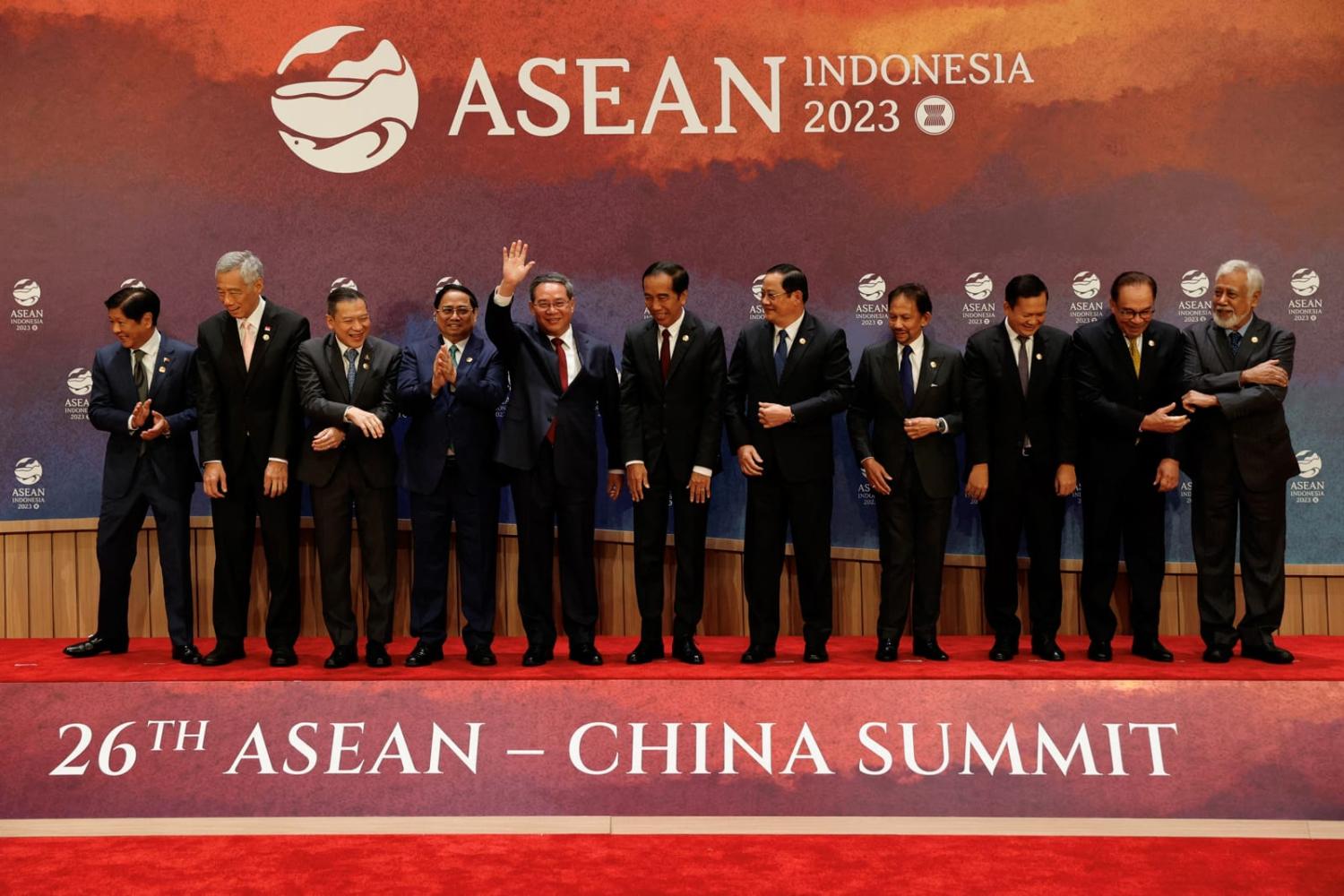
China’s Premier Li Qiang waves amid the assembled ASEAN leaders following the ASEAN-China Summit,
6 September 2023 (Willy Kurniawan, Mast Irham via AFP/Getty Images)


12 Sep 2023

Trust (or the lack of it) seems to be the central theme in describing relations between the Association of Southeast Asian Nations and China. Several ASEAN leaders emphasised this point during the leaders’ summit last week in Jakarta.

Wednesday, March 8, 2023

Commentary: Call by China foreign minister for ASEAN to stay clear of power rivalry highlights tricky balancing act for region

Some Southeast Asian leaders have said they will not take sides in the US-China conflict - but if pushed, it is not unlikely they will do so according to national interests, says Oh Ei Sun.

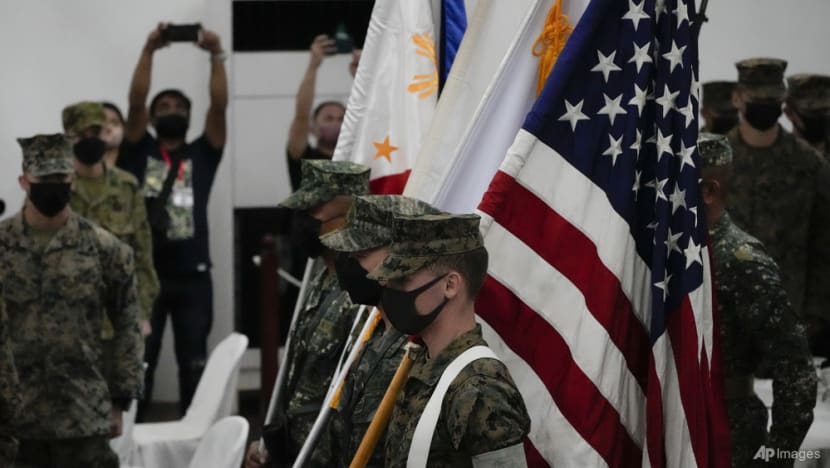
Marines at the opening ceremony of an annual US-Philippine joint military exercise at Fort Bonifacio, Taguig city,
Philippines, Oct 3, 2022. (AP Photo/Aaron Favila)


Oh Ei Sun

08 Mar 2023 


SHANGHAI: At a press conference on the sidelines of China’s annual “two sessions”, a question posed to Chinese Foreign Minister Qin Gang seemed to channel Southeast Asian regional sentiments.

The question postulated that as China’s economy faces growing downward pressure, regional countries are finding it difficult to rely on the US for security guarantees, and on China for economic development.

And according to media reports, Qin was equally blunt in answering, advising that Association of Southeast Asian Nations (ASEAN) should stay clear of any power rivalry between big countries. He noted that leaders of regional countries have stated that ASEAN should not be a proxy for any party.

Friday, October 28, 2022

Commentary: Xi cements power at Chinese Communist Party congress, but is still exposed on the economy

For Chinese President Xi Jinping, getting the numbers to endorse himself and his underlings in leadership roles is one thing; shifting the economy back on track is quite another, says this writer.

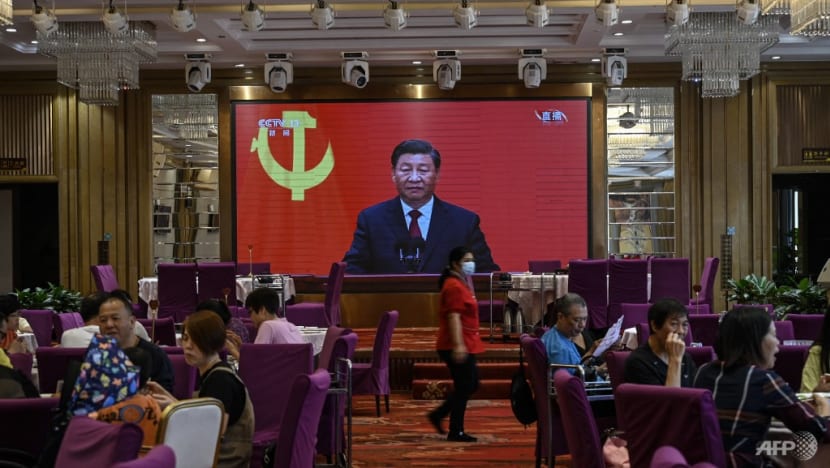
A screen shows live news coverage of China’s President Xi Jinping speaking after introducing China’s new Politburo
Standing Committee, at a restaurant in Foshan city, in China’s southern Guangdong province on Oct 23, 2022.
(Photo: AFP/Jade Gao)

Tony Walker

25 Oct 2022


MELBOURNE: Xi Jinping’s clean sweep in elevating trusted allies to the commanding heights of the Chinese Communist Party is a political outcome that has implications beyond China’s borders.

Xi sits virtually unchallenged, for the time being, at the apex of a political organisation that oversees a country with the world’s second-largest economy, a rapidly modernising military and, perhaps most importantly, global ambitions to match its growing economic and military strength.

Monday, October 17, 2022

China’s plans for military growth driven by ‘internal factors’, territorial security, say experts


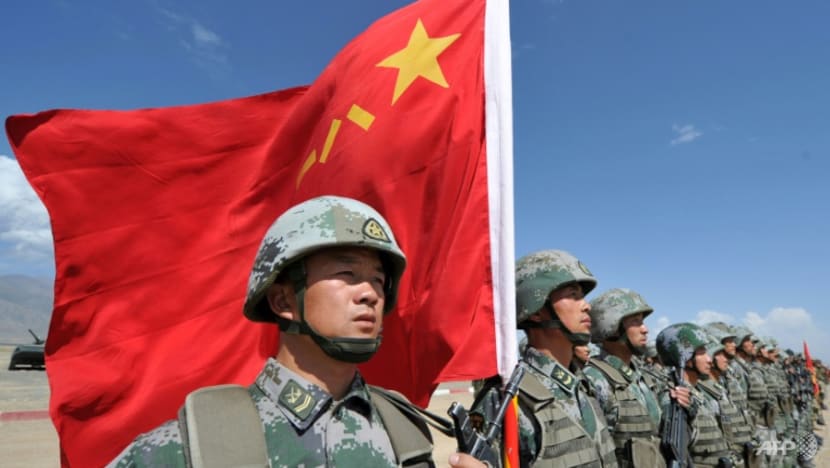
File photo of a Chinese soldier holding his country's flag. (File photo: AFP/File/Vyacheslav Oseledko)

Jalelah Abu Baker

17 Oct 2022 


SINGAPORE: China’s plans for military growth, outlined by President Xi Jinping on Sunday (Oct 16), are driven by “internal factors” and territorial security, experts said.

Opening a week-long Chinese Community Party (CCP) meeting, Mr Xi said the country will accelerate the building of a world-class military and strengthen its ability to build a strategic deterrent capability.

“We will work faster to modernise military theory, personnel and weapons,” Mr Xi said in the nearly two-hour speech.

“This is mostly reaction to internal factors like history, like nationalism sentiment, rather than, you know some kind of ambition,” Dr Lance Gore from the National University of Singapore’s East Asian Institute told CNA’s Asia Now.

Friday, August 5, 2022

Commentary: China's rise is still not a given

China’s ability to face future challenges will be constrained by the fact that it’s still a developing country, says an observer.

By Henry Storey

15 Jul 2020 
[Note: The news article is two years old.]

MELBOURNE: When discussing the rise of China, a sense of inevitability often pervades.

China’s sheer population size and economic base will inevitably see it become the dominant regional power – or so the argument goes. China’s faster reopening from COVID-19 lockdowns has added to such arguments. [This was in early 2020. Situation has changed in 2022.]

But just how far will China rise? Given the price tag of Australia’s new defence posture – and the significant opportunity costs at a time when COVID-19 will stretch budgets – it is worth still asking the question.

Friday, June 17, 2022

China launches third aircraft carrier, named after province opposite Taiwan

17 Jun 2022

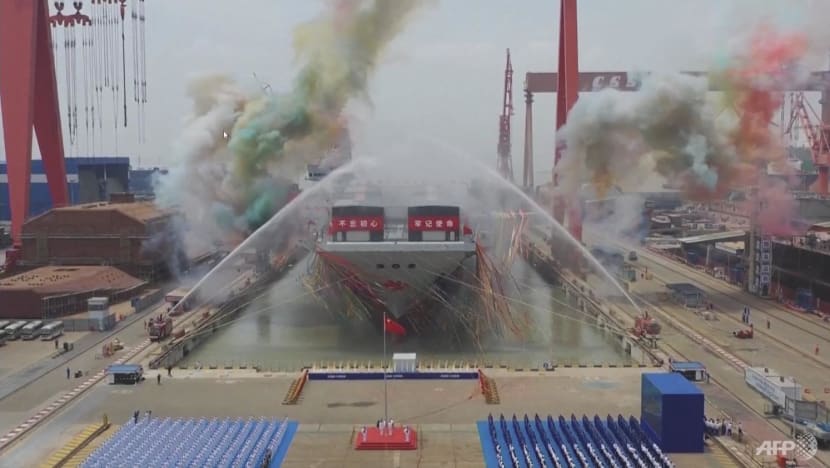
This screengrab made from video released by Chinese state broadcaster CCTV shows the launch ceremony of the Fujian, a People's Liberation Army aircraft carrier, at a shipyard in Shanghai on Jun 17, 2022. (Photo: AFP/CCTV)


BEIJING: China launched its third aircraft carrier on Friday (Jun 17), the Fujian, named after the province opposite self-ruled Taiwan, sending a statement of intent to rivals as it modernises its military.

Wednesday, December 29, 2021

Commentary: Myths about the South China Sea stoke tensions with Beijing

A major shipping route, yes, but vital? False claims about the value of these waters only make diplomacy harder, says an economist.

John Quiggin

29 Dec 2021


BRISBANE: US officials regularly present China as an aggressive and expansionist military power while Chinese state sources criticise the United States in similar terms.

The verbal sparring has only increased concern about the prospect of a future war between China and the United States

The most likely casus belli is seen as arising either from an attempt by China to take control of shipping routes and disputed territory in the South China Sea, or from an attempt to forcibly reincorporate Taiwan into the People’s Republic of China.

Tension has been stoked by a series of myths about the South China Sea. Five of these shibboleths in particular should be refuted.

Wednesday, June 16, 2021

Commentary: The trickiness of dealing with stray aircraft when territorial lines are grey

Malaysia’s encounter with Chinese military aircraft in early June illustrates how tackling foreign aircraft coming close can be a grey area in a region of overlapping claims and different interpretations of airspaces, says Mike Yeo.

By Mike Yeo

16 Jun 2021 


MELBOURNE: The news that China sent 16 military aircraft to the vicinity of disputed shoals in the South China Sea on the last day of May and prompted the latter to scramble fighter jets in response raised eyebrows among regional defence watchers.

This new development has also understandably set off discussions in Malaysia about its response to what was seen as a show of strength by the regional power.

Malaysia has framed the issue as one of an intrusion into Malaysian airspace by multiple Chinese government aircraft.

The Royal Malaysian Air Force (RMAF) said in a news release on Tuesday (Jun 2) that 16 Xian Y-20 and Ilyushin Il-76 transport aircraft of the People’s Liberation Army Air Force (PLAAF) approached to within 60 nautical miles (112 km) of Malaysia’s coast, flying at speeds of 290 knots (537 kmh) at between 23,000 and 27,000 ft in a tactical line astern formation.

Malaysian Foreign Minister Hishammuddin Hussein also said his ministry will issue a diplomatic note of protest and request an explanation from the Chinese Ambassador from Malaysia to explain the “breach of Malaysian airspace and sovereignty”.

Tuesday, June 18, 2019

China shoots itself in the foot with divide and rule tactics in Asean

Photo: Reuters

By Tang Siew Mun

Following the Asean-China Foreign Ministers’ Meeting on Tuesday, Malaysia issued a statement on escalating tensions in the S China Sea which was taken back hours later. 

17 June, 2016


Relations between the Association of South-east Asian Nations (Asean) and China suffered yet another blow during the Special Asean-China Foreign Ministers’ Meeting that ended in Kunming, China, on Tuesday.

From Asean’s standpoint, the meeting was intended to help repair its fraying relationship with China due to developments in the South China Sea. In fact, the proposal for the meeting was initially met with scepticism within Asean for fear that China will use the meeting as a public relations exercise to serve Beijing’s ends. This concern turned out not to be unfounded as China attempted to have the Asean foreign ministers endorse a 10-point consensus in Kunming.

Monday, October 9, 2017

Regional defence investments in large amphibious vessels driven by geography and ships’ versatility

Ben Ho

October 8, 2017

SINGAPORE — Talk of naval modernisation in South-east Asia usually revolves around the acquisition of traditional naval platforms such as submarines and frigates. What has slipped under the radar in recent years is the increased interest in large amphibious warfare vessels, such as that of Singapore’s Endurance-class landing ships tank, that enable the deployment of forces in the air and sea as well as on land.

Over the past year, the Philippines has acquired two 11,000-ton Tarlac-class landing ships, the first of such size and capability to be acquired by Manila. Malaysia is also mulling a large amphibious warfare vessel in the Multi-Role Support Ship, while Myanmar has reportedly expressed interest in a landing ship based on Indonesia’s 11,000-ton Makassar-class platform.

Wednesday, February 22, 2017

China finishing South China Sea buildings that could house missiles: US

22 Feb 2017 09:02

CHANNELNEWSASIA

WASHINGTON: China, in an early test of U.S. President Donald Trump, is nearly finished building almost two dozen structures on artificial islands in the South China Sea that appear designed to house long-range surface-to-air missiles, two U.S. officials told Reuters.

The development is likely to raise questions about whether and how the United States will respond, given its vows to take a tough line on China in the South China Sea.

China claims almost all the South China Sea, which carries a third of the world's maritime traffic. Brunei, Malaysia, the Philippines, Taiwan and Vietnam also have claims. Trump's administration has called China's island building in the South China Sea illegal.

Building the concrete structures with retractable roofs on Subi, Mischief and Fiery Cross reefs, part of the Spratly Islands chain where China already has built military-length airstrips, could be considered a military escalation, the U.S. officials said in recent days, speaking on condition of anonymity.

Monday, February 20, 2017

Is WWIII imminent? Speculations.

China. South China Sea. An unhinged Trump, thin-skinned and impulsive. Recipe for another World War?

The first article with a short clip suggests that there are similarities. Whether those similarities are superficial or essential, remains to be seen. The hope seems to be that while the problems and the situations are the same, how the world now answers the questions posed by those problems are intended to avoid war.

But then again, there is Trump, who seems eager to prove that he does not follow (or know) the rules.

So are we heading for an inevitable World War III?


Sunday, February 12, 2017

Sino-American War - not wanted.


China doesn't want a war.

That is obvious.

China's rise is economic, and that requires peace. War will derail their growth trajectory. And yet, pride demands that they demonstrate their rising influence.

One should always stand on one's own two feet. But in doing so, there is no need to step on others' toes. China seems bent on stomping on others' toes as they rise.

They are either stupid, or conflicted.


Saturday, February 11, 2017

Opposition parties criticise Future Economy report

TODAY ONLINE

Siau Ming En
February 11, 2017


SINGAPORE — The report put out by the Committee on the Future Economy (CFE) on Thursday (Feb 9) has been criticised by members of the Opposition, who called it lacking in bold and aggressive measures to address the problems Singapore faces.

In a media release, Singapore Democratic Party (SDP) chief Chee Soon Juan said the CFE report was “long on rhetoric but woefully lacking in bold and aggressive measures to tackle the serious problems that confront Singapore”. It is “rehash of ideas and strategies” that have been tried but failed by predecessors such as the Economic Strategies Committee (ESC) report in 2010 and the Economic Review Committee (ERC) report in 2003, he added.

The report, released after a year of work by the committee, highlighted seven key strategies for the Government, Singaporeans and firms to pursue to keep the country plugged into the world, and build the capabilities of its people and organisations.

They are: The need to deepen and diversify international connections; acquire and utilise deep skills; strengthen enterprise capabilities to innovate and scale up; build strong digital capabilities; develop a vibrant and connected city of opportunity; develop and implement Industry Transformation Maps; and partner each other to enable growth and innovation.

[I agree with Chee that the report is "long on rhetoric". And that is the extent I agree with him. He mentions the serious problems that confront SG, but does not explain what he is referring to. I suspect he does not know what are the serious problems facing Singapore. Other than that SDP, and specifically Chee himself, cannot win an election.]

Monday, December 5, 2016

Donald Trump’s Peace Through Strength Vision for the Asia-Pacific

[Was the faux pas of speaking directly to Taiwan's President intentional and strategic? Note: this is partial to Trump.]

How the Republican nominee will rewrite America’s relationship with Asia.

ALEXANDER GRAY, PETER NAVARRO
NOVEMBER 7, 2016f

In 2011, then-Secretary of State Hillary Clinton announced with great fanfare in Foreign Policy that the United States would begin a military “pivot” to the Asia-Pacific. This beating of the American chest was done against the backdrop of China’s increasing assertiveness in the region and the sense among many longtime American allies that the United States had lost sight of Asia’s strategic importance during 10 years of Middle Eastern wars.

President Barack Obama’s administration was right to signal reassurance to our Asian allies and partners. However, this pivot (and later “rebalance”) failed to capture the reality that the United States, particularly in the military sphere, had remained deeply committed to the region. This pivot has also turned out to be an imprudent case of talking loudly but carrying a small stick, one that has led to more, not less, aggression and instability in the region.

Initially, Clinton’s pivot and the Obama administration’s stated interest in countering China’s rising clout were met with general bipartisan agreement in Congress. Inside the Beltway, the analyst community also appeared to share a similar consensus that the global financial crisis had emboldened China. As one of Washington’s leading experts on Chinese foreign and security policy, Bonnie Glaser, told one of the authors in an on-camera interview: “The Chinese saw the United States as weakened by the financial crisis; and it created opportunities for China to test the United States and to try and promote its interests in its periphery in the hopes that the United States would not respond forcefully.”

Monday, November 28, 2016

Teachable moments from HK’s seizure of SAF vehicles

DAVID BOEY
TODAY
NOVEMBER 28, 2016

Without a shot fired, the Singapore Army lost possession of nine Terrex Infantry Carrier Vehicles (ICVs) after Hong Kong Customs impounded the armoured vehicles as they were transiting through the port.

This episode has many teachable moments for followers of statecraft, and must be played out carefully as the concluding act has yet to take centre stage.

Any diplomatic gaffes or missteps by any party could result in misgivings that linger long after the fate of the Singapore Armed Forces (SAF) war machines has been decided upon.

This would have unfortunate consequences for the parties concerned if what could be ascribed to routine/rigorous customs checks is given another spin.

News of this episode — the largest-ever seizure of SAF war machines — emerged last Thursday, courtesy of Hong Kong news portal, FactWire.

It had reported that up to 12 Terrex ICVs were seized at the container terminal as they were en route from the Taiwanese port of Kaohsiung to Singapore.

Within days, the topic of SAF training in Taiwan has come under the spotlight, with many theories postulated.

At one end of the spectrum, some theorised an administrative gaffe as the culprit.

More complex interpretations blamed strategic topics du jour such as the South China Sea dispute, the city-state’s leanings towards the United States, and military training in Taiwan as possible irritants to China-Singapore ties that could have prompted Hong Kong Customs officials to impound the Terrex ICVs.
Tuesday, November 22, 2016

Asean still the critical catalyst for China's future

Kishore Mahbubani

NOV 22, 2016

In undermining the grouping's unity on the South China Sea, China is shooting itself in the foot.

China is making some serious strategic mistakes in its dealings with Asean. It is sacrificing its long-term interests in favour of short-term objectives and its global interests in favour of regional concerns. And, in the process, it is undermining a critical catalyst to its peaceful rise.

China's peaceful emergence as the No. 2 power in the world is a modern geopolitical miracle. In 1980, its share of global GDP in purchasing power parity terms was 2 per cent - far less than the 22 per cent the United States accounted for. By 2014, China's share had overtaken the US'. Normally such great-power transitions are accompanied by competition and conflict. Instead, China emerged peacefully. Why?

Many factors were responsible. Deng Xiaoping's wise geopolitical advice to "hide and bide" China's strength was a key factor. He also called on the Chinese "to swallow bitter humiliation". This they did. But it is impossible to swallow bitter humiliation forever. It was inevitable that China would eventually lose its patience and lash out against perceived maritime provocations by Japan and Asean. We can only hope that these recent outbursts have had a cathartic and calming effect on the national psyche.

Yet China's actions with Asean show that the anger has not abated. It is commonly believed that Chinese pressure led Cambodia to veto the Asean joint communique on the South China Sea in 2012. Similarly, China likely persuaded Cambodia, Laos and Thailand to walk away from the agreed Asean statement, later indiscreetly leaked by Malaysia.

Monday, October 10, 2016

S’pore businesses quizzed by Chinese counterparts over their stand on South China Sea issue

Tan Weizhen

October 9, 2016

Today Online


SINGAPORE — Following the back-and-forth between Singapore and Chinese state-owned newspaper Global Times over the South China Sea issue, some Singapore businessmen with interests in China are being questioned by their Chinese counterparts, on where they stand on the matter.

Singapore companies TODAY spoke to are concerned that this, along with the increasingly shrill comments by Chinese netizens in response to the newspaper’s provocative articles, would eventually affect their businesses.

Restaurant chain Tung Lok Group has operations in Beijing and Shanghai. Its executive chairman Andrew Tjioe noted the nationalistic fervour in a country “where everything seems to be about politics”. “I’m hoping, though, that consumers in China are mature enough to know how to separate politics and business,” he said.

Friday, October 7, 2016

Start of China's coercive diplomacy towards Singapore


Global Times, published by Chinese Communist Party mouthpiece People's Daily, recently ran an article accusing Singapore of raising the South China Sea disputes at the Non-Aligned Movement (NAM) Summit held in Venezuela on Sept 18. Singapore's Ambassador to Beijing Stanley Loh wrote to refute this. Global Times editors and Chinese officials then weighed in. What is at stake in this spat? In the first article, a Chinese academic says the issue points to Beijing's pent-up frustration with Singapore. In the second article, a Singaporean academic lays bare the politics of retaliation.

Feng Zhang
For The Straits Times
Oct 6, 2016,

Thursday, October 6, 2016

Global Times report: A bid for eyeballs or a move to pressure Singapore?

Kor Kian Beng
China Bureau Chief

5 Oct 2016

BEIJING • Concerns about relations between Singapore and China have flared again, after the Global Times claimed that Singapore had pushed to include an international tribunal's ruling on the South China Sea in the final document of the recent Non-Aligned Movement (NAM) summit.

In a report in its Chinese edition on Sept 21, the newspaper cited sources as saying that Singapore had insisted on adding contents endorsing a Hague-based arbitral tribunal decision on July 12 which dismissed China's territorial claims in the vital waterway.

Singapore's Ambassador to China Stanley Loh, in a letter dated Sept 26 to the tabloid newspaper's editor-in-chief Hu Xijin, said Singapore did not raise the South China Sea issue or the tribunal ruling at the summit in Venezuela.

Still, the Global Times report prompted some Chinese commentators and netizens to publicly call for tough measures to "punish" Singapore. Some Singaporeans, especially those based in China, have also wondered why Singapore, which is not a claimant in the territorial row, is risking Chinese ire by allegedly pushing the South China Sea issue.