Showing posts with label Transport. Show all posts
Showing posts with label Transport. Show all posts
Tuesday, March 25, 2025
Man fined for swearing at airline officer, damaging aerobridge at Changi Airport
Video: British Man Fined S$5,000 for Changi Airport Outburst
Richard Michael Roll Burridge had become angry after he was told his missing phone could not be found.

Tuesday, March 19, 2024
10 MRT Rules Most Singaporeans Don’t Know Exist & Are Probably Breaking
19 Mar 2024
Raiz Redwan
Bringing in durians or smoking on the train are some of the rules most of us are probably aware of and are hopefully not breaking. But Singapore, being the fine city that we are, actually has numerous other rules that some of us may not even have heard of. Here are 10 lesser-known MRT rules to know so you aren’t found guilty of breaking them.
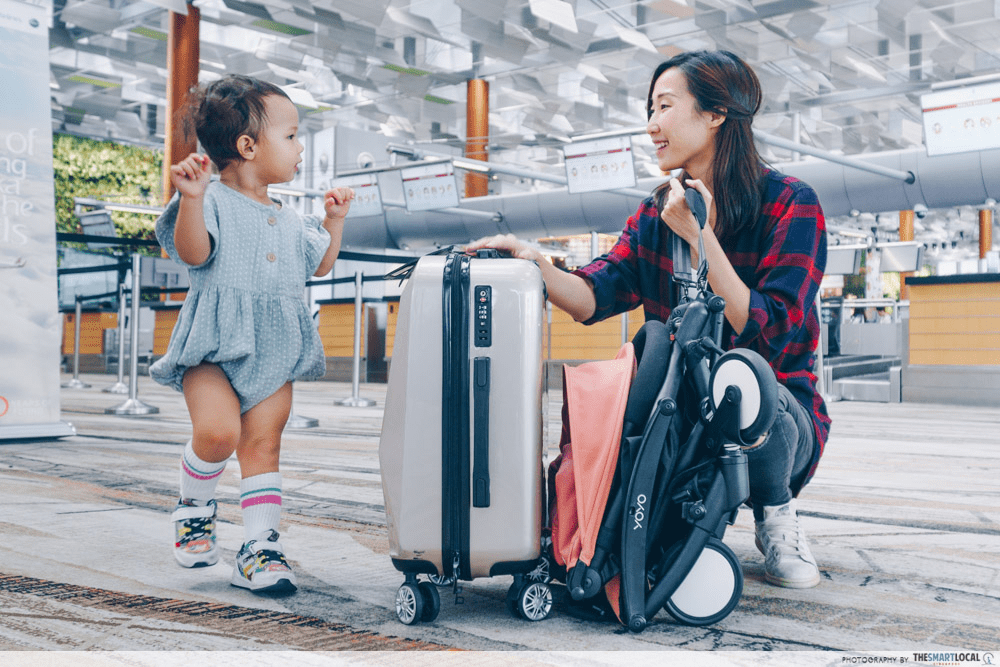
1. Bringing super-big luggages on board – $500 fine
Saving on delivery fees for your new 50” TV or refusing to cab to the airport is a good idea, but make sure your items are within the specified dimensions when you board the MRT. If kena reported, there’s a chance you might face a fine of $500.
Raiz Redwan
MRT rules in Singapore
Bringing in durians or smoking on the train are some of the rules most of us are probably aware of and are hopefully not breaking. But Singapore, being the fine city that we are, actually has numerous other rules that some of us may not even have heard of. Here are 10 lesser-known MRT rules to know so you aren’t found guilty of breaking them.
1. Bringing super-big luggages on board – $500 fine
Saving on delivery fees for your new 50” TV or refusing to cab to the airport is a good idea, but make sure your items are within the specified dimensions when you board the MRT. If kena reported, there’s a chance you might face a fine of $500.
Wednesday, March 13, 2024
Foreign Swifties praise S'pore's transport system & crowd management at Eras Tour shows
 |
| Screenshot via TikTok/eloicht |
Hannah Martens
March 12, 2024,
As the dust settles after Taylor Swift's last Eras Tour show in Singapore, some concertgoers who flew in from overseas have gone online to share their thoughts about Singapore.
Tuesday, January 24, 2023
After being used as a test bed, Ngee Ann Polytechnic gets free driverless bus service
An autonomous minibus now ferries passengers around campus and from King Albert Park MRT station, as part of a partnership between the polytechnic and homegrown company MooVita.
Foo Yueh Peng
Eileen Chew
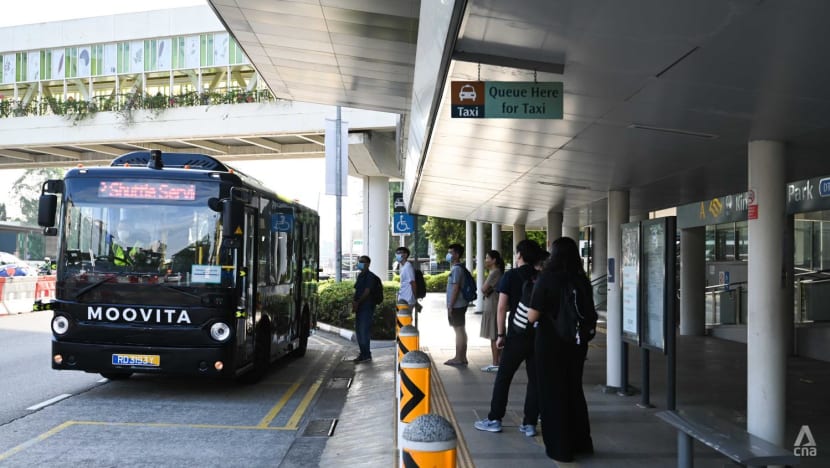 |
| Passengers queueing up outside King Albert Park MRT station for the autonomous minibus to Ngee Ann Polytechnic. (Photo: Liew Zhi Xin/CNA) |
Foo Yueh Peng
Eileen Chew
24 Jan 2023
SINGAPORE: It is one of the latest driverless vehicles allowed on public roads.
Called the MooBus, it has recently been deployed by homegrown company MooVita in its first commercial operation.
And this bus service is free for a year for students and staff of Ngee Ann Polytechnic, where MooVita has used the campus roads as a test bed over the past few years, culminating in this autonomous shuttle.
The 13-seater, measuring seven metres long, ferries passengers from King Albert Park MRT station to 10 stops on campus from 7:30 to about 9:30 a.m. on weekdays (excluding public holidays), while a lunchtime service goes round only on campus.
The electric vehicle is self-driving, capped at 20 kilometres per hour, for much of the 3-km route within campus. A safety operator, however, is required on board by the Land Transport Authority (LTA).
SINGAPORE: It is one of the latest driverless vehicles allowed on public roads.
Called the MooBus, it has recently been deployed by homegrown company MooVita in its first commercial operation.
And this bus service is free for a year for students and staff of Ngee Ann Polytechnic, where MooVita has used the campus roads as a test bed over the past few years, culminating in this autonomous shuttle.
The 13-seater, measuring seven metres long, ferries passengers from King Albert Park MRT station to 10 stops on campus from 7:30 to about 9:30 a.m. on weekdays (excluding public holidays), while a lunchtime service goes round only on campus.
The electric vehicle is self-driving, capped at 20 kilometres per hour, for much of the 3-km route within campus. A safety operator, however, is required on board by the Land Transport Authority (LTA).
Tuesday, January 17, 2023
MH370 Passenger Manifest
[From Mar 2014, held in draft all this while.]
Manifest for Flight MH370 (summary)
153 Chinese
38 Malaysians
7 Indonesians
6 Australians
5 Indians
4 French
3 Americans
2 each from New Zealand, Ukraine and Canada
One each from Russia, Taiwan, Netherlands
Two men - one confirmed as Iranian - travelling under stolen Italian and Austrian passports
Manifest for Flight MH370 (summary)
153 Chinese
38 Malaysians
7 Indonesians
6 Australians
5 Indians
4 French
3 Americans
2 each from New Zealand, Ukraine and Canada
One each from Russia, Taiwan, Netherlands
Two men - one confirmed as Iranian - travelling under stolen Italian and Austrian passports
Why Indonesia remains one of the world’s worst places to fly
DECEMBER 8, 2015
[Note. Old new report.]
SINGAPORE — A faulty component, a poor maintenance regime, bad weather, a critical mistake, a communication failure, 162 people dead.
The loss of AirAsia Flight 8501 on a stormy December morning a year ago, from an airline that previously had an excellent safety record, came as a shock, even in a country with one of the world’s worst aviation records.
This was a relatively new plane, captained by a pilot with a decade of experience in the air force and more than 9,000 hours flying commercial jets. Yet interviews with pilots, air traffic controllers, flight trainers and regulators show that the combination of mistakes and failures that doomed those on board show why Indonesia still has more than three times the global average rate of fatal air crashes.
In the past few years, Indonesia has redoubled efforts to improve that record, but the challenges are enormous. The country has a shortage of skilled pilots, ground crew and air traffic controllers. Equipment and planes are often outdated or not working. Many of its 296 airports are under par or have runways that are too short. And the terrain of 17,000 islands, dotted with volcanoes, makes for some of the most treacherous flying conditions in the world.
[Note. Old new report.]
SINGAPORE — A faulty component, a poor maintenance regime, bad weather, a critical mistake, a communication failure, 162 people dead.
The loss of AirAsia Flight 8501 on a stormy December morning a year ago, from an airline that previously had an excellent safety record, came as a shock, even in a country with one of the world’s worst aviation records.
This was a relatively new plane, captained by a pilot with a decade of experience in the air force and more than 9,000 hours flying commercial jets. Yet interviews with pilots, air traffic controllers, flight trainers and regulators show that the combination of mistakes and failures that doomed those on board show why Indonesia still has more than three times the global average rate of fatal air crashes.
In the past few years, Indonesia has redoubled efforts to improve that record, but the challenges are enormous. The country has a shortage of skilled pilots, ground crew and air traffic controllers. Equipment and planes are often outdated or not working. Many of its 296 airports are under par or have runways that are too short. And the terrain of 17,000 islands, dotted with volcanoes, makes for some of the most treacherous flying conditions in the world.
Sunday, October 9, 2022
Singapore ranks No. 1 for best roads in the world, here's what some local drivers really think
OCTOBER 05, 2022
CANDICE CAI

By now, it should not come as a surprise that Singapore typically crushes the competition in many world rankings.
And so it did, in a recent list of best roads around the world, where Singapore came in — you guessed it — first.
It scored 9.44 over 10 points in terms of its road quality in a global study by Zutobi, which also took into account the number of road deaths and the relative size of the road network.
By now, it should not come as a surprise that Singapore typically crushes the competition in many world rankings.
And so it did, in a recent list of best roads around the world, where Singapore came in — you guessed it — first.
It scored 9.44 over 10 points in terms of its road quality in a global study by Zutobi, which also took into account the number of road deaths and the relative size of the road network.
Sunday, August 8, 2021
‘This business trip could have been a Zoom call’: Companies rethink travel
AUGUST 08, 2021
NEW YORK — Boeing chief executive officer David Calhoun has access to company aircraft as part of his job. Even so, he told an interviewer that he didn’t expect to fly nearly as much for internal company meetings after the pandemic.
Mr Calhoun, like some of his peers, found that video calls were remarkably effective for checking in with colleagues, allowing him to pack in more meetings and schedule them with minimal advance notice, according to an account in “Leading at a Distance,” a recent book by authors James Citrin and Darleen DeRosa.
“I will do as much or more customer travel, because that’s still the most important way to build relationships,” Mr Calhoun told them. “But most travel when leading big companies is visiting your own teams. I won’t be doing that nearly as much.”
There’s broad consensus that how often we fly for work and what we travel for will shift significantly post-pandemic.
NEW YORK — Boeing chief executive officer David Calhoun has access to company aircraft as part of his job. Even so, he told an interviewer that he didn’t expect to fly nearly as much for internal company meetings after the pandemic.
Mr Calhoun, like some of his peers, found that video calls were remarkably effective for checking in with colleagues, allowing him to pack in more meetings and schedule them with minimal advance notice, according to an account in “Leading at a Distance,” a recent book by authors James Citrin and Darleen DeRosa.
“I will do as much or more customer travel, because that’s still the most important way to build relationships,” Mr Calhoun told them. “But most travel when leading big companies is visiting your own teams. I won’t be doing that nearly as much.”
There’s broad consensus that how often we fly for work and what we travel for will shift significantly post-pandemic.
Thursday, May 20, 2021
Tesla Drivers Test Autopilot’s Limits, Attracting Audiences—and Safety Concerns
Some users brag online about how they misuse their cars by tricking the driver-assistance system
By Katherine Bindley and
Rebecca Elliott
By Katherine Bindley and
Rebecca Elliott
May 20, 2021
Tesla Inc. Chief Executive Elon Musk for years has been championing his vehicles’ driver-assistance system called Autopilot and forecasting that self-driving cars are an emerging reality. Some would-be social media stars and Tesla owners can’t seem to wait.
Param Sharma, 25, has posted multiple videos to Instagram in which he appears to operate a Tesla while in the back seat with nobody at the wheel. Police in California arrested Mr. Sharma on May 10 for alleged reckless driving after an officer said he saw him operating a Tesla Model 3 from the back seat on a Bay Area highway.
Similar videos abound on social media, even though Tesla’s technology is intended only as a way to assist drivers, who are instructed to keep their hands on the wheel. Echoing Mr. Musk’s penchant for pushing the envelope, some Tesla drivers over years have created an online-video genre out of testing what’s possible with their vehicles, in some cases appearing to override safety functions to perform stunts that they post to YouTube or TikTok.
One TikTok user shared a video last year that appeared to depict a Tesla going more than 60 miles an hour on a highway with no one in the driver’s seat while its passengers drank hard seltzer and sang along to Justin Bieber. The video, which refers to the car as the designated driver, has 1.7 million likes. The video’s poster didn’t respond to requests for comment.
Tesla Inc. Chief Executive Elon Musk for years has been championing his vehicles’ driver-assistance system called Autopilot and forecasting that self-driving cars are an emerging reality. Some would-be social media stars and Tesla owners can’t seem to wait.
Param Sharma, 25, has posted multiple videos to Instagram in which he appears to operate a Tesla while in the back seat with nobody at the wheel. Police in California arrested Mr. Sharma on May 10 for alleged reckless driving after an officer said he saw him operating a Tesla Model 3 from the back seat on a Bay Area highway.
Similar videos abound on social media, even though Tesla’s technology is intended only as a way to assist drivers, who are instructed to keep their hands on the wheel. Echoing Mr. Musk’s penchant for pushing the envelope, some Tesla drivers over years have created an online-video genre out of testing what’s possible with their vehicles, in some cases appearing to override safety functions to perform stunts that they post to YouTube or TikTok.
One TikTok user shared a video last year that appeared to depict a Tesla going more than 60 miles an hour on a highway with no one in the driver’s seat while its passengers drank hard seltzer and sang along to Justin Bieber. The video, which refers to the car as the designated driver, has 1.7 million likes. The video’s poster didn’t respond to requests for comment.
Monday, April 26, 2021
IN FOCUS: What does the future hold for Singapore's taxi industry?
By Zhaki Abdullah
24 Apr 2021
SINGAPORE: There was a time, in the not too distant past, when trying to get a taxi in Singapore during rush hour was a stressful experience, beset with doubt and uncertainty.
And if it was raining, the situation was even worse. Demand would seemingly far outstrip supply, leaving some commuters stranded as they tried in vain to hail a cab or book one.
The situation became so frustrating that it was raised in Parliament numerous times.
In 2014, former Member of Parliament Lee Bee Wah asked how the Ministry of Transport was addressing the problem of taxi shortages during certain times.
Mr Lui Tuck Yew, who was then the Transport Minister, replied that the taxi availability standards introduced a year earlier had resulted in an additional 1,300 cabs plying the roads during peak periods.
The percentage of taxis plying at least 250km a day had also increased, as had the daily utilisation of taxis, he said then.
"In short, more taxis are plying the roads, and more commuters are using them," said Mr Lui then.
Yet it would seem that demand continued to outstrip supply as complaints persisted, and several taxi firms were fined for not being able to meet the availability standards.
SINGAPORE: There was a time, in the not too distant past, when trying to get a taxi in Singapore during rush hour was a stressful experience, beset with doubt and uncertainty.
And if it was raining, the situation was even worse. Demand would seemingly far outstrip supply, leaving some commuters stranded as they tried in vain to hail a cab or book one.
The situation became so frustrating that it was raised in Parliament numerous times.
In 2014, former Member of Parliament Lee Bee Wah asked how the Ministry of Transport was addressing the problem of taxi shortages during certain times.
Mr Lui Tuck Yew, who was then the Transport Minister, replied that the taxi availability standards introduced a year earlier had resulted in an additional 1,300 cabs plying the roads during peak periods.
The percentage of taxis plying at least 250km a day had also increased, as had the daily utilisation of taxis, he said then.
"In short, more taxis are plying the roads, and more commuters are using them," said Mr Lui then.
Yet it would seem that demand continued to outstrip supply as complaints persisted, and several taxi firms were fined for not being able to meet the availability standards.
Friday, March 26, 2021
Commentary: Why the Suez Canal accident is a worst-case scenario for global trade
The narrow strip is a critical artery where goods make way across the globe and an incident like this exposes weaknesses in the global system, say maritime researchers from Plymouth University.
By Rory Hopcraft
By Kevin Jones
By Kimberly Tam
By Rory Hopcraft
By Kevin Jones
By Kimberly Tam
26 Mar 2021
PLYMOUTH, England: It is estimated that 90 per cent of the world’s trade is transported by sea. As consumers, we rarely give much thought to how the things we buy make their way across the planet and into our homes.
That is, until an incident like the recent grounding of a huge container ship, the Ever Given, in the Suez Canal exposes the weaknesses in this global system.
High winds have been blamed for the container ship blocking the narrow strait, which serves as a trade artery that connects the Mediterranean and the Red Sea.
But with shipping so heavily reliant on such narrow channels, the potential for these incidents is ever-present.
As researchers of maritime security, we often simulate incidents like the Ever Given grounding to understand the probable long and short-term consequences.

PLYMOUTH, England: It is estimated that 90 per cent of the world’s trade is transported by sea. As consumers, we rarely give much thought to how the things we buy make their way across the planet and into our homes.
That is, until an incident like the recent grounding of a huge container ship, the Ever Given, in the Suez Canal exposes the weaknesses in this global system.
High winds have been blamed for the container ship blocking the narrow strait, which serves as a trade artery that connects the Mediterranean and the Red Sea.
But with shipping so heavily reliant on such narrow channels, the potential for these incidents is ever-present.
As researchers of maritime security, we often simulate incidents like the Ever Given grounding to understand the probable long and short-term consequences.
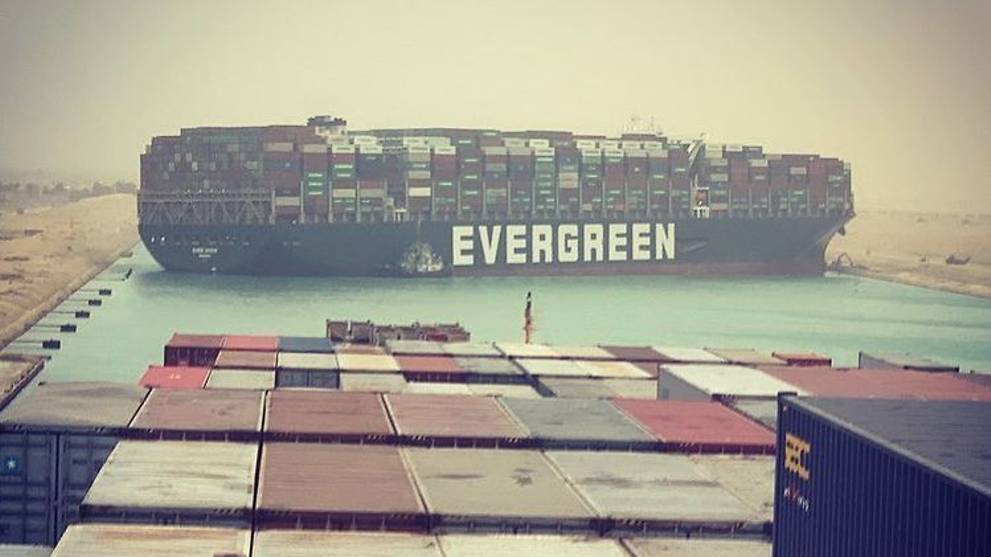 |
| Cargo Ship Ever Given got stuck in Egypt's Suez Canal, blocking traffic in a crucial waterway for global shipping. (Photo: Instagram/fallenhearts17) |
Friday, November 6, 2020
The Big Read in short: Can SIA fly high again?
By NG JUN SEN
SIA recorded its first full-year loss of S$212 million for the 12 months ending March 31, after staying profitable throughout its 48-year history. Earlier in September, it announced plans to cut around 4,300 positions, affecting around 2,400 staff.
26 September, 2020
Each week, TODAY’s long-running Big Read series delves into the trends and issues that matter. This week, we look at the challenges faced by Singapore Airlines amid the Covid-19 crisis and how it can recover post-pandemic. This is a shortened version of the full feature, which can be found here.
- Covid-19 had hit SIA like a bolt from the blue, at a time when it was facing mounting competitive pressures
- The pandemic hit SIA squarely on its core business model of premium, long-haul international flights — the first to be cancelled and likely the last to be restored
- Changi Airport air hub status is not guaranteed post-pandemic, as technological trends and alternative hubs pose a threat
- When the restart comes, SIA will need ready and trained personnel to jump on the wagon
- Global debate ongoing over the role of flag carriers, as the aviation industry is expected to consolidate in the months and years ahead.
Wednesday, June 3, 2020
3 reasons why Singapore is the smartest city in the world
14 Nov 2019
Sharmishta Sivaramakrishnan
Sharmishta Sivaramakrishnan
Community Specialist,
Young Global Leaders - Asia, World Economic Forum Geneva
It’s official: Singapore is the world’s smartest city. That’s according to a new survey Published by Swiss business school IMD and the Singapore University of Technology and Design - the IMD Smart Cities Index - which looked at how well cities are adopting digital technologies and improving the lives of the people who live there.
It’s official: Singapore is the world’s smartest city. That’s according to a new survey Published by Swiss business school IMD and the Singapore University of Technology and Design - the IMD Smart Cities Index - which looked at how well cities are adopting digital technologies and improving the lives of the people who live there.
What is a smart city?
Tuesday, May 12, 2020
Air Travel Is Going to Be Very Bad, for a Very Long Time
"there are only two things that [would] make people come back... One is a vaccine, so people feel safe going to the airport or sitting with 150 strangers in a plane. The other is people having the wherewithal to travel. Do you have a job? Do you have enough money that you can think of taking your family on a vacation? These are things that control the airlines’ future, and that they cannot do anything about.”
Wednesday, February 12, 2020
Airbus unveils 'blended wing body' plane design after secret flight tests
 |
| A view of models of Airbus' MAVERIC and E-Fan X aircraft at the Singapore Airshow in Singapore. Photo: Reuters |
11 February, 2020
SINGAPORE - Airbus on Tuesday unveiled a curvaceous aircraft design that blends wing and body, designed to slash carbon emissions by some 20%.
SINGAPORE - Airbus
Friday, August 2, 2019
Southampton to Shanghai by train — one climate change researcher’s quest to avoid flying
By Roger Tyers
02 August, 2019
Academics travel a lot. Whether for fieldwork or conferences, we’re often encouraged to do it. Often internationally, invariably by aeroplane. But while globetrotting might make us feel important, a recent study suggests there’s no connection between academic air-miles and career advancement.
With the obvious realities of the climate crisis, and with air travel being the single quickest way an average person can contribute to climate change, some academics are trying to stay on the ground whenever possible.
Within a broader campaign to encourage people to go “flight-free”, there’s a community of academics challenging the reliance on flying that’s typically sat uneasily at the heart of their careers.
I’m a member of that community. I pledged not to fly in 2019 and 2020, and then won a fellowship to study Chinese attitudes to sustainability which required me to go to China for fieldwork. Suddenly, the consequences of my pledge became very real.
02 August, 2019
Academics travel a lot. Whether for fieldwork or conferences, we’re often encouraged to do it. Often internationally, invariably by aeroplane. But while globetrotting might make us feel important, a recent study suggests there’s no connection between academic air-miles and career advancement.
With the obvious realities of the climate crisis, and with air travel being the single quickest way an average person can contribute to climate change, some academics are trying to stay on the ground whenever possible.
Within a broader campaign to encourage people to go “flight-free”, there’s a community of academics challenging the reliance on flying that’s typically sat uneasily at the heart of their careers.
I’m a member of that community. I pledged not to fly in 2019 and 2020, and then won a fellowship to study Chinese attitudes to sustainability which required me to go to China for fieldwork. Suddenly, the consequences of my pledge became very real.
Saturday, July 20, 2019
Despite high hopes, self-driving cars are ‘way in the future’
20 July, 2019
NEW YORK — A year ago, Detroit and Silicon Valley had visions of putting thousands of self-driving taxis on the road in 2019, ushering in an age of driverless cars.
Most of those cars have yet to arrive — and it is likely to be years before they do. Several carmakers and technology companies have concluded that making autonomous vehicles is going to be harder, slower and costlier than they thought.
“We overestimated the arrival of autonomous vehicles,” Ford’s chief executive, Jim Hackett, said at the Detroit Economic Club in April.
NEW YORK — A year ago, Detroit and Silicon Valley had visions of putting thousands of self-driving taxis on the road in 2019, ushering in an age of driverless cars.
Most of those cars have yet to arrive — and it is likely to be years before they do. Several carmakers and technology companies have concluded that making autonomous vehicles is going to be harder, slower and costlier than they thought.
“We overestimated the arrival of autonomous vehicles,” Ford’s chief executive, Jim Hackett, said at the Detroit Economic Club in April.
Tuesday, April 16, 2019
Climate change: Yes, your individual action does make a difference
By Steve Westlake
16 April, 2019
What can we do in the face of the climate emergency? Many say we should drive less, fly less, eat less meat. But others argue that personal actions like this are a pointless drop in the ocean when set against the huge systemic changes that are required to prevent devastating global warming.
It’s a debate that has been raging for decades. Clearly, in terms of global greenhouse gas emissions, a single person’s contribution is basically irrelevant (much like a single vote in an election).
But my research, first in my masters and now as part of my PhD, has found that doing something bold like giving up flying can have a wider knock-on effect by influencing others and shifting what’s viewed as “normal”.
16 April, 2019
What can we do in the face of the climate emergency? Many say we should drive less, fly less, eat less meat. But others argue that personal actions like this are a pointless drop in the ocean when set against the huge systemic changes that are required to prevent devastating global warming.
It’s a debate that has been raging for decades. Clearly, in terms of global greenhouse gas emissions, a single person’s contribution is basically irrelevant (much like a single vote in an election).
But my research, first in my masters and now as part of my PhD, has found that doing something bold like giving up flying can have a wider knock-on effect by influencing others and shifting what’s viewed as “normal”.
Thursday, March 7, 2019
What a Singapore Strait traffic jam says about the world economy
06 March, 2019
HONG KONG — Flying into Singapore’s Changi Airport, visitors often remark on the hundreds of vessels, from supertankers to freighters, anchored along the coastline. Why are there so many? What are they doing there?
A decade ago, the global recession created a maritime car park of apparent ghost ships in the Singapore Strait — vessels sat idle in the world’s busiest shipping lane as companies were going bust or did not have enough business to justify their use.
Now there’s a similar stockpiling of ships in the strait, but it’s more like a traffic jam. A growing global population that is getting materially richer means a burgeoning demand for goods.
HONG KONG — Flying into Singapore’s Changi Airport, visitors often remark on the hundreds of vessels, from supertankers to freighters, anchored along the coastline. Why are there so many? What are they doing there?
A decade ago, the global recession created a maritime car park of apparent ghost ships in the Singapore Strait — vessels sat idle in the world’s busiest shipping lane as companies were going bust or did not have enough business to justify their use.
Now there’s a similar stockpiling of ships in the strait, but it’s more like a traffic jam. A growing global population that is getting materially richer means a burgeoning demand for goods.
Tuesday, December 4, 2018
Singapore-Malaysia relations - Transportation
Singapore
Southern Johor airspace arrangements 'have worked well', changes will affect many: MOT
04 Dec 2018
SINGAPORE: The current airspace arrangements over southern Johor have benefitted both Singapore and Malaysia, and any changes will impact many stakeholders, Singapore's Ministry of Transport (MOT) said in a statement on Tuesday (Dec 4).
The statement was made in response to remarks by Malaysia's Transport Minister Anthony Loke, who said in parliament on Tuesday that Malaysia wants to reclaim its "delegated airspace" in southern Johor.
In its statement, MOT pointed out that under current airspace arrangements, the provision of air traffic services in the airspace over southern Johor was delegated to Singapore, and that airspace in this region was one of the "most complex in the world".
"Air traffic growth is one of the fastest in the world. The benefits to both our economies and our people have been tremendous," said MOT. "The current airspace arrangements have been working well and have facilitated this growth.
"Hence, any proposed changes will impact many stakeholders. Consultations will therefore be required to minimise the impact on airlines and passengers."
Southern Johor airspace arrangements 'have worked well', changes will affect many: MOT
04 Dec 2018
SINGAPORE: The current airspace arrangements over southern Johor have benefitted both Singapore and Malaysia, and any changes will impact many stakeholders, Singapore's Ministry of Transport (MOT) said in a statement on Tuesday (Dec 4).
The statement was made in response to remarks by Malaysia's Transport Minister Anthony Loke, who said in parliament on Tuesday that Malaysia wants to reclaim its "delegated airspace" in southern Johor.
In its statement, MOT pointed out that under current airspace arrangements, the provision of air traffic services in the airspace over southern Johor was delegated to Singapore, and that airspace in this region was one of the "most complex in the world".
"Air traffic growth is one of the fastest in the world. The benefits to both our economies and our people have been tremendous," said MOT. "The current airspace arrangements have been working well and have facilitated this growth.
"Hence, any proposed changes will impact many stakeholders. Consultations will therefore be required to minimise the impact on airlines and passengers."
Subscribe to:
Posts (Atom)