Showing posts with label Climate change. Show all posts

Sunday, September 7, 2025

Singapore appoints UK firm Mott MacDonald to study nuclear energy technologies


The Energy Market Authority said no decision had been made to deploy nuclear energy in Singapore.

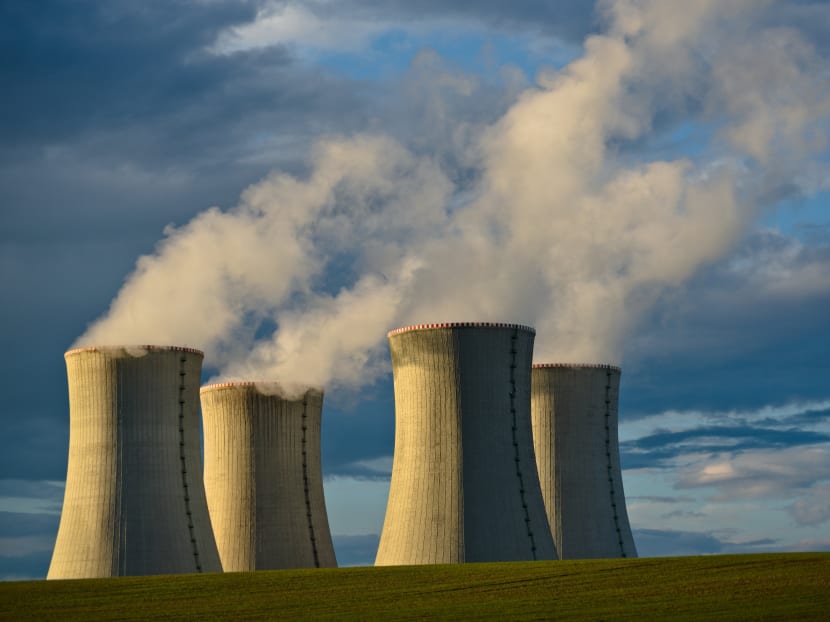
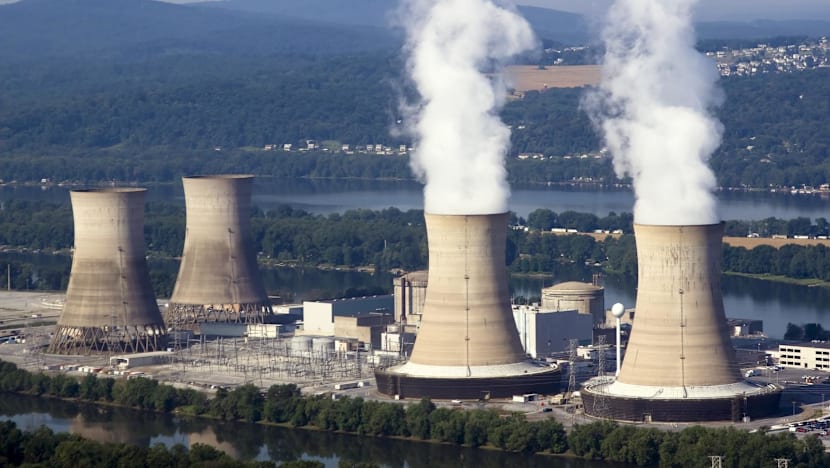
A photo of nuclear power plants. (File photo: iStock)

Chelsea Ong

02 Sep 2025 


SINGAPORE: The Energy Market Authority (EMA) has appointed the Singapore office of British firm Mott MacDonald to study advanced nuclear energy technologies, it announced on Tuesday (Sep 2).

Sunday, March 3, 2024

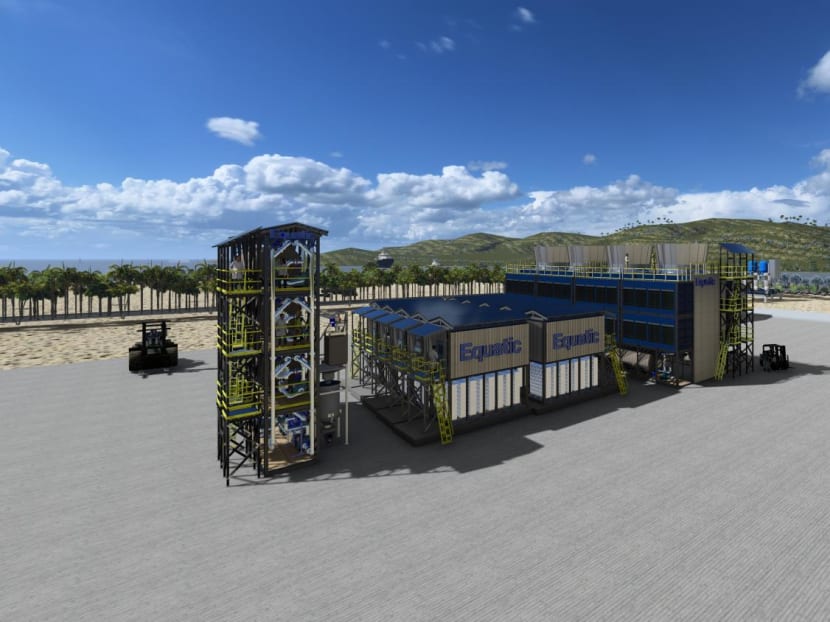
PUB partnering UCLA and American startup to build world’s largest ocean-based carbon dioxide removal plant in Tuas


A rendering of an ocean-based carbon dioxide removal plant.

PUB, Singapore's national water agency PUB, is teaming up with an American university and startup to build the world's largest plant that will remove carbon dioxide from seawater and the atmosphere
When fully completed, the plant in Tuas — named Equatic-1 — will be equipped to remove 10 metric tonnes of carbon dioxide per day from seawater and the atmosphere
This is more than 100 times the amount a trial plant has been able to remove


SHYNN ONG

February 27, 2024


SINGAPORE — Singapore's national water agency PUB is teaming up with the University of California (UCLA) and a UCLA-linked startup to build the world's largest plant that removes carbon dioxide from seawater and the atmosphere.

Wednesday, January 17, 2024

A warmer Singapore could spell trouble for its tourism industry, say experts

To mitigate the effects of the heat, various tourist attractions have put in place initiatives to keep people and places cool.

FILE: Tourists shield themselves with umbrellas on a hot day at the Merlion Park in Singapore on Jun 21, 2017.
(Photo: REUTERS/Edgar Su)

Nadirah Zaidi
Darrelle Ng

16 Jan 2024


SINGAPORE: A warmer and wetter Singapore could dampen the appeal of the nation as a tourist destination, experts warned. 

Sunday, November 20, 2022

New MIT system could cool buildings up to 10℃— without electricity

The system worked three times better than today’s state-of-the-art passive cooling system.


By Sam Jarman

October 13, 2022


As the world’s climate continues to heat up, the global demand for air conditioning is now skyrocketing. In 2019, the need for cooling drew in 8.5% of the world’s total electricity consumption, equating to some 1 billion tons of CO2 emissions.

As more air conditioning units draw ever more power each year, we now appear trapped in a cycle, only accelerating the problem of global heating further.

Friday, October 28, 2022

Global warming palpable for 96% of humans: Study

The researchers' tool measures the likelihood that unusually warm weather at a specific location on any given day
is due to climate change (Photo: AFP/Asaad NIAZI)

28 Oct 2022 


PARIS: Whether they realised it or not, some 7.6 billion people - 96 per cent of humanity - felt global warming's impact on temperatures over the last 12 months, researchers have said.

But some regions felt it far more sharply and frequently than others, according to a report based on peer-reviewed methods from Climate Central, a climate science think tank.

People in tropical regions and on small islands surrounded by heat-absorbing oceans were disproportionately impacted by human-induced temperature increases to which they barely contributed.

Thursday, September 8, 2022

Commentary: Ignoring China’s disastrous ‘three Ds’ could be a global risk

Disease, drought and debt will have worldwide consequences, says the Financial Times' Megan Greene.
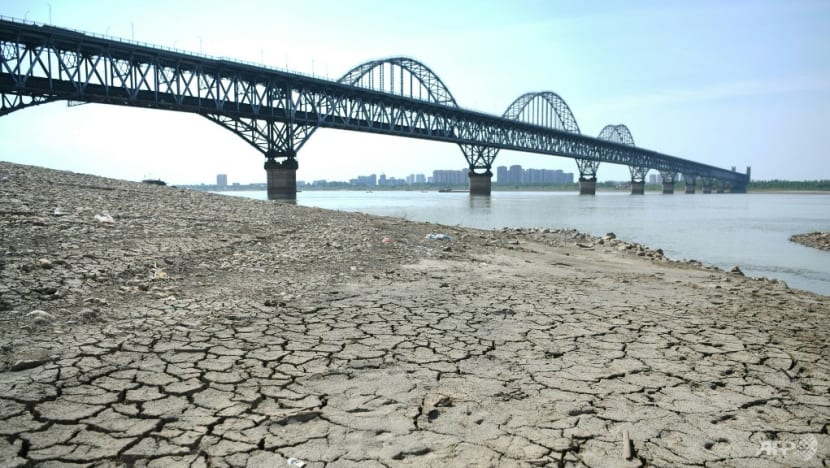
A section of a parched riverbed is seen along the Yangtze River in Jiujiang in China's central Jiangxi province
on Aug 19, 2022. (Photo: AFP/STR)

Megan Greene

08 Sep 2022 


PROVIDENCE, Rhode Island: In a world beset by multiple crises, officials may be looking past the biggest threat of all: China.

The talk among central bankers at the Jackson Hole Federal Reserve Conference focused on inflation and rising interest rates. Absent was any mention that just 10 days beforehand, the People’s Bank of China did exactly the opposite, unexpectedly cutting its key interest rate.

China is beset by three distressing Ds: Debt, disease and drought. They belie a slowdown that is not raising sufficient alarm bells among investors and policymakers. China remains heavily integrated into the global supply chain and is a potential driver of global demand as one of the biggest markets for foreign goods and services.

Wednesday, August 31, 2022

Commentary: Synthetic milk made without cows? That could radically disrupt the dairy industry

No cows needed. Unlike synthetic meat - which can struggle to match the complexity and texture of animal meat - synthetic milk is touted as having the same taste, look and feel as normal dairy milk, says this writer.
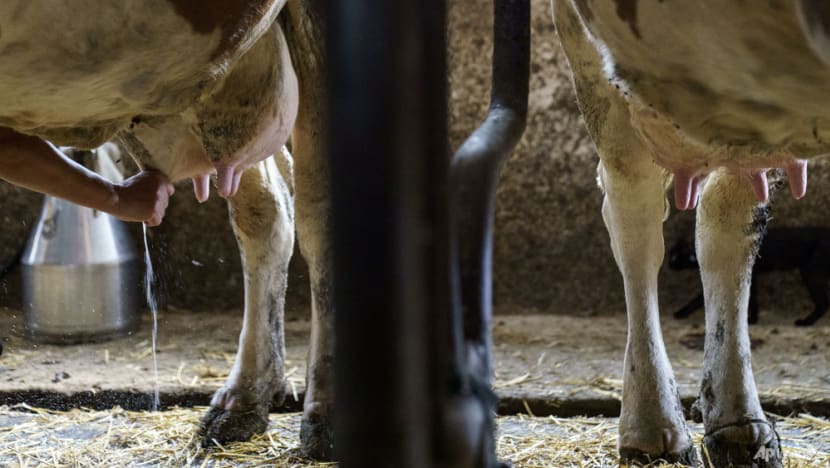
File photo. Draining leftover milk from the udder of a cow at a dairy farm in Dmytrivka, eastern Ukraine, Aug 10, 2022.
(AP Photo/David Goldman)

Milena Bojovic

31 Aug 2022 


SYDNEY: The global dairy industry is changing. Among the disruptions is competition from food alternatives not produced using animals – including potential challenges posed by synthetic milk.

Thursday, June 23, 2022

Singapore begins importing renewable energy from Laos through Thailand and Malaysia

Ng Hong Siang

23 Jun 2022 

SINGAPORE: Singapore started importing renewable energy from Laos through Thailand and Malaysia on Thursday (Jun 23), after an initial two-year power purchase agreement was signed between Keppel Electric and Laos' state-owned Electricite du Laos (EDL).

The Lao PDR-Thailand-Malaysia-Singapore Power Integration Project (LTMS-PIP) will import up to 100 megawatts (MW) of renewable hydropower using existing interconnections, marking the first multilateral cross-border electricity trade involving four ASEAN countries.

This is equivalent to about 1.5 per cent of Singapore's peak electricity demand in 2020, enough to power about 144,000 four-room HDB flats for a year.

Sunday, April 17, 2022

Polder project at Pulau Tekong more than halfway complete: Desmond Lee

Screengrab from a video showing the polder project at Pulau Tekong. (Screengrab: Facebook/Desmond Lee)


17 Apr 2022 


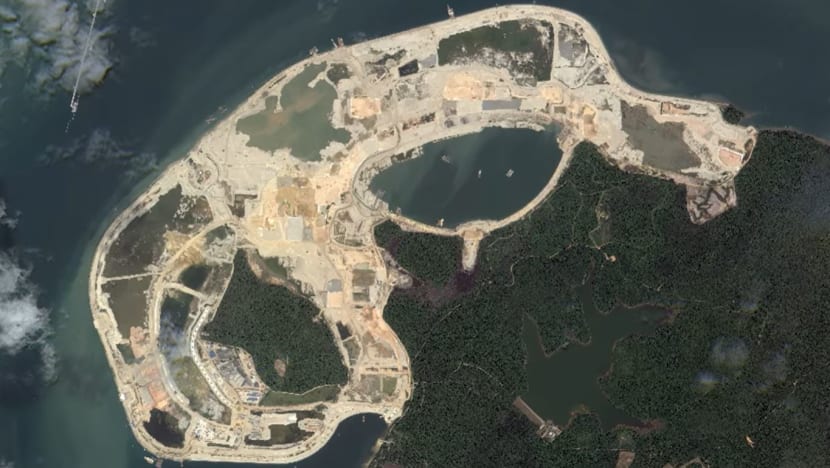
SINGAPORE: A project to build polders at Pulau Tekong is more than halfway complete, and is set to finish by the end of 2024, Minister for National Development Desmond Lee said on Sunday (Apr 17).

Polders are tracts of land that lie below sea level and are reclaimed through the building of dykes, drainage canals and pumping stations. They will help to protect Singapore against rising sea levels brought about by climate change.

Saturday, April 2, 2022

What it means to have nuclear energy in Singapore power sector’s net zero emission aim


Deemed unsuitable due to safety and reliability concerns in a pre-feasibility study conducted in 2012 by the Ministry of Trade and Industry, the Energy 2050 committee projects that nuclear energy could supply about 10 percent of Singapore’s power needs by 2050 due to technological advancement.

Friday, March 25, 2022

How countries can respond to a perfect long storm

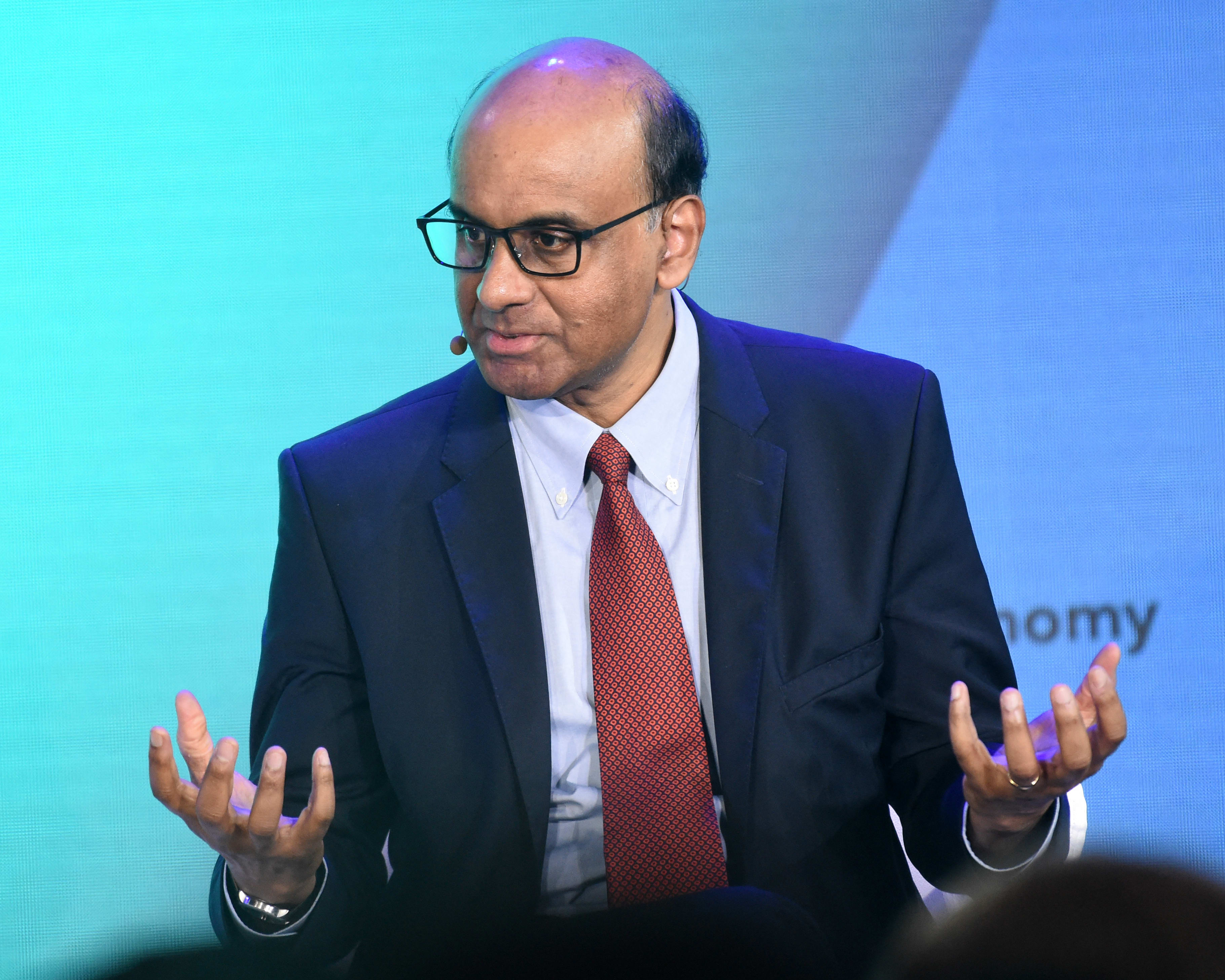
In a speech at the Investment Management Association of Singapore (IMAS)-Bloomberg Investment Conference on Wednesday (March 9), Senior Minister Tharman Shanmugaratnam spoke about how countries can navigate the current problems and “five fragilities” the world faces. Below is a transcript of his speech.


BY THARMAN SHANMUGARATNAM

March 9, 2022

I am very happy to join you this morning. It is an important conference, both because it’s IMAS’ 25th anniversary, and importantly because of the theme that you're focusing on — investing for a green future.

Let me put this in the context of the era of profound uncertainty and fragility that the world has entered.

Investing for the future has become a much more complex game. It's more complex than it was pre-pandemic. It's also more complex than it was two weeks ago.

Saturday, March 5, 2022

Commentary: Singapore’s climate ambition finally up to speed with international developments

Moves to strengthen Singapore’s net zero goals or aggressively hike carbon tax show calls for more ambition have not gone unheard, says Melissa Low of the Energy Studies Institute.

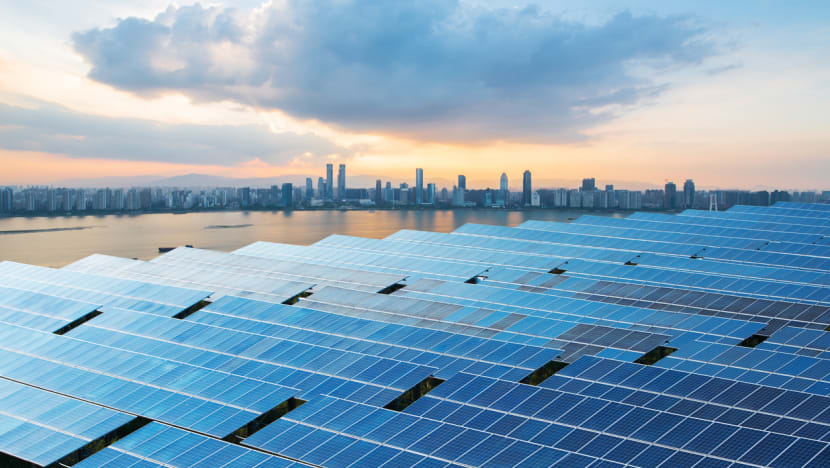
Solar panels with cityscape of Singapore. (Photo: iStock)


Melissa Low

19 Feb 2022


SINGAPORE: Singapore has made bold moves with revised carbon tax rates, and plans to achieve net-zero emissions by or around mid-century.

On Friday (Feb 18), Minister for Finance Lawrence Wong announced that Singapore’s carbon tax rate will be revised from S$5 per tonne of carbon dioxide equivalent to S$25 per tonne from 2024 and 2025.

It’ll then increase to S$45 per tonne from 2026 to 2027 and fall within the range of S$50 to S$80 per tonne by 2030. 

Saturday, November 13, 2021

7 reasons global transport is so hard to decarbonise

By CHRISTIAN BRAND

NOVEMBER 12, 2021


Even if current and committed emission policies were to succeed, transport’s carbon emissions would still grow almost 20 per cent by 2050.


Transport accounts for 21 per cent of global carbon emissions.

It is now the largest emitting sector in many developed countries. While Europe and North America dominate historic transport emissions, much of the projected growth in emissions is in Asia.

Even if current and committed policies were to succeed, transport’s carbon emissions would still grow almost 20 per cent by 2050.

Highly ambitious policies could cut these emissions by 70 per cent — but not to zero.

Here are seven reasons global transport is particularly hard to decarbonise.\

Sunday, October 31, 2021

Commentary: Worrying signs COP26 is being set up for failure

There are worrying signs to suggest these most consequential of climate change talks are being set up for failure, says a climate researcher.

Anthony Burke

30 Oct 2021


CANBERRA: In just days, the most consequential climate meeting in human history begins in Glasgow, Scotland.

The Earth has warmed by up to 1.3 degrees Celsius since 1880. Devastating fires, cyclones and weather are wreaking havoc around the world.

And current emissions trends put the world on a path toward 3 degrees Celsius of catastrophic heating by 2100, which would trigger tipping points such as the melting of the poles, the loss of the Amazon rainforest, and a drastic slowdown in the Atlantic ocean circulation.

Under the Paris Agreement, this year countries must submit new nationally determined commitments (NDCs) to reduce emissions consistent with holding global heating well below 2 degrees Celsius and as close to 1.5 degrees Celsius as possible.

Yet a recent United Nations assessment of existing NDCs estimates that they will only hold heating to 2.7 degrees Celsius – and then only if they are implemented. The UN’s recent Production Gap report, which finds that countries are planning to produce 190 per cent more fossil fuels by 2040 than is consistent with the 1.5 degrees Celsius guardrail, puts the sincerity of these commitments in doubt.

Monday, August 9, 2021

Singapore studies latest UN’s climate change report as it continues to plan and implement adaptation measure

Vanessa Lim

09 Aug 2021 


SINGAPORE: The Centre for Climate Research Singapore is studying findings from the UN’s latest climate change report to see how they impact Singapore and to inform its policy recommendations.

On Monday (Aug 9), the UN’s Intergovernmental Panel on Climate Change (IPCC) released a major report detailing the latest scientific assessments of climate change. It is the first of three reports which will make up the panel’s Sixth Assessment Report.

The panel’s key findings include the clear influence of humans on climate change, resulting in the warming of the atmosphere, ocean and land.

It warned that unless deep – and quick – cuts in carbon dioxide and other greenhouse gas emissions are made, global surface temperatures will cross the 1.5 degrees Celsius threshold goal of the 2015 Paris Agreement sometime in the early 2030s.

In the most aggressive emission scenario, the world could exceed that mark by the end of this decade.

Saturday, January 30, 2021

Forests are needed to absorb carbon, but the overheating planet might soon flip a critical switch

By Jack Board 

30 Jan 2021


BANGKOK: New research shows that the fast warming of the planet could cause trees and plants to release more carbon than they absorb, a critical function reversal that would further accelerate climate change.

By as early as 2040, given the current projections of global temperature rise, land systems will only be able to take in half the amount of carbon compared to what they do today, according to the research, published in Science Advances this month.

The research analysed data from about 1,500 sites around the world to try and understand how temperature intersected with the absorption of carbon. What it uncovered was a “powerful tipping point”.

As temperatures continue to rise, the ability of trees and plants to perform photosynthesis - a function that utilises carbon dioxide in the air - is compromised. At the same time, in a warmer environment, the respiration of plants also increases due to heat stress, adding more carbon to the atmosphere.

Sunday, May 10, 2020

Greenhouse Gas Emissions Predicted To Fall Nearly 8% — Largest Decrease Ever


April 30, 2020

Jennifer Ludden
Jeff Brady

The San Gabriel Mountains are seen under a clear sky beyond downtown Los Angeles. Air quality in the U.S. and elsewhere has been improved by reduced traffic from coronavirus restrictions and weeks of rainstorms.  David McNew/Getty Images


The COVID-19 pandemic is delivering the biggest shock to the global energy system in seven decades, according to a new report by the International Energy Agency.

Global energy demand is expected to fall by 6% this year, seven times the decline brought by the financial crisis 10 years ago. IEA projections show oil and gas being hit hard. But demand for coal could fall by an extraordinary 8% — the largest decline since World War II.

Sunday, March 29, 2020

Coronavirus could help push us into a greener way of life

By Simon Kuper

26 March, 2020

By the time this horror ends, it might have changed our way of life. Already, the coronavirus has achieved something that government policies and moral awakening couldn’t: It is pushing us into green living.

The nature of work, commuting and shopping changed this month. If that transformation sticks, then one day we’ll have happier and more productive societies, and we’ll look back on December 2019 as the all-time peak in global carbon emissions.

First of all, the pandemic may show that offices are an outdated way to organise work. This is something I have suspected since my three-year office experience in the 1990s.

I was amazed at the inefficiency of the set-up: People spent much of the day distracting each other by gossiping, flirting, complaining about the boss or that morning’s commute. I’ve worked happily alone for 22 years now.

Offices exist largely so that bosses can check whether workers are doing the work (or at least putting in face-time). But nowadays, data can do much of the monitoring. Meanwhile, improved workplace software such as Slack and Zoom lets employees collaborate from home.

The tech may actually outperform real life: A professor who has hurriedly learnt Zoom told me he liked the way the software can instantly create small break-out groups of students to work on a problem.

In an auditorium, everyone has to pack their bags, find a room and grab a coffee on the way.

Now that entire countries are learning to work from their bedrooms, many employers may end up concluding that they can ditch expensive office space.

That wouldn’t merely reduce emissions, and liberate metropolitan workers from ghastly commutes (the daily round trip averages well over an hour in cities such as New York, Chicago and London).

The shift would also reduce urban house prices, as some offices get converted into homes, and some workers are freed to leave the city.

In the next year or two, virtual-reality software will let the boss (or at least the boss’s avatar) step into underlings’ home-offices to root out shirking.

In short, work could follow dating, shopping and game-playing in going virtual. That would make life greener but also more isolated.

To compensate, neighbourhoods will need more communal spaces. Already the death of bricks-and-mortar retail has allowed coffee shops and co-working spaces to take over high streets.

But we’ll also have to build more playgrounds (with some for adults), community centres and parks.

Another benefit: The pandemic may help stop the decades-long rise in business travel.

I discovered this month that each time a trip was cancelled, I mostly felt relief.

I know the benefits of business travel: The two books I’m currently writing both came out of meeting someone while at a conference. So did my previous book.

However, most trips probably cause a net loss of productivity. While you search for the one or two useful people to talk to amid the 300 carbon-emitting duds at a disappointing conference, you’re missing work at home.

Moreover, most conferences feature a lot more wannabe sellers than buyers. Nowadays it’s quicker to find the perfect counterpart on LinkedIn.

As for content, well-made virtual conferences could be as compelling to watch as good TED talks or TV — and more so than the endless panels of executives talking their own books.

As for shopping, even before the coronavirus we were shifting towards a world where the shop comes to you. That movement just accelerated, possibly for ever.

It’s much greener for a supermarket to send an electric van (or a cargo-bike) to 100 homes in a neighbourhood than for all those people to drive to the supermarket. Some could ditch their cars.

Even in the very short term, the green lining to this pandemic is surprisingly large.

Air pollution kills about 1.1 million people in China alone every year.

The fall in pollution during the country’s lockdown in January and February “likely saved 20 times more lives in China than have currently been lost due to infection with the virus in that country”, calculates Marshall Burke of Stanford University’s Department of Earth System Science.

He adds: “The fact that disruption of this magnitude could actually lead to some large (partial) benefits suggests that our normal way of doing things might need disrupting.”

That’s particularly true since climate change makes pandemics more likely. It expands the natural habitat of infectious insects such as mosquitoes, while reducing the habitat of animals, with the effect of pushing both into closer contact with humans.

Governments need to make good use of the current pandemic. Many states are preparing a fiscal stimulus.

United States President Donald Trump wants to bestow much of it on the carbon emitters that could go bust in the incipient recession: airlines, cruise ships, oil producers and his beloved hotel industry (which lives off travellers’ emissions).

Forward-looking governments will instead prioritise green industries, while helping workers who lose their fossil-fuel jobs.

It turns out that developed countries (except possibly the US) can still do collective government-led wartime-style mobilisation. It’s a muscle we’re going to need.

FINANCIAL TIMES


ABOUT THE AUTHOR:

Simon Kuper is a life and arts columnist for the Financial Times.


Cleaner hands, bluer skies: What has coronavirus done for us?

25 March, 2020

TOKYO — Deaths, economic meltdown and a planet on lockdown. The coronavirus pandemic has brought us waves of bad news, but squint and you might just see a few bright spots.

From better hygiene that has reduced other infectious diseases to people reaching out as they self-isolate, here are some slivers of silver linings during a bleak moment.

WASH YOUR HANDS!

The message from health professionals has been clear from the start of the outbreak: wash your hands.

Everyone from celebrities to politicians has had a go at demonstrating correct technique — including singing "Happy Birthday" twice through to make sure you scrub long enough, and hand sanitiser has flown off the shelves.

All that extra hygiene appears to be paying off, at least in some countries, including Japan, where the number of flu cases appears to be sharply down.

Japan recorded 7.21 million cases by early March — usually around the peak of the flu season that runs until May.

That was far below figures for previous years, including the 21.04 million infections seen during the 2017/18 season.

"We estimate that one of the reasons behind it is that people are now much more aware about the need to wash hands... given the spread of the new coronavirus," Japanese health ministry official Daisha Inoue told AFP.

CARBON CURBS

Factory shutdowns, travel bans and a squeeze on demand spell economic disaster, but it isn't all bad news for the environment.

In the four weeks to March 1, China's CO2 emissions fell 200 million tonnes, or 25 per cent, compared to the same period last year, according to the Centre for Research on Energy and Clean Air.

That's a decline equivalent to annual CO2 emissions from Argentina, Egypt or Vietnam.

The slowdown in China also saw coal consumption at power plants there down 36 per cent, and the use of oil at refineries drop by nearly as much.

Air travel is also grinding to a virtual halt, achieving at least a short-term drop-off in emissions from a highly polluting industry.

And there have been other environmental benefits, including crystal-clear waters in Venice canals usually choked with tourist-laden boats.

Unfortunately, experts say the cleaner air may be short-lived. 

Once the health crisis is over, experts expect countries will double down to try to make up for lost time, with climate change concerns likely to be sidelined in a race to recover economic growth.

SAVE THE PANGOLINS

The source of the coronavirus remains in question, but early tracking focused on a market in China's Wuhan where a variety of live wildlife was on sale for consumption.

A number of animals, including bats and the highly endangered pangolin, have been identified as possible culprits for the virus.

As a result, China in February declared an immediate and "comprehensive" ban on the trade and consumption of wild animals that was welcomed by environmentalists.

Beijing implemented similar measures following the Sars (severe acute respiratory syndrome) outbreak in the early 2000s, but the trade and consumption of wild animals, including bats and snakes, made a comeback.

This time the ban is permanent, raising hopes that it could end the local trade in wildlife.

"I do think the government has seen the toll it takes on national economy and society is much bigger than the benefit that wild-eating business brings," said Mr Jeff He, China director at the International Fund for Animal Welfare.

Reports linking the virus to the pangolin have also scared off would-be consumers of the scaly mammals elsewhere, with bushmeat vendors in Gabon reporting a plunge in sales.

APART, TOGETHER

One of the most difficult aspects of the stringent lockdowns imposed to slow the spread of the virus has been loneliness, with families and friends forced to endure weeks or even months apart.

But some people have found the measures are creating a sense of community spirit, and prompting them to make more of an effort to check in with family and reconnect with friends.

In Colombia, where a nearly three-week period of self-isolation is now in place, 43-year-old Andrea Uribe has organised everything from group exercise classes to family talent shows using video messaging programmes including Zoom.

"I have called my parents more often, I have talked to friends that I usually don't talk to... I have organised Zoom meetings with friends in multiple countries," Ms Uribe, who works in development, told AFP.

"It is wonderful to be forced to be there for one another. It has made me more creative. It just shows that we need to be present in people's lives."

AFP
Friday, December 27, 2019

Explainer: How bickering over a carbon trading system led to the failure of international climate talks

By Navene Elangovan

18 December, 2019

On Sunday (Dec 15), an international meeting to push through bolder measures to tackle climate change fell through, after countries were unable to come to an agreement on the details.

The 2019 United Nations (UN) Climate Change Conference, also known as COP25, was held in the Spanish capital of Madrid, and had brought together close to 200 countries over a span of two weeks to sort through the details of the Paris Agreement on Climate Change signed in 2016.

Despite running for two days longer than initially expected, making it the longest-running climate change conference in the UN’s history, little was achieved beyond broad statements calling for countries to do more to fight climate change by next year.

TODAY looks at what the COP25 was supposed to achieve, why it was so pressing to achieve these targets and what were the sticking points at the conference.

Tuesday, December 3, 2019

In calling for action on climate crisis, it is not enough to say ‘listen to the science’

By Sofiah Jamil

25 November, 2019

Within the span of a year, Greta Thunberg’s weekly lone ranger act of skipping school to stage a climate strike outside the Swedish parliament has spread globally into what is known as the Fridays for Future (FFF) movement. Despite being at the tender age of 16 and diagnosed with Asperger’s syndrome, Greta’s display of her commitment to the cause has been impressive.

By refusing environmental awards and refraining from travelling by air for international conferences, she has catapulted herself as a leading climate change campaigner, and earned audiences with various international leaders and politicians.

Her message to them: To “listen to the science”, and also understand the acuteness of impending environmental disasters.