Showing posts with label Housing. Show all posts

Sunday, March 31, 2024

Singapore ranked 6th most resilient city in latest global inde

By Anna Maria Romero

MARCH 26, 2024


SINGAPORE: In Singapore news today, here’s one more thing that Singaporeans can be proud of: the Little Red Dot has climbed six spots to rank sixth on the Savills Resilient Cities Index. In 2021, Singapore was ranked twelfth the last time the index was published.

Wednesday, March 20, 2024

Comment: Public Housing in Singapore - One big disguised Ponzi scheme?

[From a FB post in Sept 2009]

There has been a raft of letters to the press about how the surging prices of public housing is making it impossible for young couples and families to afford housing in Singapore.
In particular, house-hunters have pointed fingers at the Cash-Over-Valuation (COV) that sellers are demanding. HDB has replied to say that they strive to provide affordable housing, and COV are an instrument of the market over which HDB has no control.

So a flurry of letter followed about how HDB might tweak the system (to the benefit of the young house hunters of course). Such as banning COV, and increasing the supply of new flats.
http://heresthenews.blogspot.com/2009/09/cash-over-valuation.html


Tuesday, February 7, 2023

'Generosity' of VERS scheme will give flat owners remaining value of lease: Sim Ann


Chew Hui Min

07 Feb 2023 


SINGAPORE: Members of Parliament debated how expiring leases on Housing Board (HDB) flats will be dealt with on Tuesday (Feb 7), with Senior Minister of State for National Development Sim Ann rebutting the proposals and concerns raised by opposition members in the House.

During the debate on public housing policies, Assoc Prof Jamus Lim (WP - Sengkang) asked: “But notice that once we actually reach the 60 years or so, the only way to end up extracting the value is to sell (the flat) on to someone else so that we can actually retire comfortably by extracting that value.

“Now the question is: We are selling on a rapidly depreciating asset … What is the Government’s plan, at least at the macro level, to prevent creating a generation of home purchasers who have bought at the tail end just before the music stops?”

Tuesday, November 1, 2022

Commentary: Japan’s empty villages are a warning for China

Beijing should take note of the risks posed by a property bubble and demographic changes, says the Financial Times’ Leo Lewis.

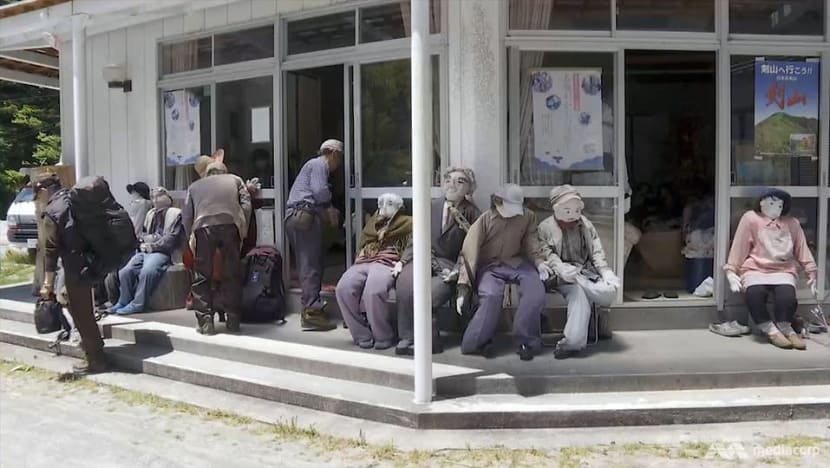
In Japanese village Nagoro, life-sized dolls outnumber the living. Japan’s population is projected to shrink by almost a
third by 2065. (Photo: Mediacorp)


Leo Lewis

01 Nov 2022


TOKYO: Next year, according to a recent estimate, Japan will have roughly 11 million unoccupied residences — slightly more than the entire residential stock of Australia. By 2038, under one scenario in the same forecast, just under a third of Japan’s dwelling units could lie empty.

A gloomy prognosis for Japan, where spooky, semi-abandoned rural villages already abound, but a portent of much bigger trouble, potentially, for China.

Saturday, September 17, 2022

Cock-a-doodle-don't: Sin Ming resident spends $7,000 on soundproof windows to block out roosters' crowing

SEPTEMBER 15, 2022

CHING SHI JIE

Xu shared that her family had installed soundproof windows to prevent the roosters from disturbing their sleep. 
Shin Min Daily News


How far would you go to get a good night's sleep?

One woman, fed up with roosters' crowing under her block for years, recently spent a large sum of money on soundproof windows so she'd get some peace at night.

58-year-old Xu said that the number of roosters appearing under her block along Sin Ming Avenue has increased over the past three years, Shin Min Daily News reported on Tuesday (Sept 13).

There are now more than 20 free-roaming chicken in the estate, the frustrated housewife said.

"They would fly up to the trees and crow at 2 or 3am. Closing the doors and windows didn't help [to block out the noise].

Thursday, September 15, 2022

More young Singaporeans considering renting and flat sharing as they find current property prices too high: Study

SEPTEMBER 11, 2022

ISABELLE LIEW

One-fifth of respondents aged 22 to 29 felt that current property prices are too high. The Straits Times file


SINGAPORE — More young Singaporeans, compared with older age groups, are considering renting and flat sharing as they find current property prices too high.

Even then, most still intend to buy a home within the next two years, a consumer sentiment study released by real estate portal PropertyGuru last week showed.

WP calls for BTO eligibility age for singles to be lowered, boost in HDB flat supply

In an adjournment motion, Workers’ Party MP Louis Chua asked the Government to take “urgent and decisive steps” to increase the availability of HDB housing.

HDB flats in Singapore. (File photo: TODAY/Ooi Boon Keong)

Chew Hui Min

13 Sep 2022 


SINGAPORE: Workers’ Party Member of Parliament Louis Chua on Tuesday (Sep 13) made a case for lowering the age at which Singaporean singles can apply for a new Housing Board (HDB) flat to 28, while urging the Government to up the supply of public housing for all.

Tuesday, July 12, 2022

New SERS rehousing options for Ang Mo Kio flat owners will apply to similar projects in future: Desmond Lee

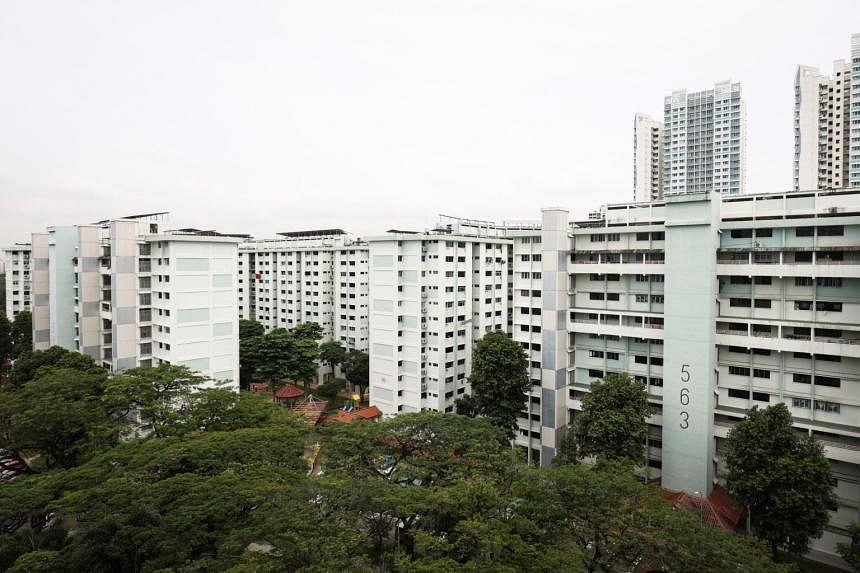
Blocks 562 to 565 in Ang Mo Kio Avenue 3 have been picked for the Selective En bloc Redevelopment Scheme (SERS).
(Photo: CNA/Cheryl Lin)

Tang See Kit
04 Jul 2022 


SINGAPORE: The new rehousing options made available to some flat owners in Ang Mo Kio as part of the Selective En bloc Redevelopment Scheme (SERS) will apply to a similar exercise in Marsiling and future acquisitions under the scheme, said National Development Minister Desmond Lee on Monday (Jul 4).

The Housing and Development Board (HDB) over the weekend announced that eligible home owners under SERS will be able to purchase a new replacement unit on a shorter 50-year lease, instead of a fresh 99-year one. A second option allows residents who are seniors to take up the lease buyback scheme for their existing flat and buy a new replacement flat of the same flat type on a short lease.

Sunday, June 19, 2022

Some Ang Mo Kio residents dismayed by top-up for similar-sized Sers replacement units

The HDB announced in April that four Ang Mo Kio HDB blocks had been selected under Sers.
PHOTO: LIANHE ZAOBAO


Michelle Ng and Nellie Toh

15 JUN 2022


SINGAPORE - When part-time hairdresser Janice Ong learnt in April that her Ang Mo Kio Housing Board block was among the four picked for the Selective En bloc Redevelopment Scheme (Sers), she thought she would be getting a brand-new flat with little to no extra money out of her pocket.

So it came as a shock to the 54-year-old when she realised that she might have to fork out more than $100,000, if she were to pick a similar-sized four-room flat at the Sers replacement site.

"I thought I could live here for the rest of my life, but now that I've just finished paying for the flat, they want me to pay another $100,000," said Madam Ong, who moved into the flat at Block 562 Ang Mo Kio Avenue 3 around six years ago with her husband. Their two daughters and a son-in-law live with them.

Wednesday, June 16, 2021

IN FOCUS: How Johor’s residential property market has been hit hard by COVID-19

The Johor skyline is now dotted with empty condominium units, due to an oversupply in the market and lack of foreign buyers.

By Amir Yusof

12 Jun 2021 


JOHOR BAHRU: When Singapore business owner Jonathan Gan purchased a 4-room condominium at Lovell Country Garden in 2018, he thought he had clinched his dream retirement home.

The freehold apartment located near Johor Bahru’s city centre was twice the size of his 3-room HDB flat in Singapore, but the cost was only half of the latter when he bought it directly from the developers.

“The best thing about the unit is the amazing view. You never get anything close to it at such value in Singapore,” added the 42-year-old, who lives with his wife and two daughters.

The apartment, like most units in the Lovell development, overlooks the Straits of Johor. The balcony opens up to a picturesque sea view and there is a sandy beach below.

“It was the ideal weekend home,” said Gan. “But now it’s becoming a bugbear.”

Monday, March 22, 2021

Residents living near former Kallang Gasworks grow weary over odours, noise from soil treatment works

By TESSA OH

MARCH 21, 2021

  • Remediation works at the old Kallang Gasworks started last year and is expected to end in 2022
  • Some residents reported falling ill more often due to the fumes from the site
  • The authorities said the air released is treated and does not pose adverse health risks
  • They have also put in place mitigation measures in response to feedback from the public

Source: SLA

Sunday, March 21, 2021

Commentary: Keeping public housing in prime locations like Greater Southern Waterfront affordable and fair

To help low-income families afford those flats, while avoiding the lottery effect, consider awarding a housing grant tiered by income level, with levies to recovery subsidies depreciating over time.

By Sing Tien Foo

21 Mar 2021 


SINGAPORE: Singapore’s public housing model is changing.

During the early years of the country’s independence, the national goal was largely an operational one in ramping up construction to provide living spaces for growing numbers of families and resolve overcrowding.

Over the decades, a conscious belief that building a nation of homeowners would be the best strategy to give Singaporeans a stake in the nation and strengthen retirement adequacy took root.

And in the last 20 years, the national conversation has shifted towards how public housing goals can fulfil new aspirations while keeping homes affordable. New models like the Design Build and Sell Scheme and Executive Condominiums were rolled out.

More recently, public discussions have swirled around the subject of inclusiveness, with the announcement that spaces will be set aside for future public housing in the Greater Southern Waterfront, and how to keep such an exercise fair.

While many Singaporeans welcomed the redistributive aspects of this move so more Singapore families can afford housing in good locations, most have also cautioned against the lottery effect seen in past HDB projects.

Sunday, March 14, 2021

A timeline of Singapore’s public housing policy for singles

By JANICE LIM

MARCH 13, 2021

  • Singapore's policy on singles living in public housing has evolved over the years.
  • In the 1960s, singles were not able to have their own public housing flat
  • The arrival of the Housing and Urban Development Company (HUDC) in the 1970s meant singles could buy these flats. HUDC catered to a segment of S'poreans able to buy a place better than typical public housing yet unable to afford private housing
  • It was only in 1991 that singles above 35 years old were able to buy resale HDB flats, but limited to three-room flats at selected locations
  • Since 2000, there have been a series of policy moves to provide more HDB options for singles  


SINGAPORE — Compared with their married counterparts, singles in Singapore have generally faced greater hurdles in acquiring a flat from the Housing and Development Board (HDB), perhaps most notably in having to hit the minimum age of 35 years old before one can purchase a flat. 

However, earlier in the Republic’s history, singles were not even allowed to buy public housing flats at all as housing policies were focused on meeting the needs of families.

Former National Development Minister S Dhanabalan said in 1988 that allowing singles to buy their own flats and live alone would also be in direct conflict with the Government’s efforts to preserve the traditional family unit.

Wednesday, June 3, 2020

3 reasons why Singapore is the smartest city in the world

14 Nov 2019

Sharmishta Sivaramakrishnan
Community Specialist, 
Young Global Leaders - Asia, World Economic Forum Geneva


It’s official: Singapore is the world’s smartest city. That’s according to a new survey Published by Swiss business school IMD and the Singapore University of Technology and Design - the IMD Smart Cities Index - which looked at how well cities are adopting digital technologies and improving the lives of the people who live there.

What is a smart city?


Wednesday, July 24, 2019

Young and not so upwardly mobile

Why it’s increasingly challenging to sustain inter-generational mobility in Singapore.

Sat, Jul 20, 2019
BT ILLUSTRATION: SIMON ANG

Marissa Lee


IN 2015, the last time any study of its kind was published, the Finance Ministry looked at incomes of those born from 1978-1982 (aged 37-41 this year) and concluded that inter-generational income mobility in Singapore had remained high.

But even as these findings affirmed the national belief that everyone has a fair chance of success regardless of who their parents are, the study's authors could already see that upward mobility for new cohorts of Singaporeans wouldn't be as easily achieved. Anyone who came of age during the 1980s and 1990s, when Singapore's rapid transformation was accompanied by a significant expansion in education and jobs, would have enjoyed opportunities that their parents never got, the study noted.

Conditions have since changed, the study said: "As the pace of Singapore's development slows, it will be an increasing challenge to sustain such mobility in the future."

Monday, July 22, 2019

Young homeowners who bought ageing flats: What’s the deal?


By Janice Lim

21 July, 2019

SINGAPORE — During the National Day Rallylast year, Mr Leroy Yew, 31, watched Prime Minister Lee Hsien Loong announce several new schemes to address the issue of the depleting leases of Housing and Development Board (HDB) flats.

Mr Yew, who recently joined the real estate industry, admitted that it was only then that he began to worry about the resale value of his own flat, which has less than 60 years of lease left.

Friday, May 17, 2019

Why Hong Kong cannot copy Singapore’s approach to public housing

Hong Kong’s struggles to house its population don’t just stem from its shortage of land, and looking to the Lion City as a model is unrealistic
Public housing in Singapore by its Housing and Development Board. Photo: Roy Issa

Hongkongers have long looked at Singapore as a model for how to provide good quality public housing. The latest example was laid out by University of Hong Kong adjunct professor Tony Kwok in his piece for this newspaper, “How would Lee Kuan Yew have solved Hong Kong’s housing and health care problems?” published on April 17.

He argued Singapore’s solution had simply been land reclamation, but this is an oversimplification of the city state’s approach to its acute home shortage of the 1960s. The reasons behind Singapore’s successes have little to do with reclaimed land, and the conditions in Singapore when Lee was prime minister are vastly different from those in Hong Kong today.

Reclamation was never a key feature of Singapore’s public housing policies. Most of the country’s reclaimed land has been put to non-residential uses such as the airport, industrial parks, ports, the new financial district at Marina Bay, and recreation. Only a thin sliver in the southeast has been set aside for public housing. Most future residential land parcels are also not on reclaimed land.

Wednesday, April 17, 2019

Tough to get ‘balance right’ when pricing HDB flats in central areas: Lawrence Wong

TODAY file photo

By JANICE LIM


It is difficult to get the “balance right” when it comes to pricing public housing flats, particularly for those located close to the city centre, said National Development Minister Lawrence Wong.


07 MARCH, 2019


SINGAPORE — It is difficult to get the “balance right” when it comes to pricing public housing flats, particularly for those located close to the city centre, as the Government has to weigh between pricing them to market value and keeping housing affordable, said National Development Minister Lawrence Wong.

Speaking during his ministry’s Budget debate on Thursday (March 7), Mr Wong was responding to a concern raised by Nominated Member of Parliament (MP) Walter Theseira about social stratification in housing estates.

Associate Professor Theseira, a labour economist with the Singapore University of Social Sciences, had pointed to the widening price disparities between Housing and Development Board (HDB) flats located close to the city centre and those that were not.

Acknowledging the challenges that the Ministry of National Development (MND) faces, Mr Wong said: “It’s difficult to get this balance right”

“If you price it to market, then only the very well-off can afford. If you want to make it affordable, the only way is through a big discount to the BTO (Build-to-Order) price.”

Monday, March 25, 2019

Can bringing young and old under one roof solve the world's housing crisis?

24 March, 2019

BRUSSELS — Home sharing initiatives that link cash-strapped young people with elderly home owners are becoming popular with governments around the world as they seek to tackle the twin crises of homelessness and loneliness, experts said on March 21.

Home sharing, which usually involves an older person offering a spare room at low cost to a young person in exchange for help and companionship, is increasingly seen as a solution to the problem of affordability faced by many countries.

Experiments in a number of countries suggest it could also alleviate loneliness among older people — a growing problem as populations age and more and more people live alone.

Wednesday, March 20, 2019

Why my first home purchase is a HDB flat I may just outlive

By WONG PEI TING


18 MARCH, 2019


I am 29 years old, know full well that a Housing and Development Board (HDB) flat will be worth nothing when its 99-year lease expires, and even explored a Big Read surrounding the lease decay issue.