Showing posts with label New Media. Show all posts

Monday, September 1, 2025

Sammy Obeid - Censorship Allegations

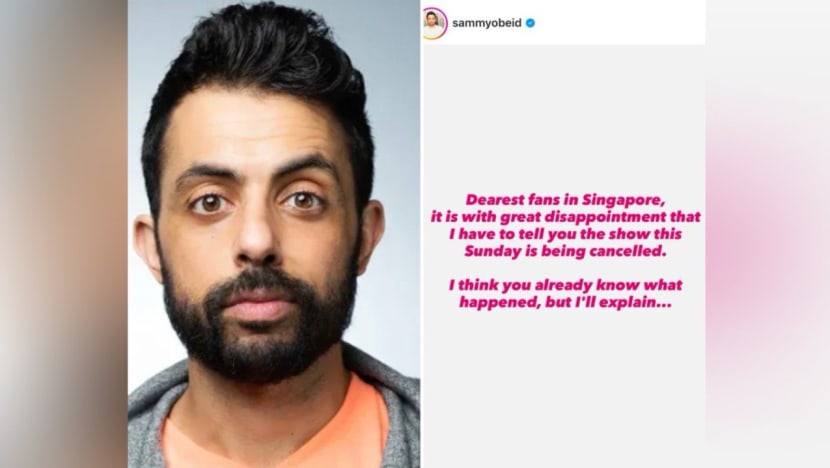
Comedian Sammy Obeid alleges censorship as shows cancelled; IMDA cites late licence application

IMDA said it had not requested any edits to be made to the script and that the licence was rejected because it was submitted late.

Stand-up comedian Sammy Obeid and a screenshot of his Instagram post on Aug 27, 2025, about his event's cancellation.
(File photos: Mr Sammy Obeid's website and Instagram/@sammyobeid)


28 Aug 2025


SINGAPORE: The Infocomm Media Development Authority (IMDA) said on Thursday (Aug 28) that several allegations by a comedian about his Singapore shows’ cancellation were "inaccurate".

The authority said the licence application for Mr Sammy Obeid's shows on Sunday was rejected because it was submitted late.

Friday, March 14, 2025

Activist group 'targeting and disrupting' PAP Meet-The-People Sessions

Activist group 'targeting and disrupting' PAP Meet-The-People Sessions
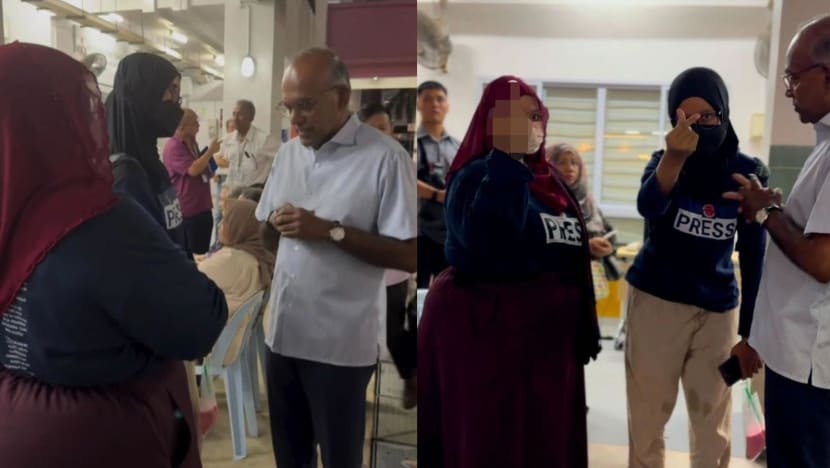
Home Affairs and Law Minister K Shanmugam speaking with two activists outside his Meet-The-People Session in 
Chong Pang on Mar 12, 2025, with one of them pointing a middle finger. 
(Photos: Facebook/K Shanmugam Sc)

The group turned up at Home Affairs and Law Minister K Shanmugam’s Chong Pang branch in Nee Soon GRC on Wednesday (Mar 12) evening, the minister said in a social media post.

Fabian Koh
13 Mar 2025


SINGAPORE: A group of people has been going to People's Action Party (PAP) Meet-The-People Sessions (MPS) to be "deliberately confrontational, create incidents, try and provoke", said Mr K Shanmugam, who posted on Thursday (Mar 13) footage of one such disruption that took place the day before at his ward in Chong Pang.

Sunday, May 8, 2022

Govt petition platform ‘never been live’, idea now canned: GovTech

iStock The Straits Times reported that PetitionsSG was created with the aim of empowering citizens
to push for change and to connect important ground sentiment to government ministries.


BY KIMBERLY LIM

May 5, 2022


SINGAPORE — The Government Technology Agency (GovTech) said that it has canned an idea in which a petition website would reportedly have been used to submit petitions to relevant government ministries if more than 10,000 signatures were garnered. GovTech added that the platform has "never been live".

In an email on Thursday (May 5) in response to TODAY's queries, GovTech said that the Government “actively seeks out views and concerns of citizens through various channels but we do not make decisions on the basis of petitions”.

The agency's response came less than a day after The Straits Times published a report about the PetitionsSG website developed by GovTech's Open Government Products unit.

The report stated that Singaporeans "may soon get a new avenue to voice their concerns through a platform where petitions that garner 10,000 supporters will be submitted to the relevant ministries for review".

Wednesday, February 9, 2022

Peng Shuai’s Weibo Post (with translation)

[Disclaimer: My Mandarin is VERY limited. So I cannot attest to the accuracy or veracity of either the original post, or the translation. Peng Shuai may well refute either the authenticity of the (alleged) Weibo post (but she has not!), or the translation or misunderstanding (which she has, but only to state generally, that it was an "enormous misunderstanding" but has not provided any specifics, or even the purpose of the Weibo post. So here's the text (in Mandarin) of her (alleged) original Weibo Post, and the translation provided by "What's on Weibo"]


Full Text Translation of Peng Shuai’s Weibo Post   

In a previous post, What’s on Weibo gave a partial translation of Peng’s Weibo post. Here, we will provide a full translation. Please note that this is a translation provided by What’s on Weibo and not an official translation issued by any other party.  

Monday, July 5, 2021

What’s fuelling China’s new online nationalists

By YUAN YANG

JULY 01, 2021


Last summer, a friend of mine told me that she found China’s biggest social media platform Weibo was becoming “unusable” for feminists and liberals such as her. Tempers were so heated, Bao told me, that disagreements easily became personal pile-ons.

After a friend became the centre of a social media storm, she posted a message: “We’re all just blades of grass, what’s the point of fighting with each other?”

Bao ended up becoming the next target.

At the time, we put it down to Covid-19, which, across the world, left people stuck at home, bored and anxious. They were just venting.

But a year on, Chinese nationalist sentiment is even greater online. It used to be outsiders, a United States politician criticising the government for instance, who received the worst of the attacks from bloggers.

Now insiders bear the brunt.

Wednesday, May 12, 2021

Why SPH news titles will continue with paid model despite government funding: Khaw

May 12, 2021

  • SPH’s media publications will maintain its paid-subscription business model
  • This is to keep it competitive and keep up the quality of their content, Mr Khaw Boon Wan said
  • The incoming chairman of SPH Media Trust added that it is important for newsrooms to have editorial independence
  • He said he will try to make a difference in helping newsrooms realise a bigger potential


SINGAPORE — News publications under Singapore Press Holdings (SPH) will continue with their subscription-based business model even when they get substantial government funding.

Mr Khaw Boon Wan, 68, the incoming chairman of SPH Media Trust, its new non-profit media entity, said that this would press the newsrooms to answer a “higher call” to quality journalism and keep them on their toes to produce quality content.

Sunday, January 17, 2021

The Big Read: What’s the big deal with data privacy? Thorny, complex issues confront citizens and governments

By NG JUN SEN

January 16, 2021
  • The issue of data privacy has come under the spotlight, with debates triggered by the police’s use of TraceTogether data and the privacy policy changes of WhatsApp
  • Besides your name, age, gender, education and employment, data companies know what vehicle you own, the size of your home, your socioeconomic status, the websites you visit, your tendency to default on loans, and even your health problems
  • The enormous use of personal data by corporates and governments have become part and parcel of today’s connected society and quality of life, but also risks being misused or falling into the wrong hands
  • Data privacy law differs from country to country. Experts say Singapore’s Personal Data Protection Act is not designed to ensure data privacy as its chief aim, but was conceived to achieve a narrower goal of protecting personal user data
  • The onus is also on the individual to keep asking questions about their personal data and not simply sign away their privacy, experts added

SINGAPORE — When messaging app WhatsApp’s new privacy policy sparked a global exodus from its services, Mr Darren Chin’s company — a local tech firm — decreed that its entire staff was to cease using the Facebook-owned platform for work.

“We’ve all been using WhatsApp for many years, but the company’s top management decided to ban it and we cannot say no,” said Mr Chin, 52.

“Everyone in the tech chat groups in my company switched to Signal, so I did so as well. I agree with the decision too: Data privacy is important to me,” the IT operations specialist told TODAY — ironically in an interview conducted over Facebook at his request.

Signal, as well as Telegram, are rival encrypted messaging apps that have surged in popularity amid the fiasco as an alternative to WhatsApp.

WhatsApp has since come forward to clarify that its new terms will not allow its parent company to access the app users' messages, and delayed its February deadline for users to accept the terms. But the new policy will still allow WhatsApp to share more information with Facebook and roll out advertising and e-commerce.

Around the same time, a similar controversy unfolded involving Singapore’s contact-tracing system TraceTogether, after Singaporeans found out earlier this month that their Bluetooth proximity data could be used for criminal investigations.

This led some users to switch off their apps or leave their tokens at home, despite the fact that such data is critical in fighting the unprecedented Covid-19 pandemic, TODAY previously reported.

Wednesday, January 13, 2021

The scary power of the companies that finally shut Trump up

By Michelle Goldberg

January 12, 2021


THE NEW YORK TIMES


In the days after President Donald Trump whipped up a mob to overrun the United States Capitol in a desperate attempt to stop the certification of his defeat, many conservatives have voiced their outrage over the true victims of the failed putsch.

“I’ve lost 50k-plus followers this week,” an indignant Sarah Huckabee Sanders wrote on Twitter on Saturday, after the platform banned Mr Trump and purged accounts that promoted the QAnon conspiracy theory.

Complaining of “radical left” censorship, Sanders, Mr Trump’s former press secretary, wrote: “This is not China, this is United States of America, and we are a free country.”

In fact, Twitter and Facebook’s ejection of Mr Trump is pretty much the opposite of what happens in China; it would be inconceivable for the Chinese social media giant Weibo to block President Xi Jinping.

Mr Trump’s social media exile represents, in some ways, a libertarian dream of a wholly privatised public sphere, in which corporations, not government, get to define the bounds of permissible speech.

As a non-libertarian, however, I find myself both agreeing with how technology giants have used their power in this case, and disturbed by just how awesome their power is.

Mr Trump deserved to be deplatformed.

Parler, a social network favored by Trumpists that teemed with threats against the president’s enemies, deserved to be kicked off Amazon’s web-hosting service.

But it’s dangerous to have a handful of callow young tech titans in charge of who has a megaphone and who does not.

In banning Mr Trump, the big social media companies simply started treating him like everyone else.

Lots of people, including prominent Trump supporters like Alex Jones, Roger Stone and Steve Bannon, have been ousted from Facebook, Twitter or both for inciting violence, threatening journalists and spreading hatred.

Mr Trump, who has done all of those things, had until this past week been given special privileges as president.

There’s no First Amendment problem with taking these privileges away; Americans don’t have a constitutional right to have their speech disseminated by private companies.

On the contrary, the First Amendment gives people and companies alike the freedom not to associate with speech they abhor.

There’s a debate about how far this freedom should go.

Liberals, myself included, generally believe that freedom of association shouldn’t trump civil rights law, which is why bakeries shouldn’t be allowed to deny wedding cakes to gay couples.

But it seems obvious enough that the Constitution doesn’t compel either individuals or businesses to amplify seditious political propaganda.

Still, the ability of tech companies, acting in loose coordination, to mostly shut up the world’s loudest man is astonishing, and shows the limits of analogies to traditional publishers.

It’s true that Mr Trump can, any time he wants, hold a press conference or call into Fox News.

But stripping him of access to social media tools available to most other people on Earth has diminished him in a way that both impeachment and electoral defeat so far have not.

Social media bans matter because they work.

You can see it with villains as diverse as Isis, Milo Yiannopoulos and Alex Jones.

“Their ability to drive the conversation, reach wider audiences for recruitment, and, perhaps most importantly to a lot of these conflict entrepreneurs, to monetise it, is irreparably harmed,” said Peter W Singer, co-author of LikeWar: The Weaponization of Social Media.

It’s great that Mr Trump’s poisonous presence has been curtailed.

Private companies have shown themselves able to act far more nimbly than the US government, imposing consequences on a would-be tyrant who has until now enjoyed a corrosive degree of impunity.

But in doing so, these companies have also shown a power that goes beyond that of many nation-states, one they apply capriciously and without democratic accountability.

As The Verge noted, it’s hard to make sense of a system that leads to the trolly left-wing podcast “Red Scare” being suspended from Twitter, but not Ayatollah Ali Khamenei.

So it’s not surprising that serious people including Chancellor Angela Merkel of Germany and Russian dissident Alexei Navalny find the Trump bans disturbing.

“This precedent will be exploited by the enemies of freedom of speech around the world,” Mr Navalny wrote on Twitter.

“In Russia as well. Every time when they need to silence someone, they will say: ‘This is just common practice; even Trump got blocked on Twitter.’”

But the answer isn’t to give Mr Trump his beloved account back.

Mr Navalny pointed out that Mr Trump’s ban seems arbitrary because so many other bad actors, including autocrats, Covid-19 deniers and troll factories, still have access to the service.

He called for platforms to create a more transparent process, appointing committees whose decisions could be appealed. That would be a start.

In the long term, tech monopolies need to be broken up, as US Senator Elizabeth Warren has proposed.

Mr Singer described the tech barons who finally took action against Mr Trump after enabling him for years as “rulers of a kingdom that abdicated their responsibility for a long time.”

This time, with Mr Trump, they ruled judiciously. But they shouldn’t rule over as much as they do. 

THE NEW YORK TIMES


ABOUT THE AUTHOR:

Michelle Goldberg has been an opinion columnist for The New York Times since 2017 and was part of a team that won a Pulitzer Prize in 2018 for public service for reporting on workplace sexual harassment issues. She is the author of three books.

Saturday, June 27, 2020

Trapped abroad, China’s ‘little pinks’ rethink their country

Young and patriotic, Chinese students abroad often defend their nation against its critics. But when many tried to return home during the Covid-19 pandemic, they became targets themselves.
THE NEW YORK TIMES

26 June, 2020


NEW YORK — Mr James Liu has always considered himself a patriot.

With a lump in his throat, he watched a military parade on National Day, China’s birthday, that showed a once backward nation that had become strong and powerful. He got goose bumps watching “Wolf Warrior 2,” a “Rambo”-like Chinese blockbuster featuring a superhero veteran who single-handedly rescues his countrymen trapped abroad.

When China came under attack online, Mr Liu was one of the legions of Chinese students studying abroad who posted in its defense. He condemned the pro-democracy protests in Hong Kong, which he saw as an effort to split a uniting China.

After US President Donald Trump called the coronavirus the “Chinese virus”, Mr Liu turned to Twitter to correct those who used the term.

“I was a real little pink,” he said, using a somewhat derogatory term for the young, Communist-red Chinese nationalists who use the internet as a patriotic battleground to fight those who disparage China.

Monday, May 11, 2020

Virus conspiracists in the US elevate a new champion

The rise of Dr Judy Mikovits is the latest twist in the virus disinformation wars, which have swelled throughout the pandemic.

USA Today Network via Reuters

10 May, 2020


NEW YORK — In a video posted to YouTube on Monday (May 4), a woman animatedly described an unsubstantiated secret plot by global elites like Bill Gates and Dr Anthony Fauci to use the coronavirus pandemic to profit and grab political power.

In the 26-minute video, the woman asserted how Dr Fauci, the director of the US National Institute of Allergy and Infectious Diseases and a leading voice on the coronavirus, had buried her research about how vaccines can damage people’s immune systems. It is those weakened immune systems, she declared, that have made people susceptible to illnesses like Covid-19.

The video, a scene from a longer dubious documentary called “Plandemic,” was quickly seized upon by anti-vaccinators, the conspiracy group QAnon and activists from the Reopen America movement, generating more than 8 million views. And it has turned the woman — Dr Judy Mikovits, 62, a discredited scientist — into a new star of virus disinformation.

[The problem with disinformation is that it distracts from the issue, it diverts attention to debunking such disinformation, it leads people down a clearly false path and ultimately a dead end, it promotes demonstrably wrong and dangerous ideas, it diverts resources to dead end research, and lengthens the process of getting to the right answer. Freedom of Expression will allow a thousand flowers to bloom, but then there must be a process of culling the wheat from the chaff. If the problem calls for a thousand solution, then yes, leave the thousand blooming flowers alone. But if some of the flowers (proposed solutions) have been discredited, debunked, disproof, are clearly wrong, then the avenues of further research should rightly focus on the more promising proposals. Not be distracted, diverted, and diluted.]

Saturday, April 18, 2020

How thousands of Chinese gently mourn a virus whistleblower

THE NEW YORK TIMES

Dr Li Wenliang tried to warn his country but was silenced. Now its traumatised people visit his spirit online, telling his silent social media account about their fears and dreams.

18 April, 2020

NEW YORK — Dr Li Wenliang tried to warn his country but was silenced. Now its traumatised people visit his spirit online, telling his silent social media account about their fears and dreams.

They come to say “good morning” and “good night.” They tell him that spring has arrived and that the cherry blossoms are blooming. They share that they are falling in love, falling out of love or getting divorced. They send him photos of fried chicken drumsticks, his favorite snack.

They whisper that they miss him.

Wednesday, September 25, 2019

Govts must lead fight against foreign interference, cannot rely on tech firms: Shanmugam

By Kenneth Cheng

Singapore wants to work with technology companies to fight foreign influence in national affairs, Home Affairs and Law Minister K Shanmugam said on Wednesday (Sept 25).

25 September, 2019

SINGAPORE — Governments must lead the fight against foreign interference in national affairs and cannot look to technology companies to solve the problem, Home Affairs Minister K Shanmugam said on Wednesday (Sept 25).

“Governments have to lead from the front and we need to ensure we have the right tools to fight this,” Mr Shanmugam, who is also Law Minister, said at a conference on foreign-interference tactics and countermeasures.

Friday, September 20, 2019

Defending Singapore against foreign interference

By Muhammad Faizal Abdul Rahman

19 September, 2019

Foreign interference is a form of political warfare — coercive means short of conventional war — that lies in the continuum between diplomacy and aggression. It is an application of soft force that entails a foreign state using its influence to affect the politics and policies of the target state covertly.

A foreign state with hostile intent would undermine the sovereignty of the target state — without violating its physical territory — by infiltrating its national institutions and people. The desired outcomes of the foreign state are political and economic gains at the expense of the target state.


Monday, August 12, 2019

How a village pond became a quirky tourist attraction in Indonesia in the social media age

South China Morning Post

10 August, 2019

KLATEN (Central Java) — Mr Dery Sananya sits casually on a chair “watching” television – as carp, koi and pomfret swim past him. Later, he will upload a selfie of this pose to his Instagram feed, with a quip about how easy it is to find TV channels underwater.

He is one of the many tourists — Indonesian and foreign — who have flocked to Umbul Ponggok in Klaten, Central Java, Indonesia, to take tongue-in-cheek underwater selfies in a pond.

“Many visitors upload photos of themselves on motorbikes or bicycles, and even do pre-wedding photo shoots, which quickly become viral on their Instagram accounts,” says Umbul Ponggok’s 25-year-old manager, Mr Muhammad Abdul Rahman.

Saturday, August 10, 2019

Travel vlogger Nas Daily reflects on ‘easy’ life in Singapore and the pursuit of social media ‘likes’

By Low Youjin

Nuria Ling

Mr Nuseir Yassin admitted that before he started Nas Daily, he was clueless on how to tell a story — a skill he says every human should have. Now, he believes he has hit the right formula, and wants to share it.

09 August, 2019

SINGAPORE — Close to four months from the day he landed in Singapore and made it his new home, popular travel vlogger Nuseir Yassin of the Nas Daily videos says life here has been “easy”.

In an interview at his home office near Stevens Road, Mr Yassin said: “You know what you have to do, you know what you can do, you know what you can’t do.”

Living here has also strengthened his initial positive assessment of Singapore’s traffic and transportation system, he said, though he acknowledged that some Singaporeans might not see eye-to-eye with him on this.

“There’s nothing that stresses you out, and I really like that.”

Tuesday, July 30, 2019

Rap video criticising ‘brownface’ ad crossed the line by attacking Singaporean Chinese: Shanmugam

By Faris Mokhtar

In response to a video by rapper Subhas Nair and YouTuber Preeti Nair, Law and Home Affairs Minister K Shanmugam said that it is not acceptable to use four-letter words and vulgar language to attack another race and put it out in public.

TODAY

30 July, 2019


SINGAPORE — A rap video, which called out a racially offensive advertisement, crossed the line because it contained vulgarities directed at Singaporean Chinese and could turn minorities against the majority community, Law and Home Affairs Minister K Shanmugam said.

Wednesday, May 15, 2019

Looking beyond the vague terms in Singapore's fake news laws

By Benjamin Joshua Ong

Benjamin Joshua Ong is an Assistant Professor of Law at Singapore Management University.
"Often, an Act that is at first glance vague, overly broad, or open to abuse by the Government, turns out not to be when read against the backdrop of the case law."

14 May, 2019


In recent debates about the Protection from Online Falsehoods and Manipulation Act (Pofma), some criticised it for being too vague. Yes, at first glance, Pofma contains words and phrases whose meaning is not explicitly clear.

But such criticisms only consider Pofma on the surface in isolation from its legal context. Much of the Act makes sense when one understands how it will operate in the light of other relevant legal principles.

First, Acts passed by Parliament (such as Pofma) are not the only source of law in Singapore. Another important source of law is case law. This is the law developed and nuanced by the courts over time.

Many areas of our law, such as the laws of contracts, defamation, and negligence, consist mainly of rules from case law. These rules are the product of decades or centuries of development, first by the English courts, and now by independent Singapore's courts.

Sunday, April 7, 2019

All you need to know about Singapore’s proposed fake news law

By Asyraf Kamil
iStock photo
02 April, 2019

TODAY

SINGAPORE — After two years spent studying the threat of fake news, the Republic is taking things a step further with the introduction of sweeping new laws that will, among other things, give Government ministers broad powers to quickly stop the dissemination of online falsehoods and punish those who create and spread them.

These new laws, which will come under a new Protection from Online Falsehoods and Manipulation Bill, were tabled in Parliament on Monday (April 1).

Monday, April 1, 2019

'Anti-vax' movement fuels rise in measles, vaccine-preventable diseases in South-east Asia

A girl receives anti-measles vaccination drops at a health centre in
Tondo, Manila, on Sept 3, 2014. 
REUTERS

29 March, 2019


HONG KONG — Vaccination rates for measles have dipped across South-east Asia, falling below the 95 per cent mark which experts say is needed to fully protect a community from the infectious disease.


At the same time, cases of measles have spiked in Indonesia, Malaysia and the Philippines in recent years — part of a worldwide 50 per cent increase seen last year, according to the World Health Organisation (WHO).

Tuesday, February 19, 2019

What you can find on the dark web besides drugs and child porn: military secrets, stolen art and more

17 FEBRUARY, 2019


HONG KONG — Although most people have no idea how to access the dark web, their exposure on this hidden, crime-ridden corner of the internet continues to grow.

Six million hacked personal accounts were added to the dark web last week, adding to the 6.5 billion personal records already available in the internet’s netherworld, stolen from websites where internet users entrust their personal information every day.

This leaked data is passed around in forums where hackers gloat about their recent cybercrimes, and scammers go shopping for identities to steal.