Showing posts with label CPF. Show all posts

Wednesday, March 20, 2024

Commentary: Higher CPF monthly salary ceiling is good news for your retirement plan - provided you make the most of it

Amid the debate over the higher CPF monthly salary ceiling, Endowus’ chief investment officer looks at what the changes mean for your retirement income in dollars and cents.

File photo. The long-term impact of a raised CPF salary ceiling has far-reaching benefits that are important to remember.
(Photo: iStock/joyt)


Samuel Rhee

25 Feb 2023


SINGAPORE: Since the announcement of a staggered increase in the Central Provident Fund (CPF) monthly salary ceiling, I’ve had many conversations about what it means for Singapore residents and businesses. Those who fall within the S$6,000 to S$8,000 income bracket are worried about the impact on their take-home pay, while business owners are, of course, fretting over the increase in manpower costs.

In the short term, it’s understandable that seeing a drop in one’s monthly take-home pay (assuming the wages stay the same) can feel unsettling - even if that money is going to one’s own CPF. This is especially so if the individual is the sole income earner in the household.

Comment: Public Housing in Singapore - One big disguised Ponzi scheme?

[From a FB post in Sept 2009]

There has been a raft of letters to the press about how the surging prices of public housing is making it impossible for young couples and families to afford housing in Singapore.
In particular, house-hunters have pointed fingers at the Cash-Over-Valuation (COV) that sellers are demanding. HDB has replied to say that they strive to provide affordable housing, and COV are an instrument of the market over which HDB has no control.

So a flurry of letter followed about how HDB might tweak the system (to the benefit of the young house hunters of course). Such as banning COV, and increasing the supply of new flats.
http://heresthenews.blogspot.com/2009/09/cash-over-valuation.html


Wednesday, February 15, 2023

Snap Insight: Raising CPF monthly salary ceiling will reduce take-home pay for some, but there are payoffs


The increase of the Central Provident Fund (CPF) monthly salary ceiling is part of a slew of initiatives to address retirement adequacy in Singapore, says Christopher Gee of the Institute of Policy Studies.


Christopher Gee

14 Feb 2023


SINGAPORE: The announcement of a staggered increase in the Central Provident Fund (CPF) monthly salary ceiling, from S$6,000 per month now to S$8,000 by 2026, in this year’s Budget is hugely significant.

It will have major long-term effects on Singaporean workers’ retirement savings contributions and therefore accumulation. More will be able to reach their Full or Enhanced Retirement Sums by the time they retire.

The increase in salary ceiling will also mean that CPF savings will keep pace with wage inflation, so that the system continues to cater for the needs of workers up to the 80th percentile of the monthly income distribution. 

Thursday, January 7, 2021

440,000 Singaporeans eligible for matched CPF savings scheme

A total of 440,000 Singaporeans aged 55 to 70 are eligible for a new savings scheme this year where the Government will match cash top-ups made to their Central Provident Fund (CPF) Retirement Accounts.

06 Jan 2021


SINGAPORE: A total of 440,000 Singaporeans aged 55 to 70 are eligible for a new savings scheme this year where the Government will match cash top-ups made to their Central Provident Fund (CPF) Retirement Accounts.

To qualify for the Matched Retirement Savings Scheme, the CPF members must have less than the prevailing Basic Retirement Sum in their accounts, said the CPF Board in a media release on Wednesday (Jan 6).

The Basic Retirement Sum this year is S$93,000.

Other eligibility criteria are: An average monthly income of not more than S$4,000, an annual value of residence of up to S$13,000 – which covers all Housing Board flats – and ownership of not more than one property.

About 53 per cent of CPF members between 55 and 70 years old are eligible for the grant, the CPF Board said.

Friday, August 16, 2019

CPF money: Yours, ours or the Government’s?

By Christopher Gee

Being a social savings pool, the CPF is more than just a system of individual pension accounts, says the author.

14 August, 2019


To whom does our Central Provident Fund (CPF) money belong? This question comes up regularly in Singapore, and two recent cases attracted wide public attention and deep sympathies among Singaporeans.

In one case, a husband wanted to draw out his CPF monies to pay for his wife’s treatment at a private hospital. She had reportedly been given a terminal diagnosis. In another, a father wanted to draw out his CPF monies for his daughter’s tertiary education.

Indeed, there are provisions for members to withdraw their CPF monies for the healthcare needs of their loved ones and educational costs of their children. However, both men had reached limits set by the CPF Board.

Wednesday, June 26, 2019

Raise CPF contribution rates for older workers to be on a par with younger workers: Study

By Faris Mokhtar

26 June, 2019

SINGAPORE — Central Provident Fund (CPF) contribution rates for older workers in Singapore should be raised so that they are on a par with the rates for younger workers, a new local study published on Wednesday (June 26) has recommended.

The aim of the move — lifting both employee and employer contribution rates — would be to encourage older workers to remain employed and to lift their savings for retirement, said the study from local think-tank, the Institute of Policy Studies (IPS).

The question of contribution rates for older workers has been in the spotlight this year, with the Manpower Ministry set to unveil details of a review of raising the retirement and re-employment ages as well as the contribution rates in September.

Friday, May 17, 2019

Why Hong Kong cannot copy Singapore’s approach to public housing

Hong Kong’s struggles to house its population don’t just stem from its shortage of land, and looking to the Lion City as a model is unrealistic
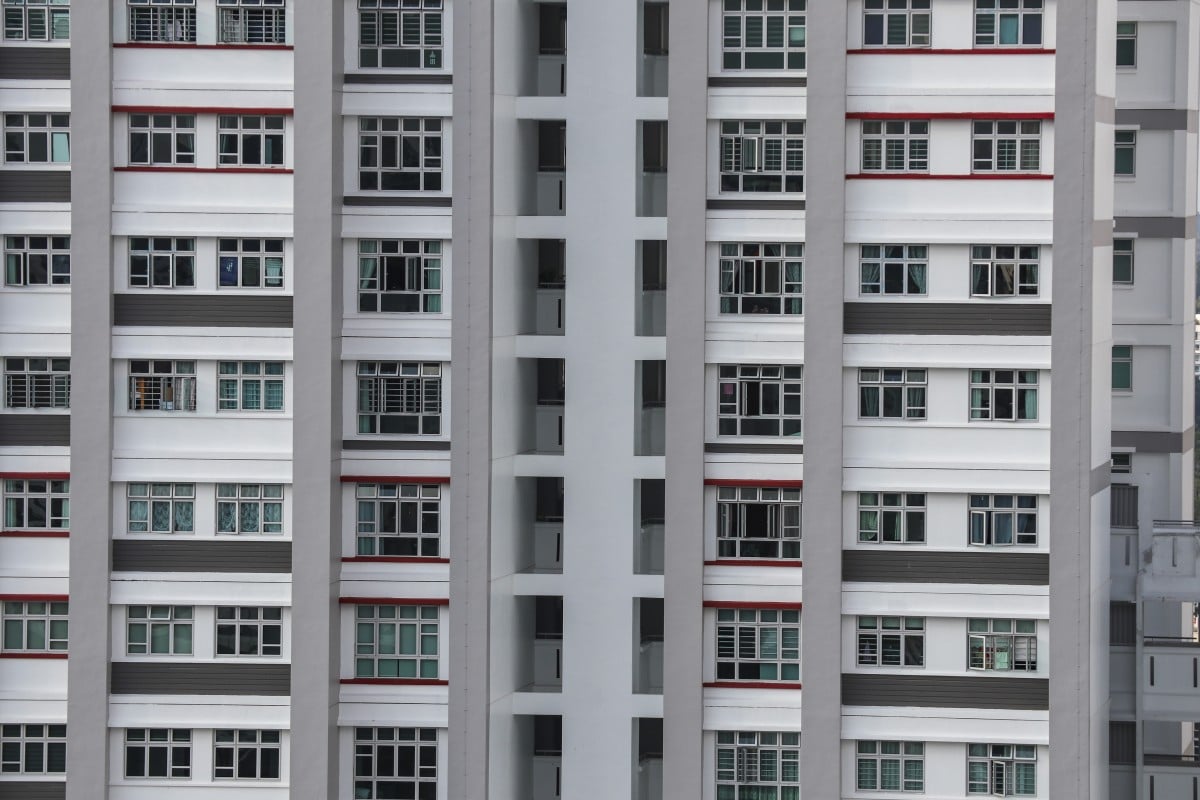
Public housing in Singapore by its Housing and Development Board. Photo: Roy Issa

Hongkongers have long looked at Singapore as a model for how to provide good quality public housing. The latest example was laid out by University of Hong Kong adjunct professor Tony Kwok in his piece for this newspaper, “How would Lee Kuan Yew have solved Hong Kong’s housing and health care problems?” published on April 17.

He argued Singapore’s solution had simply been land reclamation, but this is an oversimplification of the city state’s approach to its acute home shortage of the 1960s. The reasons behind Singapore’s successes have little to do with reclaimed land, and the conditions in Singapore when Lee was prime minister are vastly different from those in Hong Kong today.

Reclamation was never a key feature of Singapore’s public housing policies. Most of the country’s reclaimed land has been put to non-residential uses such as the airport, industrial parks, ports, the new financial district at Marina Bay, and recreation. Only a thin sliver in the southeast has been set aside for public housing. Most future residential land parcels are also not on reclaimed land.

Friday, April 12, 2019

China’s state pension fund to run dry by 2035 due to shrinking workforce: Study


The urban worker pension fund, the backbone of the country’s state pension system,
held a reserve of 4.8 trillion yuan (US$714 billion) at the end of 2018.
It is predicted to peak at 7 trillion yuan in 2027, then drop steadily to zero by 2035.
12 April, 2019

TODAY


HONG KONG — China’s main state pension fund will run out of money by 2035 due to a decline in the available work force, according to new research.

The urban worker pension fund, the backbone of the country’s state pension system, held a reserve of 4.8 trillion yuan (S$968 billion) at the end of 2018. It is predicted to peak at 7 trillion yuan in 2027, then drop steadily to zero by 2035, a report by the World Social Security Centre at the government-supported Chinese Academy of Social Sciences has said.

And the gap between contributions and outlays could be as high as 11 trillion yuan by 2050, with each retired citizen supported by only one worker, down from the current level of two, the government think tank calculated.

Tuesday, January 15, 2019

Majority of applications for CPF funds on medical grounds successful: MOM


ByFann Sim@Fann

CNA

15 Jan 2019 


SINGAPORE: In the last three years, about 65 per cent of applications to withdraw money from the Central Provident Fund (CPF) earlier due to medical reasons have been successful said Manpower Minister Josephine Teo in Parliament on Tuesday (Jan 15).

Under the Medical Grounds Scheme, CPF members can withdraw or start their payouts before the stipulated payout age of 65.

Eligibility criteria they have to meet under the scheme include being permanently incapacitated, terminally ill, or having a severely impaired life expectancy due to illness. Such applications have to be accompanied by the relevant doctors’ certification, the minister said.

Mrs Teo was responding to Member of Parliament for Nee Soon GRC Lee Bee Wah on the percentage of successful appeals for an earlier withdrawal of CPF payouts.

The remaining 35 per cent were not successful because applicants did not meet the eligibility conditions and were referred to help avenues for help, such as Workforce Singapore and the Social Services Office, Mrs Teo said.

Tuesday, August 28, 2018

About 6 in 10 withdraw CPF savings when they turn 55: CPF Board

By Jeremy Lee

28 August, 2018


SINGAPORE — About six in 10 members (58 per cent) aged between 55 and 70 have withdrawn cash from their Central Provident Fund (CPF) savings since turning 55. The median amount withdrawn was S$9,000, and the average amount was $33,000.

Releasing an analysis of CPF withdrawal trends on Tuesday (Aug 28), the CPF Board said the information was obtained from a Retirement and Health Study involving face-to-face interviews with 7,200 members aged between 55 and 70.

The survey was conducted to find out what CPF members did with their funds, if they cashed them out. Under existing rules, when CPF members turn 55, they may withdraw part of their CPF savings in a lump sum.

Sunday, June 3, 2018

HDB flats "lease decay" issue

The Big Read: No easy answers to HDB lease decay issue, but public mindset has to change first

By Wong Pei Ting


02 June, 2018

SINGAPORE — When the lease of his three-room flat in Lorong 4 Toa Payoh runs out in 2066, first aid and swimming coach Low Mong Seng, 34, expects the Government to give him “something in compensation”.

“Either another shelter over our heads, or a lower lump sum amount (compared to the value of the property) for us to get another flat to stay in,” said Mr Low, who inherited the unit from his mother who died in 1995.

But another homeowner, who gave her name only as Ms Kwok, has a different view.

There is “a misunderstanding (among the public) of what homeownership is”, she said.

“People think ‘ownership’ means a freehold ownership but if you buy a leasehold then obviously the limited lease is reflected,” added the 30-year-old lawyer. Three years ago, she bought a three-room flat in Tiong Bahru — completed in 1973 — with her husband.

Sunday, May 27, 2018

ElderShield to be renamed CareShield Life with higher, lifetime payouts from 2020

By Louisa Tang

27 May, 2018


SINGAPORE — The enhanced ElderShield insurance scheme will be renamed CareShield Life from 2020, and will dole out higher and lifetime payouts to severely disabled Singapore residents — up from a cap of six years.

Unlike the existing opt-out ElderShield scheme, enrollment in CareShield Life will be compulsory. The first cohort to be enrolled are citizens and permanent residents aged between 30 and 40 in 2020, with all subsequent cohorts automatically enrolled once they reach 30 years old.

Those born before 1980 can opt to join the scheme from 2021.

The Government, which on Sunday (May 27) accepted the committee's full set of recommendations, has pledged to help lower- to middle-income residents by providing them with means-tested premium subsidies of up to 30 per cent.

Tuesday, May 15, 2018

MP suggests changing valuation method for ageing flats to raise demand

By Chen Lin

15 May, 2018


SINGAPORE — With owners of older HDB flats worried about the value of their homes as their leases shorten, Ms Cheryl Chan, Member of Parliament for Fengshan constituency, proposed taking a “multi-prong” approach to help sellers and buyers by changing the valuation method for ageing units and extending the lease for flats in mature towns of selected precincts.

To further help Singaporeans put a roof over their heads, she also proposed reassessing the property loan structure and allowing selected older flats to be leased directly from the Housing and Development Board (HDB).

Sunday, August 27, 2017

Perils of owning ageing leasehold properties

By Cecilia Chow
The Edge Property
April 21, 2017

A week ago, Singapore permanent resident Ms Lew was just calculating the remaining lease on her 700 sq ft, three-room HDB flat in Marine Parade and wondering how much it could fetch in the resale market. “I’m just a couple of years from retirement,” she says. Lew’s flat, like the more than 7,000 in Marine Parade, was completed in 1975. According to HDB’s website, Marine Parade was the first housing estate to be built on reclaimed land. This means that the flats in Marine Parade have 57 years remaining on their 99-year leases.

Singaporean Ms Aw, who bought her 1,128 sq ft, five-room HDB flat in Marine Parade 17 years ago, says she now feels “a little unsettled”. Even though her flat is already fully paid for, the 56-year-old says, “My retirement is locked in this flat. If I want to make money from it, I will have to sell it and downgrade to a smaller BTO [built-to-order] flat so I won’t be saddled with a big home loan”.

The two HDB owners are representative of many others staying in ageing leasehold properties who became worried, following National Development Minister Lawrence Wong’s blog post on March 24. It was intended to caution buyers against paying high prices for older HDB flats on the assumption that their flats would automatically be eligible for the Selective En-bloc Redevelopment Scheme (SERS).

Wong wrote, “In fact, for the vast majority of HDB flats, the leases will eventually run out, and the flats will be returned to HDB, which will in turn have to surrender the land to the State.” He added, “As the leases run down, especially towards the tail-end, the flat prices will come down correspondingly.”

Tuesday, November 22, 2016

[The Angle] Ideas to Further Refine the CPF System

Jan 20, 2016
IPSC

By Christopher Gee

The CPF return formula has been “tweaked” significantly to improve the progressivity of the system in recent years with the addition of initial balance layers that attract higher rates of interest; most recently as high as 6% on balances up to $30,000 in the Retirement Account.

I’m not sure you can find a better return-risk trade-off out there anywhere in the private markets, and the return is structured to cater to the large majority of CPF members’ needs and risk profile; they should satisfy all but the most risk-hungry, most likely top quintile CPF members for whom their CPF payouts are likely to be a minor component of their overall retirement financial plans.

In some respects, the Government is best placed to absorb some investment risks that individuals find very difficult to mitigate, such as that of sequence risk or inflation risk.  Amongst the most persuasive arguments to further improve CPF returns would be to add some element of inflation protection, again perhaps structured to protect the most needy CPF members first.

Wednesday, September 14, 2016

Government to review CPF Investment Scheme: Tharman

By Nicole Tan

13 Sep 2016

ChannelNewsAsia

SINGAPORE: The Singapore Government will be reviewing the CPF Investment Scheme (CPFIS), said Deputy Prime Minister and Coordinating Minister for Economic and Social Policies Tharman Shanmugaratnam on Tuesday (Sep 13), adding that the scheme was "not fit for purpose".

Mr Tharman was speaking at the Economic Society of Singapore's dinner on Tuesday.

He said that over the last 10 years, more than 80 per cent of those who invested through the scheme would have been better off leaving their money in the CPF Ordinary Account.

The Ordinary Account provides returns of 2.5 per cent for amounts above S$20,000.

Forty-five per cent of investors made losses through the scheme, and Mr Tharman said the main reasons for underperformance were behavioural biases in investment as well as higher fees.

Monday, August 15, 2016

GIC sees lower returns, warns of tougher times

Rumi Hardasmalani

July 28, 2016


SINGAPORE — GIC warned that it could see low returns for up to 20 years partly because of an uncertain global economic and earnings environment, as the Republic’s sovereign wealth fund manager posted its weakest performance since 2013.

GIC, which manages well over US$100 billion (S$136 billion) in assets, produced a rolling annualised 20-year real rate of return — calculated after taking into account global inflation — of 4 per cent for the fiscal year ended March, down from 4.9 per cent previously.

In nominal US dollar terms, the return was 5.7 per cent over the same period, down from 6.1 per cent previously.


Friday, August 5, 2016

CPF review: 7 things to know about the proposed CPF Life Plan

AUG 3, 2016,

Rachel Au-Yong

SINGAPORE - The CPF Advisory Panel is proposing to introduce a new CPF Life Plan, one that will see rising levels of payments that will help keep pace with inflation.

The plan with escalating payouts starts with a lower monthly payout than under the current default option by about 20 per cent. But payments will increase by 2 per cent per year.

The two existing plans offer only fixed payouts till a member's death.

One is the default Standard plan, which offers higher monthly payouts, leaving less to beneficiaries after a member's death. The other is the Basic plan, which offers lower monthly payouts at a fixed rate, leaving more to beneficiaries after death.

The CPF Advisory Panel is proposing to introduce a new CPF Life Plan that will feature monthly payments that increase by 2 per cent every year.

‘More than one investment option needed’ to protect against inflation

TODAY

SIAU MING EN

AUGUST 5, 2016

SINGAPORE — The payouts that increase over time under a proposed Central Provident Fund (CPF) Life annuity scheme are aimed at protecting members’ savings against inflation to some degree, but if members want to grow their retirement nest egg for an even stronger buffer against such cost of living hikes, they will need to turn to other options, said experts.

An advisory panel looking into enhancements to the CPF system had recommended a new CPF Life option that would see “escalating” payouts at a fixed rate of 2 per cent every year for the rest of a CPF member’s life.

This is unlike the two existing plans — the CPF Life Standard and the CPF Life Basic — that give flat payouts. But the starting payouts under this new plan would also be about 20 per cent lower than the Standard plan.

Professor Euston Quah, Nanyang Technological University’s economics department head, told TODAY that “nothing really is guaranteed against inflation”.

Wednesday, January 20, 2016

CPF savings and the elusive dream of high returns, low risk

Economic Affairs

Aaron Low
Deputy Business Editor

Jan 20 2016

The question of how returns on CPF savings should be calculated has resurfaced after an economics don's surprising call for change.

When shopping, many people open their wallets on one simple principle - "cheap and good".

In the world of finance, an equivalent of the maxim would probably be "high and low" - high returns on low risk. The problem is there are almost no investments that can offer a high return on low risk, without a hidden catch. High returns must necessarily come with high risks. That is a universal law of finance.

But last week, a National University of Singapore economics don offered a suggestion that could result in returns on the Central Provident Fund becoming "high and low".

Associate Professor Chia Ngee Choon said at a symposium on pensions that the formula used to tabulate the returns on the CPF Ordinary Account (OA) could be tweaked such that interest rates on the funds can be enhanced while still bearing zero risk for the member.