Showing posts with label Health/Medical. Show all posts

Wednesday, March 11, 2026

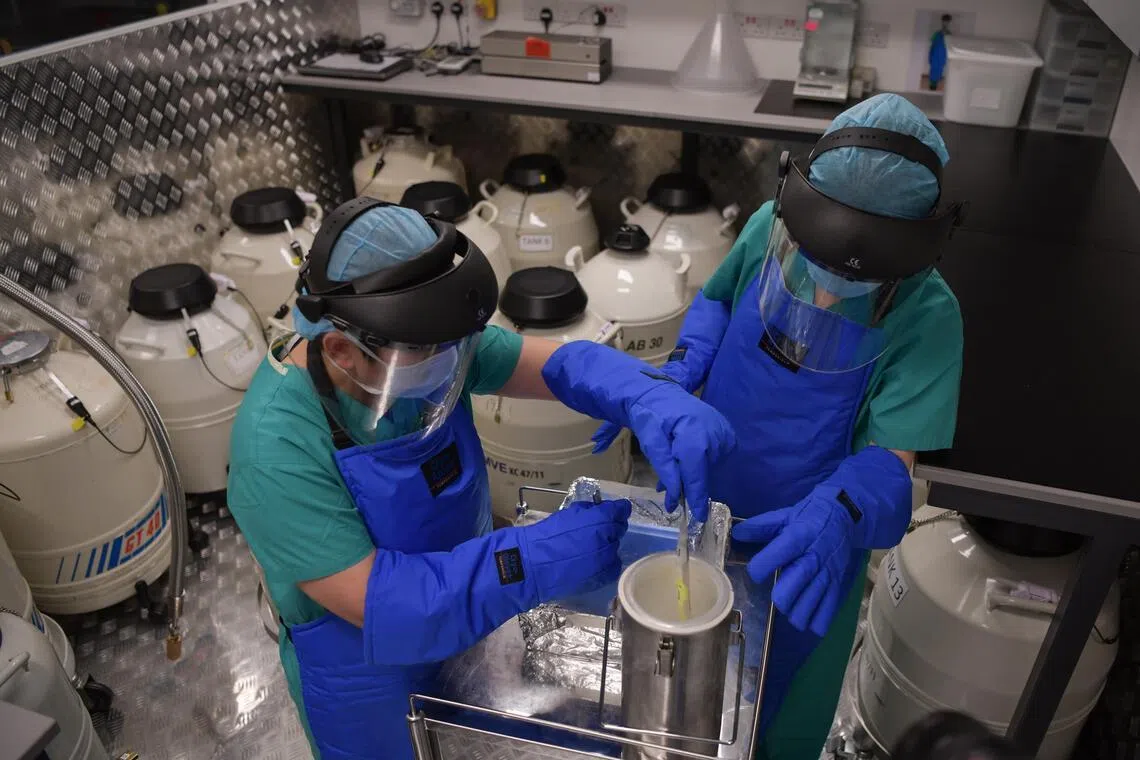
Over 800 women in S’pore have frozen their eggs for non-medical reasons since 2023

In Singapore, women aged between 21 and 37 – regardless of their marital status – are allowed to undergo the procedure,
which preserves their fertility.

Summary
  • Since Singapore allowed elective egg freezing in June 2023, over 800 women have undergone the procedure by end of December 2025, according to Health Minister Ong Ye Kung.
  • 57% of women freezing their eggs are 35 years of age and older, 39% are 30-34, and 4% are under 30. The procedure allows women to preserve fertility as egg quality declines with age.
  • Elective egg freezing costs about $10,000 per cycle in public hospitals, is not subsidised, and is available to women aged 21-37.
Feb 04, 2026

Tuesday, March 10, 2026

Is Singapore really a Blue Zone? Experts weigh in on how healthy Singaporeans are

A Blue Zone is a place where people live longer and enjoy better health well into old age. We look at whether and how Singapore steps up to this latest accolade. 

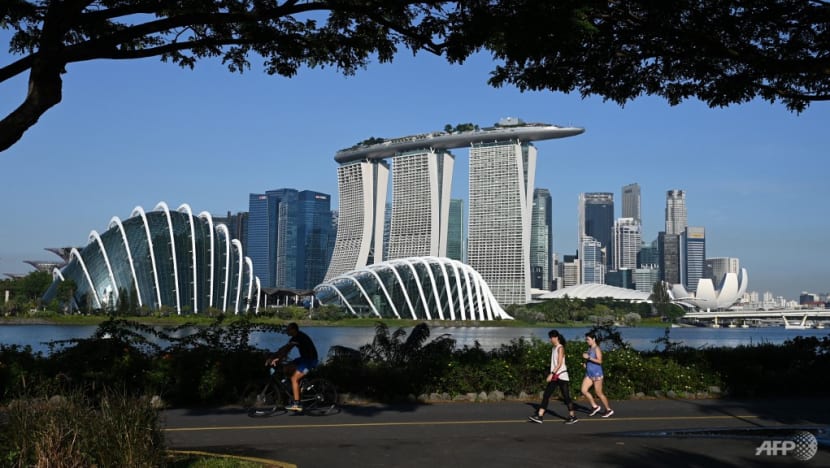
People walk and cycle through the Bay East Garden in Singapore on Aug 9, 2021. (File photo: AFP/Roslan Rahman)

Singapore was recently named a Blue Zone 2.0, where people live longer and lead healthier lives. But unlike other Blue Zones where traditional ways of life have naturally led people to longevity, it is an “engineered” Blue Zone

Health Minister Ong Ye Kung has said that the country should strive to be a Blue Zone 3.0
Health and longevity experts weigh in on what has worked so far and how Singaporeans can lead healthier lives


Chew Hui Min

17 Oct 2023 

Saturday, August 2, 2025

Contested police statements by doctor in fake COVID-19 jab case can be used by prosecution, court rules

The six statements by Dr Jipson Quah implicate his co-accused Iris Koh Hsiao Pei and identify patients who allegedly used saline instead of COVID-19 vaccines.

(From left) Dr Jipson Quah, Iris Koh Hsiao Pei and Thomas Chua Cheng Soon at the State Courts on Jul 28, 2025.
(Photos: CNA/Syamil Sapari)


Lydia Lam

28 Jul 2025 

SINGAPORE: A court ruled on Monday (Jul 28) that contested police statements by a doctor in a case of fake COVID-19 vaccines are admissible and can be used by the prosecution.

The six statements, made in January 2022 by Dr Jipson Quah, implicate his co-accused Iris Koh Hsiao Pei and identify patients who allegedly used saline instead of COVID-19 vaccines.

Dr Quah, 37, is on trial along with his clinic assistant, Thomas Chua Cheng Soon, 43, and Koh, 49, who founded Healing the Divide, a group that is known to be against COVID-19 vaccination.

Quah is contesting 17 charges of dishonestly making false representations to the Health Promotion Board that his patients had received the COVID-19 vaccines, when they had not.

He is accused of conspiring with his patients, Koh and Chua, in various permutations.

However, soon after the trial began, Dr Quah's lawyer Adrian Wee objected to the six contested police statements being used.

In the six contested statements, Dr Quah identified 15 to 17 patients who had taken saline shots instead of COVID-19 vaccines, in order to be reflected as vaccinated in the National Immunisation Registry.

He also claimed that Koh was the "complete mastermind" and that most of the patients were directed to him by Koh.

Dr Quah alleged that the statements were given under two inducements while he was remanded for investigations.

First, that he could be granted bail if he helped the police identify the names of patients who received fake vaccinations.

Second, that he could be given bail if he helped the police to implicate his co-accused Koh in his statements.

This issue was looked at in an ancillary hearing – a separate hearing to decide on this specific issue – over several days.

On Monday, District Judge Paul Quan agreed with the prosecution that the statements were admissible and that no threat, inducement or promise was made by the police officers to Dr Quah.

Judge Quan said the statements were given voluntarily, and that Dr Quah had continued to implicate Koh even after being bailed out, "indeed doubling down".

The main trial will resume in the afternoon, with one of the investigation officers recalled to the stand.

Dr Quah is represented by Mr Adrian Wee, while Mr Wee Pan Lee defends Koh. Chua is currently unrepresented but said he is in talks to get a lawyer on board.

Source: CNA/ll(mi)
Sunday, June 30, 2024

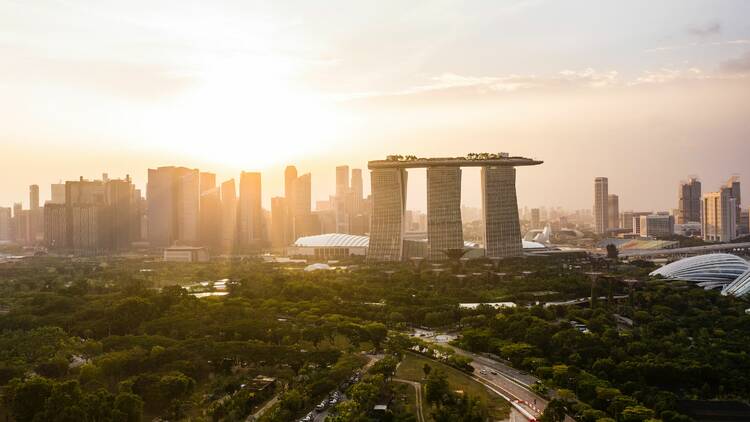
Singapore No. 1 again in world ranking on government effectiveness


Singapore edged out Denmark, Finland, Switzerland and Norway, which were ranked second to fifth, respectively. ST PHOTO: GIN TAY
Jean Iau

MAY 15, 2024


SINGAPORE Singapore has topped a ranking that tracks the effectiveness of more than 100 governments around the world for the second consecutive year.

It edged out Denmark, Finland, Switzerland and Norway – which ranked second to fifth, respectively – in the fourth edition of the Chandler Good Government Index (CGGI) released on May 15. South Korea (20th) is the only other Asian country in the top 20.

Monday, March 25, 2024

Singapore takes the title of being the world’s 6th Blue Zone

Photograph: Kirill Petropavlov/Unsplash

We are supposedly going to live longer

Written by Mingli Seet

Wednesday 20 September 2023

Singapore has just been named the 6th Blue Zone in the world. This means that Singapore is regarded as one of the cities with the highest life expectancy across the globe.

Thursday, February 23, 2023

Fat, Sugar, Salt … You’ve Been Thinking About Food All Wrong

Scientists are asking tough questions about the health effects of ultra-processed diets. The answers are complicated—and surprising.


IN THE LATE 2000s, Carlos Monteiro noticed something strange about the food that Brazilian people were eating. The nutritionist had been poring over three decades’ worth of data from surveys that asked grocery shoppers to note down every item they bought. In more recent surveys, Monteiro noticed, Brazilians were buying way less oil, sugar, and salt than they had in the past. Despite this, people were piling on the pounds. Between 1975 and 2009 the proportion of Brazilian adults who were overweight or obese more than doubled.

This contradiction troubled Monteiro. If people were buying less fat and sugar, why were they getting bigger? The answer was right there in the data. Brazilians hadn’t really cut down on fat, salt, and sugar—they were just consuming these nutrients in an entirely new form. People were swapping traditional foods—rice, beans, and vegetables—for prepackaged bread, sweets, sausages, and other snacks. The share of biscuits and soft drinks in Brazilians’ shopping baskets had tripled and quintupled, respectively, since the first household survey in 1974. The change was noticeable everywhere. When Monteiro first qualified as a doctor in 1972, he’d worried that Brazilians weren’t getting enough to eat. By the late 2000s, his country was suffering with the exact opposite problem.

Saturday, January 28, 2023

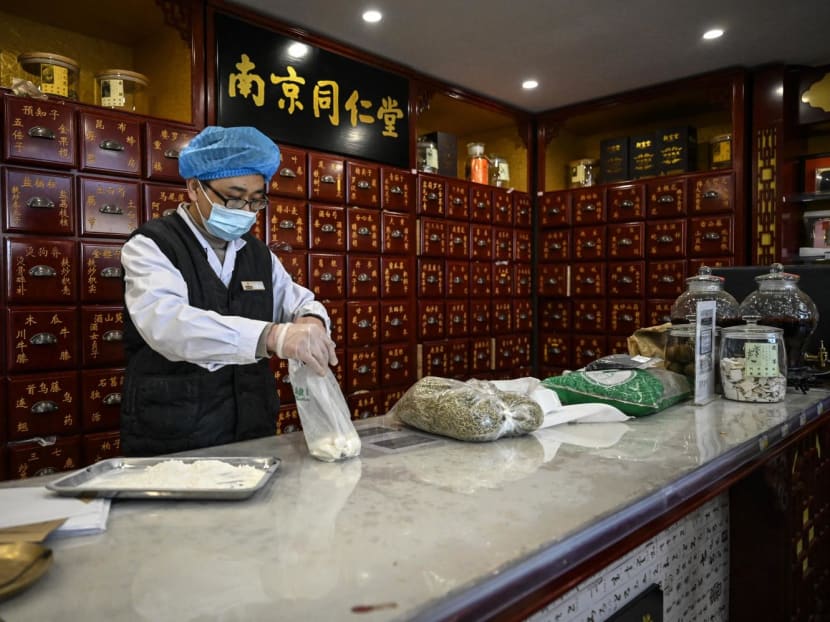
Chinese turn to traditional remedies to fight Covid-19

An employee working at a traditional Chinese medicine pharmacy in Beijing. AFP

January 24, 2023


BEIJING — As Covid-19 rips through China's vast population, making millions sick and fuelling a shortage of drugs, many are turning to old-school traditional medicines to battle the aches and pains of the virus.

President Xi Jinping has promoted traditional Chinese medicine (TCM) since the start of the pandemic, while health officials have hailed its "important role" in fighting the coronavirus.

Encompassing a range of treatments from herbal remedies and massages to acupuncture and diets, TCM has been used for thousands of years to treat all manner of ailments.

Critics say it is pseudoscientific and ineffective in treating actual illness, and there is little peer-reviewed data to back claims of its efficacy.

But millions in China use it, often in conjunction with modern medicine to alleviate symptoms

Thursday, September 8, 2022

Commentary: Ignoring China’s disastrous ‘three Ds’ could be a global risk

Disease, drought and debt will have worldwide consequences, says the Financial Times' Megan Greene.
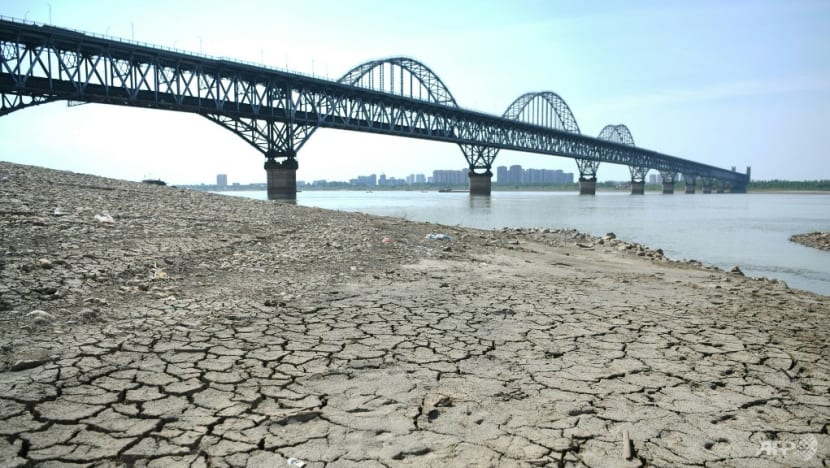
A section of a parched riverbed is seen along the Yangtze River in Jiujiang in China's central Jiangxi province
on Aug 19, 2022. (Photo: AFP/STR)

Megan Greene

08 Sep 2022 


PROVIDENCE, Rhode Island: In a world beset by multiple crises, officials may be looking past the biggest threat of all: China.

The talk among central bankers at the Jackson Hole Federal Reserve Conference focused on inflation and rising interest rates. Absent was any mention that just 10 days beforehand, the People’s Bank of China did exactly the opposite, unexpectedly cutting its key interest rate.

China is beset by three distressing Ds: Debt, disease and drought. They belie a slowdown that is not raising sufficient alarm bells among investors and policymakers. China remains heavily integrated into the global supply chain and is a potential driver of global demand as one of the biggest markets for foreign goods and services.

Wednesday, July 27, 2022

Pair of new studies point to natural Covid origin


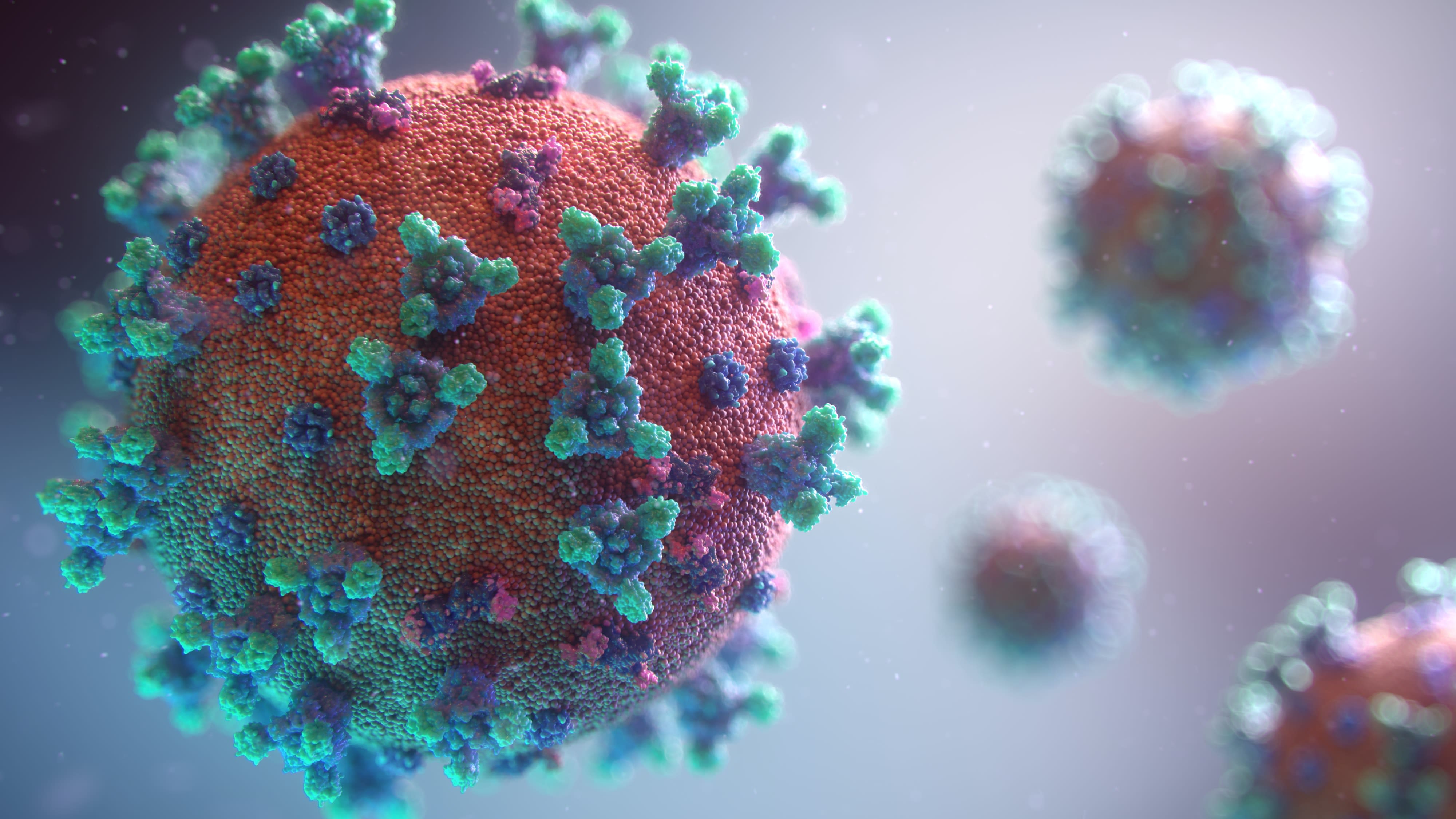
Fusion Medical Animation/Unsplash

The researchers concluded it was unlikely that there was human circulation prior to November 2019.

July 27, 2022

WASHINGTON — An animal market in China's Wuhan really was the epicentre of the Covid pandemic, according to a pair of new studies in the journal Science published Tuesday (July 26) that claimed to have tipped the balance in the debate about the virus' origins.

Answering the question of whether the disease spilled over naturally from animals to humans, or was the result of a lab accident, is viewed as vital to averting the next pandemic and saving millions of lives.

The first paper analysed the geographic pattern of Covid cases in the outbreak's first month, December 2019, showing the first cases were tightly clustered around the Huanan Market.

The second examined genomic data from the earliest cases to study the virus' early evolution, concluding it was unlikely the coronavirus circulated widely in humans prior to November 2019.

Both were previously posted as "preprints" but have now been vetted by scientific peer review and appear in a prestigious journal.

Friday, July 8, 2022

Commentary: Overturning of Roe v Wade abortion decision has upended the US midterm elections

With the US Supreme Court overturning the right to abortion, will Roe v Wade unify Democrats or rally Republicans in the November midterm elections? Yale-NUS College’s Trisha Craig says domestic politics could affect America’s role as global leader in uncertain times.
A celebration outside the Supreme Court, Friday, June 24, 2022, in Washington. after its decision
to overturn the court's landmark abortion cases. (AP Photo/Steve Helber)

Trisha Craig

08 Jul 2022


SINGAPORE: Abortion in the United States has been a highly partisan issue for decades. Politically, it is often summed up by where one stands on the landmark 1973 Roe v Wade decision that guaranteed a constitutional right to abortion.

So when the US Supreme Court – with a conservative majority of judges - overturned Roe v Wade on Jun 24 after a draft decision was leaked in May, it was expected but no less stunning.

Saturday, April 16, 2022

Commentary: With egg freezing, Singapore women aren’t forced to sacrifice career and self to become mothers

The ageing population and total fertility rate have long been topics of national discussion. With elective egg freezing set to be allowed, the Institute of Policy Studies’ Kalpana Vignehsa discusses what this means for Singapore women.

With egg freezing, Singapore women aren’t forced to sacrifice career and self to become mothers. (Illustration: Rafa Estrada)

Kalpana Vignehsa

15 Apr 2022 


SINGAPORE: If things go as we hope, my family will soon welcome our much-awaited second child. Getting here hasn’t been smooth – obstetricians consider this a “geriatric pregnancy” due to my “advanced maternal age”.

Still, I count myself lucky. Last year, I had a heartbreaking miscarriage late in my first trimester, a few months before this pregnancy. Two close friends had stillbirths and others struggled through in-vitro fertilisation (IVF). 

Saturday, April 2, 2022

The coronavirus is still mutating. But will that matter? ‘We need to keep the respect for this virus.’

A drop in infections offers hope that the end of the pandemic is in sight. The virus may have something to say about that.


By Joel Achenbach, Ben Guarino and Aaron Steckelberg

October 18, 2021 

[Note the date. As we open up, we need to keep an eye on the ball, and be prepared to respond again, if necessary. But let's all hope for the best. There's an overseas vacation calling to me!]

Coronavirus infections are down across much of the United States. Hospitalizations, too. Deaths are finally dropping from their dismaying late-summer peak of more than 2,000 a day. Most people are vaccinated, and booster shots are gaining approval. Officials in the United States are hoping the worst of the pandemic is over.

But so much depends on the virus itself. It is not static. It mutates. Delta, the variant of SARS-CoV-2 now causing virtually all infections in the United States, is more than twice as transmissible as the virus that emerged in Wuhan, China. The possibility of further significant mutations in the virus looms like a giant asterisk over any discussion of the trajectory of the pandemic.

In recent weeks, scientists who closely monitor the virus have said it still appears to have plenty of room to evolve.

Tuesday, March 29, 2022

Research raises fresh questions on adverse impact of ‘long Covid’. Here’s why a vaccine-plus approach is needed


BY ADAM CLARIDGE-CHANG

March 28, 2022


A mild infection changed my life.

In the final year of high school, shortly before my final exams, for around six weeks, I caught Epstein-Barr virus (EBV), and developed mononucleosis or glandular fever.

The months of fatigue, a hallmark of EBV infections, took their toll on my exam performance, and I missed admission to law school by a single point.

While the effect on my vocation was arguably positive, mild EBV infections can, in some cases, have a devastating long-term impact on health.

EBV was recently discovered to be the leading cause of multiple sclerosis, a debilitating disease of the nervous system with symptoms from incontinence to depression to blindness.

Sunday, March 27, 2022

Commentary: Countries that focus the most on happiness may make people feel worse

Measuring a country’s subjective levels of happiness has become something of an international sport, say two researchers, but focusing on happiness may backfire, say two researchers.

A woman is seen smiling. (Photo: Unsplash/Constantinos Panagopoulos)

Brock Bastian

Egon Dejonckheere

20 Mar 2022 


MELBOURNE: Have you looked at the international rankings of the world’s happiest countries lately?

Measuring a country’s subjective levels of happiness has become something of an international sport. People look with interest (and a little jealousy) to nations such as Denmark, which consistently tops the world happiness rankings.

It has also led to Danish practices such as the “hygge” lifestyle gaining popularity elsewhere. If only we could add more cosiness to our lives, perhaps we would be as happy as the Danish!

Friday, March 25, 2022

How countries can respond to a perfect long storm

In a speech at the Investment Management Association of Singapore (IMAS)-Bloomberg Investment Conference on Wednesday (March 9), Senior Minister Tharman Shanmugaratnam spoke about how countries can navigate the current problems and “five fragilities” the world faces. Below is a transcript of his speech.


BY THARMAN SHANMUGARATNAM

March 9, 2022

I am very happy to join you this morning. It is an important conference, both because it’s IMAS’ 25th anniversary, and importantly because of the theme that you're focusing on — investing for a green future.

Let me put this in the context of the era of profound uncertainty and fragility that the world has entered.

Investing for the future has become a much more complex game. It's more complex than it was pre-pandemic. It's also more complex than it was two weeks ago.

Sunday, February 20, 2022

Commentary: Just how concerned should we be about COVID-19 reinfections?

Reports of COVID-19 reinfection have become common since the Omicron variant emerged, but many cases are still likely to go undiagnosed, says a medical professor.

Paul Hunter

20 Feb 2022 


NORWICH, United Kingdom: We’ve known since early on in the pandemic that COVID-19 reinfections could occur. One of the first reinfections reported was in a 33-year-old man from Hong Kong. His initial infection was diagnosed on Mar 26, 2020, with his second infection, with a genetically distinct virus, being diagnosed 142 days later.

Since then, reports of reinfection have become common, especially since the emergence of the Omicron variant. Early research from South Africa (awaiting review by other scientists) suggests that the risk of reinfection increased quickly and substantially after the variant arrived.

So why are reinfections increasing? The simple answer is because our immunity is often no longer sufficient to prevent an infection.

Sunday, February 13, 2022

Migrant worker’s tale of inequality grips China, then is erased


Jialun Deng/The New York Times

A migrant worker, who revealed a parallel universe to well-off Chinese, became a symbol of inequality that the Chinese government had to erase.

February 13, 2022


HONG KONG — He visited 28 places in the first 18 days of 2022, including a puppet theater, a few luxury residential compounds and a shopping mall in the heart of China’s equivalent of Silicon Valley.

He didn’t go to any of these places for fun. He was often there in the wee hours when they were deserted, to unload concrete and sand from trucks that weren’t allowed in the city until after midnight. He would be gone before day broke.

The migrant worker, surnamed “Yue,” toiled in obscurity until he tested positive for Covid-19 and authorities released the extensive details of his movements. After that, he became known as the hardest working person in China.

Wednesday, February 9, 2022

Why are young children contracting COVID-19 at such a high rate and what can parents do?

Jalelah Abu Baker

09 Feb 2022 


SINGAPORE: On Tuesday (Feb 8), Health Minister Ong Ye Kung revealed that among all age groups in Singapore, children are contracting COVID-19 at the highest rate.

The infection rate for children between the ages of five and 11 is about 67 per 100,000, followed by those aged 12 to 19, with an infection rate of about 55 per 100,000.

The Omicron variant is more likely to infect children than the Delta variant, added Mr Ong. To this end, public and private hospitals are setting up more beds for children, he said, and COVID-19 treatment facilities are also converting more beds for children and their caregivers.

But admitting children to hospitals and facilities is often “precautionary” in nature, he added, with short stays of about two to three days.

CNA spoke to health experts to find out why this age group has the highest infection rate and what parents should do.

Saturday, February 5, 2022

Explainer: Why EU nations are lifting Covid-19 restrictions despite high case numbers and should Singapore do the same?

Several European Union countries are doing away with infection controls for Covid-19
Denmark has had none since Feb 1 and France said on Feb 2 that it will be lifing most restrictions
This is even though they have a high number of Covid-19 cases
The World Health Organization is, however, cautioning against relaxing curbs too quickly
Infectious diseases experts in Singapore said that the Government here may consider easing some restrictions


BY JANICE LIM

February 4, 2022


SINGAPORE — Several European Union (EU) countries are lifting most, if not, all of their Covid-19 restrictions, despite recording high number of Covid-19 cases.

Denmark removed all restrictions, including mask-wearing and Covid-19 vaccination passes, on Tuesday (Feb 1) — the first EU country to do so. 

Saturday, January 29, 2022

Denialism: How Irrational Thinking Hinders Scientific Progress

[From Sunday Times Jan 10, 2010]

Ex-Libris

Denialism: How Irrational Thinking Hinders Scientific Progress, Harms the Planet, and Threatens Our Lives Michael Specter Penguin Press (2009)

A science and public-health writer for the New Yorker, Michael Specter tackles the disturbing trend of the 'denial of scientific advancement' among some Americans: perceiving science as harmful and turning to natural remedies as alternatives.

Excerpt
There's a lot to be said for buying locally grown produce: it can help sustain community farmers and focus attention on the quality of the environment. It tastes better, too.
But is organic food healthier for you than food that contains genetically engineered ingredients or that has been harvested by robot-guided combines instead of human hands? Is it more likely to sustain the planet or the majority of its inhabitants? And are organic fertilisers and pesticides clearly a more virtuous and earth-friendly choice for the consumer than those made of synthetic chemicals?
There are no short answers to those questions (at least none that are true). But there has certainly never been a study that would suggest the answer to any of them is a simple yes. There is no evidence, for example, that a single person has died or become seriously ill as a result of the accumulated residue of pesticides in their food.
The same cannot be said of the toxins contained in 'natural' food - as any number of salmonella outbreaks or raw milk poisonings in the United States continually demonstrate. In 2009, after salmonella and listeria contamination sent dozens of people to hospitals in six states, the Food and Drug Administration even warned Americans to avoid raw alfalfa sprouts - perhaps the signature food of a healthy, organic lifestyle.

Extracted by Chong Thong Yang from the National Library Board.
The book is available at NLB's public libraries. Call No.: English 306.45 SPE
------

Organic food just means that there are no inorganic (and thus artificial) fertilisers and pesticdes used to grow the food. Without pesticides to protect the fruit, pests may invade the fruit, so that organic fruit juice may just contain the ground up remains of an insect or other pests. But guess what? Those things are organic! So no false advertising there when they tell you the juice is 100% organic. Me, I'd prefer my juice to be 100% fruit.