Showing posts with label Singapore Democracy. Show all posts
Showing posts with label Singapore Democracy. Show all posts
Monday, April 15, 2024

Saturday, April 22, 2023
Preparations for Singapore's leadership transition going 'as well as they can': Shanmugam
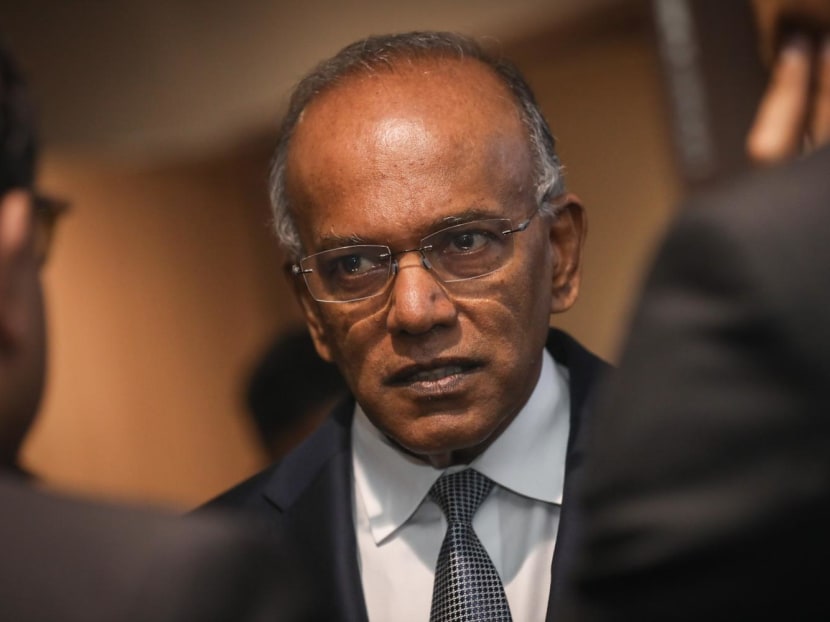 |
| The fourth-generation leadership is "doing well", Mr K Shanmugam said when asked for his assessment on how the new team is making their mark. TODAY file photo |
- In an interview with the South China Morning Post, Law and Home Affairs Minister Shanmugam spoke about the training that Singapore's leaders go through as they rise up the ranks
- He noted, for example, how Singapore's fourth generation of political leaders have gained valuable experience through the Covid-19 crisis and current housing issues
- This is different from the process in many other countries, he said, where people do not need training before becoming prime minister
- Mr Shanmugam also touched on geopolitics, including the tensions between the United States and China, and the Russia-Ukraine war
Wednesday, June 29, 2022
BBC asked Shanmugam about S'pore's 'social controls', 'draconian' drug laws and Section 377A. Here's how he responded
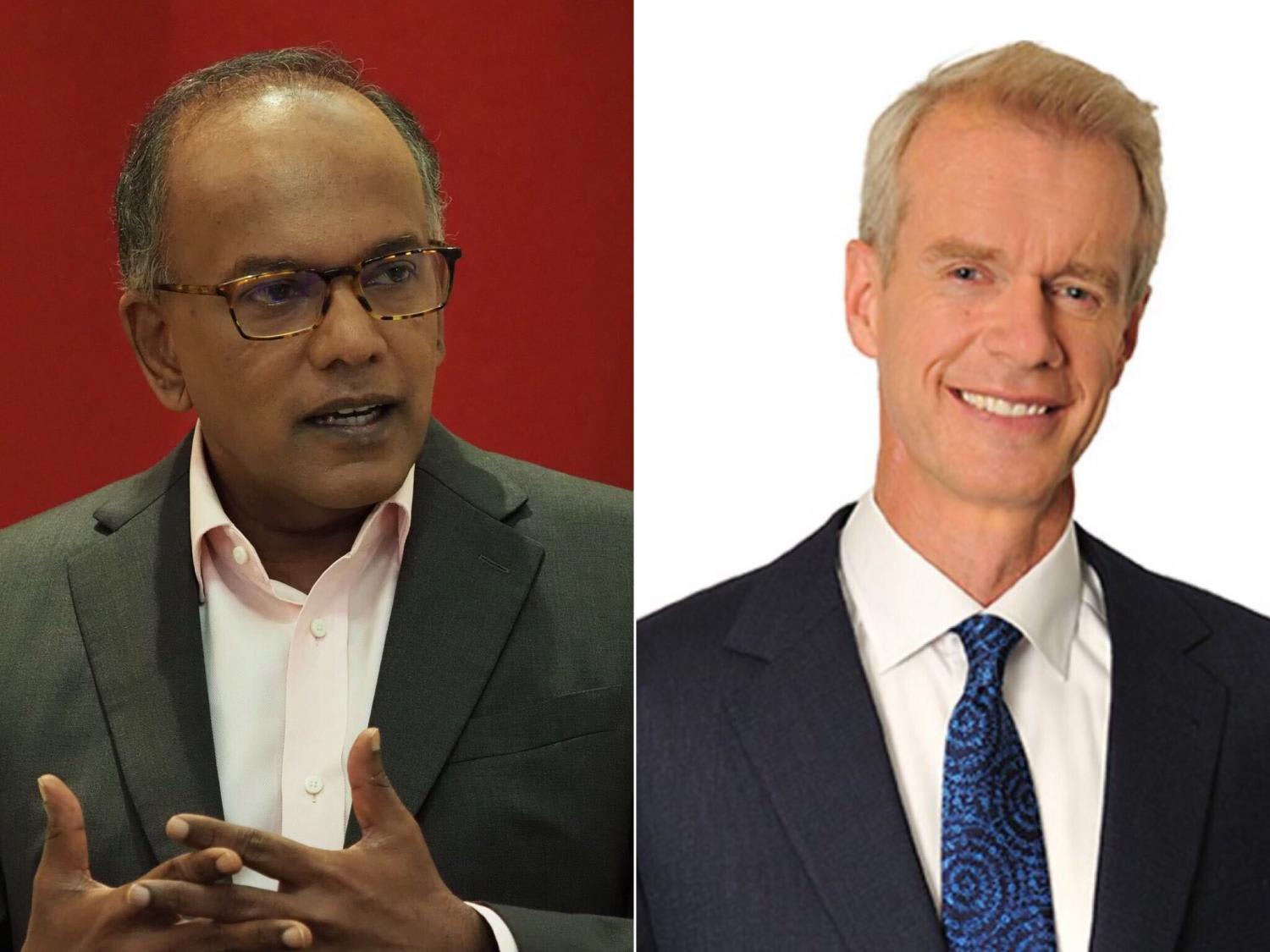 |
| Law and Home Affairs Minister K Shanmugam (left) was a guest on BBC journalist Stephen Sackur's podcast HardTalk. |
- Law and Home Affairs Minister K Shanmugam was a guest on the BBC's HardTalk programme, hosted by British journalist Stephen Sackur
- Mr Sackur questioned the minister on Singapore's "social controls" and controversial laws such as the death penalty
- Refuting facts presented by the journalist at several points, Mr Shanmugam set out why the Republic takes a tough stance on drugs
- He also explained Singapore's approach on Section 377A of the Penal Code, which criminalises gay sex
Wednesday, October 6, 2021
Parliament repeals Sedition Act, amends Penal Code and Criminal Procedure Code to cover relevant aspects
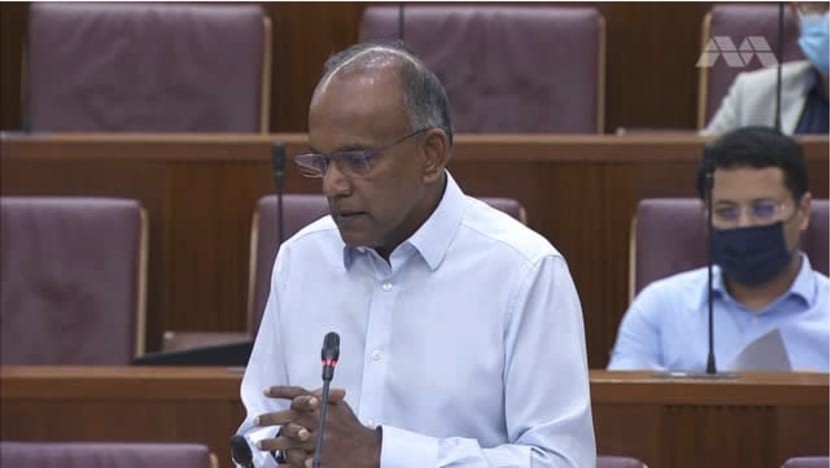 |
| Minister for Law and Home Affairs K Shanmugam in Parliament on Oct 5, 2021. |
Cindy Co
05 Oct 2021
SINGAPORE: Parliament voted to repeal the Sedition Act on Tuesday (Oct 5), while amending the Penal Code and Criminal Procedure Code to cover aspects of the Act that “continue to be relevant”.
The Sedition Act has been in existence since 1938, and criminalises conduct with seditious tendencies including promoting disaffection against the Government and feelings of ill-will and hostility between different races or classes.
Some aspects of the Sedition Act are “no longer relevant and have not been relevant for a long time”, Law Minister K Shanmugam told the House on Tuesday.
“For instance, the excitement of disaffection against the Government shouldn’t be criminalised. I think if it is, a lot of people, including many in this house, would be considered criminals.
“But it hasn’t been done away with sooner, because some of the other provisions were relevant,” said Mr Shanmugam, who is also Minister for Home Affairs.
Sunday, August 8, 2021
American Prof: SGs should think again when they complain, given that SG a “pretty good place to live”
03/08/2021
In an opinion piece published by the Straits Times on Sat, American Prof Peter Coclanis wrote that Singaporeans should think again when they complain, given that Singapore is a “pretty good place to live”, all things considered (‘Singaporeans, you think you’ve got problems? Think again‘, 31 Jul).
Prof Coclanis is Albert R. Newsome Distinguished Professor of History and director of the Global Research Institute at the University of North Carolina-Chapel Hill. He has lived and taught in Singapore, and often visits Singapore.
“It doesn’t take a visitor long to appreciate the fact that Singaporeans are perhaps most comfortable while complaining and, as a result, have developed the verbal remonstrance into something akin to an art form – or national sport,” Prof Coclanis pointed out.
In an opinion piece published by the Straits Times on Sat, American Prof Peter Coclanis wrote that Singaporeans should think again when they complain, given that Singapore is a “pretty good place to live”, all things considered (‘Singaporeans, you think you’ve got problems? Think again‘, 31 Jul).
Prof Coclanis is Albert R. Newsome Distinguished Professor of History and director of the Global Research Institute at the University of North Carolina-Chapel Hill. He has lived and taught in Singapore, and often visits Singapore.
“It doesn’t take a visitor long to appreciate the fact that Singaporeans are perhaps most comfortable while complaining and, as a result, have developed the verbal remonstrance into something akin to an art form – or national sport,” Prof Coclanis pointed out.
Sunday, July 4, 2021
Most S'poreans say elections are fair, offer ‘genuine choice’ but 1 in 4 feels opposition candidates ‘prevented from running’: IPS report
By NG JUN SEN
JULY 02, 2021
A survey found that Singapore had the second-highest proportion of respondents who believe that genuine choices are offered to voters in elections, behind Taiwan.
- A 2020 global survey that polled more than 2,000 Singapore respondents was analysed by IPS
- It found that Singaporeans were among the most political apathetic and least politically active in the world
- Most people said they had some, though not much, power to effect changes on government decisions or on politics
- Most said elections are fair and viewed treatment of voters positively
- Despite political apathy, Singaporeans do take part politically by signing petitions, donating to groups
SINGAPORE — Most people in Singapore are likely to believe that national elections are fair, that they have some say in what the Government does, and that they are given a genuine choice in the polls, findings by the Institute of Policy Studies (IPS) showed.
Saturday, May 8, 2021
‘Hiccup’ in political transition: ESM Goh commends DPM Heng’s ‘selflessness’ in stepping aside as 4G leader
By Chew Hui Min
07 May 2021
SINGAPORE: Emeritus Senior Minister Goh Chok Tong said on Friday (May 7) that he commends Deputy Prime Minister Heng Swee Keat for his “self-sacrifice” in stepping aside as leader of the 4G or fourth-generation leadership team.
At the launch of a second volume of his biography titled Standing Tall, Mr Goh said that there has been a “hiccup” in the political transition in Singapore but that it was “part of the process”.
“There were also hiccups before the Old Guard passed on the baton to the 2G. I recounted them in my first volume, Tall Order,” said the former Prime Minister.
“I commend DPM Heng Swee Keat for his self-sacrifice in stepping aside as leader of the 4G. It takes courage and selflessness to do this when one is only a step away from being prime minister.
“He has put the interests of Singapore first, like a good leader should.”
SINGAPORE: Emeritus Senior Minister Goh Chok Tong said on Friday (May 7) that he commends Deputy Prime Minister Heng Swee Keat for his “self-sacrifice” in stepping aside as leader of the 4G or fourth-generation leadership team.
At the launch of a second volume of his biography titled Standing Tall, Mr Goh said that there has been a “hiccup” in the political transition in Singapore but that it was “part of the process”.
“There were also hiccups before the Old Guard passed on the baton to the 2G. I recounted them in my first volume, Tall Order,” said the former Prime Minister.
“I commend DPM Heng Swee Keat for his self-sacrifice in stepping aside as leader of the 4G. It takes courage and selflessness to do this when one is only a step away from being prime minister.
“He has put the interests of Singapore first, like a good leader should.”
Tuesday, August 4, 2020
GE2020: Middle-aged voters, not youths, accounted for national vote swing against PAP, says Lawrence Wong
By NG JUN SEN
19 July, 2020
SINGAPORE — Suggestions that younger voters across the board had abandoned the People’s Action Party (PAP) in the recent General Election (GE) are untrue, PAP’s Lawrence Wong said on Saturday (July 18).
A preliminary review on the party’s performance has shown that the more likely swing came from “sandwiched” middle-class voters who have been affected by the economic effects of the Covid-19 pandemic, he added.
Swing votes also came from those who were swayed by the opposition’s messaging that there was a real threat of an opposition wipeout in the election.
19 July, 2020
- Ruling party lost votes from middle-aged voters in the sandwich class
- PAP did not do well in its digital campaign despite putting out a lot of content
- Party will review its style, conduct of campaign including how it goes about highlighting falsehoods
SINGAPORE — Suggestions that younger voters across the board had abandoned the People’s Action Party (PAP) in the recent General Election (GE) are untrue, PAP’s Lawrence Wong said on Saturday (July 18).
A preliminary review on the party’s performance has shown that the more likely swing came from “sandwiched” middle-class voters who have been affected by the economic effects of the Covid-19 pandemic, he added.
Swing votes also came from those who were swayed by the opposition’s messaging that there was a real threat of an opposition wipeout in the election.
Friday, July 24, 2020
GE2020 commentary: Assessing the voters’ message to PAP (and other parties)
By Eugene K B Tan
14 July, 2020
Despite the “crisis of a generation”, the 2020 general election results point to a considered flight from the status quo, rather than a flight to safety.
Singaporean voters, through their 2.54 million ballots cast, sent a nuanced message to all political parties and election candidates. It was a renewed, urgent expression of a vote for change, more so than in the 2011 election.
For the ruling People’s Action Party (PAP), winning 83 out of 93 seats with a popular vote share of 61.24 per cent — while indicative of a “clear mandate” — fell short of the strong mandate it had sought. In losing an unprecedented second group representation constituency (GRC), it also lost three political office-holders in the process.
Many GRCs, including those helmed by the PAP fourth-generation (4G) ministers, also saw the ground shift significantly against them.
This raises questions whether the next generation leadership has truly earned the trust and confidence of Singaporeans. This could not come at a worse time for leadership succession.
14 July, 2020
Despite the “crisis of a generation”, the 2020 general election results point to a considered flight from the status quo, rather than a flight to safety.
Singaporean voters, through their 2.54 million ballots cast, sent a nuanced message to all political parties and election candidates. It was a renewed, urgent expression of a vote for change, more so than in the 2011 election.
For the ruling People’s Action Party (PAP), winning 83 out of 93 seats with a popular vote share of 61.24 per cent — while indicative of a “clear mandate” — fell short of the strong mandate it had sought. In losing an unprecedented second group representation constituency (GRC), it also lost three political office-holders in the process.
Many GRCs, including those helmed by the PAP fourth-generation (4G) ministers, also saw the ground shift significantly against them.
This raises questions whether the next generation leadership has truly earned the trust and confidence of Singaporeans. This could not come at a worse time for leadership succession.
Monday, July 13, 2020
GE2020 commentary: What next for PAP and Singapore politics?
By Nicholas Fang
13 July, 2020
As the dust settles on Singapore’s 13th General Election, the time is ripe for some soul searching, not only by political parties as they evaluate the outcome of a bruising campaign, but also by the electorate.
The nine days of campaigning and the preceding months of posturing and positioning by the various parties have thrown up some interesting lessons which could be useful for politicians, particularly those from the ruling People’s Action Party (PAP), in light of the electoral results.
13 July, 2020
As the dust settles on Singapore’s 13th General Election, the time is ripe for some soul searching, not only by political parties as they evaluate the outcome of a bruising campaign, but also by the electorate.
The nine days of campaigning and the preceding months of posturing and positioning by the various parties have thrown up some interesting lessons which could be useful for politicians, particularly those from the ruling People’s Action Party (PAP), in light of the electoral results.
GE2020: Opposition vote swing shows people are looking beyond bread and butter issues, analysts say
By Aqil Haziq Mahmud
By Matthew Mohan
By Matthew Mohan
12 Jul 2020
SINGAPORE: The vote swing towards opposition parties in this year’s General Election has shown that the electorate does not only care about bread and butter issues, political observers told CNA.
While the ruling People’s Action Party (PAP) had built its campaign and manifesto around saving lives and jobs amid the COVID-19 pandemic, observers said the results mean some voters also prioritise issues like social justice and having diverse voices in Parliament.
The results also pointed to a more “discerning” electorate, analysts said, adding that the PAP will likely need to demonstrate it can listen to and act on these additional concerns to woo back some of its support.
Official results released after counting dragged into the early hours of Saturday saw the PAP’s vote share slide by close to nine percentage points from the previous election in 2015.
The PAP clinched 61.24 per cent of the vote in this year’s election, but the Workers’ Party (WP) made inroads into Parliament by claiming its second Group Representation Constituency (GRC) in the polls held amid the COVID-19 pandemic.
SINGAPORE: The vote swing towards opposition parties in this year’s General Election has shown that the electorate does not only care about bread and butter issues, political observers told CNA.
While the ruling People’s Action Party (PAP) had built its campaign and manifesto around saving lives and jobs amid the COVID-19 pandemic, observers said the results mean some voters also prioritise issues like social justice and having diverse voices in Parliament.
The results also pointed to a more “discerning” electorate, analysts said, adding that the PAP will likely need to demonstrate it can listen to and act on these additional concerns to woo back some of its support.
Official results released after counting dragged into the early hours of Saturday saw the PAP’s vote share slide by close to nine percentage points from the previous election in 2015.
The PAP clinched 61.24 per cent of the vote in this year’s election, but the Workers’ Party (WP) made inroads into Parliament by claiming its second Group Representation Constituency (GRC) in the polls held amid the COVID-19 pandemic.
Saturday, June 27, 2020
GE2020: Political comeback unlikely, says former Workers' Party chief Low Thia Khiang
By Lianne Chia

By Afifah Ariffin
SINGAPORE: Former Workers' Party (WP) secretary-general Low Thia Khiang on Friday (Jun 26) said it was unlikely he would make a political comeback in the future.
This follows the announcement made by the party on Thursday that Mr Low would not contest the upcoming General Election.
In an interview with CNA, Mr Low said he was stepping down because he wanted to see a “more resilient” and younger WP team to build on the base formed by the party to “provide Singapore a more balanced political system and safeguard to Singaporeans”.
“If I were to one day offer myself as a candidate, it’s a back step,” he said. “I wouldn’t want to see that, and I believe that it should not happen.”
By Afifah Ariffin
27 Jun 2020
SINGAPORE: Former Workers' Party (WP) secretary-general Low Thia Khiang on Friday (Jun 26) said it was unlikely he would make a political comeback in the future.
This follows the announcement made by the party on Thursday that Mr Low would not contest the upcoming General Election.
In an interview with CNA, Mr Low said he was stepping down because he wanted to see a “more resilient” and younger WP team to build on the base formed by the party to “provide Singapore a more balanced political system and safeguard to Singaporeans”.
“If I were to one day offer myself as a candidate, it’s a back step,” he said. “I wouldn’t want to see that, and I believe that it should not happen.”
Sunday, September 29, 2019
S’pore Police Force will not grant permits for rallies that ‘advocate political causes’ of other countries
28 September, 2019
SINGAPORE — Permit for assemblies that “advocate political causes of other countries” will not be granted, the Singapore Police Force said on Saturday (Sept 28).
In response to queries about police’s approach to calls for an anti-totalitarian rally in Singapore, the police warned that foreigners visiting or living in Singapore will have to abide by the country’s laws.
“Action will be taken against those who break the law. This may include termination of visa or work passes,” police said.
“At the Speakers’ Corner, only Singapore citizens and permanent residents are allowed to participate in assemblies without a permit, subject to the conditions in the Speakers’ Corner rules.”
SINGAPORE — Permit for assemblies that “advocate political causes of other countries” will not be granted, the Singapore Police Force said on Saturday (Sept 28).
In response to queries about police’s approach to calls for an anti-totalitarian rally in Singapore, the police warned that foreigners visiting or living in Singapore will have to abide by the country’s laws.
“Action will be taken against those who break the law. This may include termination of visa or work passes,” police said.
“At the Speakers’ Corner, only Singapore citizens and permanent residents are allowed to participate in assemblies without a permit, subject to the conditions in the Speakers’ Corner rules.”
Saturday, August 31, 2019
Secret documents reveal extent of negotiations for Separation
Edmund Lim
22 Dec 2015
A nondescript exhibit at the National Museum has the potential to reshape Singapore's national history narrative. Singapore leaders were actively involved in negotiations leading to the exit from Malaysia, newly released documents highlight.
Museums play an important role in a nation's history. They serve as repositories of national history, preserving and showcasing artefacts and documents central to our shared understanding of the past, so that we can better understand our present.
[This is nothing new. The information in the "newly released" documents has been publicised before, and if there is anything new, it is simply the "documentary proof" provided by these original documents.]
Curators and public educators in charge of museums and their exhibitions also play a key role in shaping our sense of the past, and hence our sense of self, and our shared national identity.
22 Dec 2015
A nondescript exhibit at the National Museum has the potential to reshape Singapore's national history narrative. Singapore leaders were actively involved in negotiations leading to the exit from Malaysia, newly released documents highlight.
Museums play an important role in a nation's history. They serve as repositories of national history, preserving and showcasing artefacts and documents central to our shared understanding of the past, so that we can better understand our present.
[This is nothing new. The information in the "newly released" documents has been publicised before, and if there is anything new, it is simply the "documentary proof" provided by these original documents.]
Curators and public educators in charge of museums and their exhibitions also play a key role in shaping our sense of the past, and hence our sense of self, and our shared national identity.
Monday, April 8, 2019
With no Tan Cheng Bock-led alliance in sight, opposition parties turn to plan Bs
 |
| Tan Cheng Bock being pestered by Chee Soon Juan |
By Kenneth Cheng and Wong Pei Ting
TODAY
08 April, 2019
SINGAPORE — Inspired by last year’s shock victory of the Pakatan Harapan alliance in the Malaysian General Election (GE), hopes were briefly raised among the opposition circles on this side of the Causeway that several parties could band together, led by former presidential candidate Tan Cheng Bock.
SINGAPORE — Inspired by last year’s shock victory of the Pakatan Harapan alliance in the Malaysian General Election (GE), hopes were briefly raised among the opposition circles on this side of the Causeway that several parties could band together, led by former presidential candidate Tan Cheng Bock.
It was touted as a possible game-changer given the fragmented opposition landscape dotted by fewer than a handful of established parties and several fringe ones that have struggled to make any impact at recent polls.
Eight months on, however, the proposed coalition of seven opposition parties appears dead in the water, with several party leaders fast losing hope and turning to plan Bs.
Eight months on, however, the proposed coalition of seven opposition parties appears dead in the water, with several party leaders fast losing hope and turning to plan Bs.
Saturday, February 23, 2019
Will the GE be held in 2019 or 2020? We look at the case for each
By Faris Mokhtar
23 February, 2019
SINGAPORE — Amid earlier speculation that snap polls could be held this year, political analysts are divided on whether this year’s Budget provided sufficient hints of an imminent General Election (GE).
Traditionally, the presence of Budget goodies has been seen by some as an indication of an impending GE, with the Government sharing its surpluses with the people before its current term is up.
While Budget 2019contained what the analysts described as “generous” measures, some of those interviewed by TODAY expect the GE to be held next year, following a string of incidents since the turn of the year which could have affected public confidence.
These included the death of actor Aloysius Pang, which was the fourth NS training fatality in 16 months, SingPost’s postal service lapses, and the leak of confidential information of 14,200 individuals diagnosed with the human immunodeficiency virus (HIV).
While the Government has acted quickly to address the lapses, the analysts noted that it would take time to restore public confidence.
Murdoch University's Associate Professor Terence Lee, who researches Singapore and Malaysia politics, said he believed the Government had initially crafted Budget 2019 with a GE in mind, but had second thoughts after the recent incidents.
SINGAPORE — Amid earlier speculation that snap polls could be held this year, political analysts are divided on whether this year’s Budget provided sufficient hints of an imminent General Election (GE).
Traditionally, the presence of Budget goodies has been seen by some as an indication of an impending GE, with the Government sharing its surpluses with the people before its current term is up.
While Budget 2019contained what the analysts described as “generous” measures, some of those interviewed by TODAY expect the GE to be held next year, following a string of incidents since the turn of the year which could have affected public confidence.
These included the death of actor Aloysius Pang, which was the fourth NS training fatality in 16 months, SingPost’s postal service lapses, and the leak of confidential information of 14,200 individuals diagnosed with the human immunodeficiency virus (HIV).
While the Government has acted quickly to address the lapses, the analysts noted that it would take time to restore public confidence.
Murdoch University's Associate Professor Terence Lee, who researches Singapore and Malaysia politics, said he believed the Government had initially crafted Budget 2019 with a GE in mind, but had second thoughts after the recent incidents.
Wednesday, January 16, 2019
Workers' Party to win one-third of seats?
[This is the same speech covered by two newspapers. ]
Workers' Party should aim to win one-third of seats in Parliament: Pritam Singh
14 Jan 2019
By Aqil Haziq Mahmud
SINGAPORE: The Workers' Party (WP) should aim to contest and win one-third of the seats in Parliament as a "medium-term objective", its secretary-general Pritam Singh has said.
"I say one-third in the medium-term because of the past experience of the Workers’ Party in attracting suitable and qualified candidates who are willing to stand in general elections," Mr Singh said on Sunday (Jan 13), according to a copy of a speech he gave at the WP Members' Forum 2019.
"For a small party like ours, it is a high bar."
Monday, December 3, 2018
Behind a tall order: Goh Chok Tong reflects on succession and politics past and present
By Jaime Ho
Chief Editor, Digital News
ChannelNewsAsia
02 Dec 2018
SINGAPORE: My interview with Emeritus Senior Minister Mr Goh Chok Tong following the publication of his authorised biography, Tall Order,happens at a fortuitous time.
We speak three days after the People’s Action Party’s (PAP) announcement on Nov 23 that Mr Heng Swee Keat had been chosenas the party’s presumptive next-generation leader.
Political succession within the PAP today and Mr Goh’s story of his own ascension within the party as told in the book are natural parallels. We therefore start by discussing Mr Heng’s appointment.
The former prime minister gives a solid endorsement– not only of the finance minister’s capabilities and experience – but also of the team that has emerged, with Mr Heng having chosen Mr Chan Chun Sing as his deputy in eventually leading the party.
He agrees with the notion that had it not been for the stroke that Mr Heng suffered in May 2016, the fourth generation of PAP leaders might have come to the decision on their leader earlier.
Chief Editor, Digital News
ChannelNewsAsia
02 Dec 2018
SINGAPORE: My interview with Emeritus Senior Minister Mr Goh Chok Tong following the publication of his authorised biography, Tall Order,happens at a fortuitous time.
We speak three days after the People’s Action Party’s (PAP) announcement on Nov 23 that Mr Heng Swee Keat had been chosenas the party’s presumptive next-generation leader.
Political succession within the PAP today and Mr Goh’s story of his own ascension within the party as told in the book are natural parallels. We therefore start by discussing Mr Heng’s appointment.
The former prime minister gives a solid endorsement– not only of the finance minister’s capabilities and experience – but also of the team that has emerged, with Mr Heng having chosen Mr Chan Chun Sing as his deputy in eventually leading the party.
He agrees with the notion that had it not been for the stroke that Mr Heng suffered in May 2016, the fourth generation of PAP leaders might have come to the decision on their leader earlier.
Tuesday, June 12, 2018
Trump and Kim can learn a lot from Singapore
By Tyler Cowen
12 June, 2018
TODAY
SINGAPORE — United States President Donald Trump and North Korean leader Kim Jong-un are spending such a short amount of time in Singapore this week. Maybe they should stick around longer to see what makes its economy tick.
Singapore is an especially wealthy nation, with a per capita income of about US$90,000 (S$120,000), well above that of the US But how is this prosperity maintained, and why has Singapore commanded so much admiration from liberals and conservatives alike?
Singapore has many features shared by other wealthy countries, such as a high capital stock, a predictable legal environment and a well-educated workforce, but what are some of the less common factors behind its success?
12 June, 2018
TODAY
SINGAPORE — United States President Donald Trump and North Korean leader Kim Jong-un are spending such a short amount of time in Singapore this week. Maybe they should stick around longer to see what makes its economy tick.
Singapore is an especially wealthy nation, with a per capita income of about US$90,000 (S$120,000), well above that of the US But how is this prosperity maintained, and why has Singapore commanded so much admiration from liberals and conservatives alike?
Singapore has many features shared by other wealthy countries, such as a high capital stock, a predictable legal environment and a well-educated workforce, but what are some of the less common factors behind its success?
Wednesday, March 21, 2018
Next PM likely to retain status quo: Panel
By Wong Pei Ting
21 March, 2018
SINGAPORE — With the identity of Singapore’s next Prime Minister still up in the air, several past and present Nominated Members of Parliament (NMPs) – who were speaking on Tuesday (March 20) at a forum on the political succession – noted that there is no standout candidate from the fourth-generation leadership.
Nevertheless, regardless of who Mr Lee Hsien Loong’s successor will be, some of the speakers felt that in general, it will be more of the same, with the new leader unlikely to veer from the tried and tested ways.
“When we talk about the fourth-generation leadership, part of the difficulty (in identifying a successor) is that none of them have really left a deep enough impression,” said former NMP and Singapore Management University law don Eugene Tan.
21 March, 2018
SINGAPORE — With the identity of Singapore’s next Prime Minister still up in the air, several past and present Nominated Members of Parliament (NMPs) – who were speaking on Tuesday (March 20) at a forum on the political succession – noted that there is no standout candidate from the fourth-generation leadership.
Nevertheless, regardless of who Mr Lee Hsien Loong’s successor will be, some of the speakers felt that in general, it will be more of the same, with the new leader unlikely to veer from the tried and tested ways.
“When we talk about the fourth-generation leadership, part of the difficulty (in identifying a successor) is that none of them have really left a deep enough impression,” said former NMP and Singapore Management University law don Eugene Tan.
Subscribe to:
Posts (Atom)