Showing posts with label Money. Show all posts

Friday, August 2, 2024

Tommy Koh 'not convinced' by Income Insurance's reasons for sale to German insurer


"Income is not a loss making company in need of rescue," he said.


Ilyda Chua

August 01, 2024

Tommy Koh said that while he is a "friend and admirer" of NTUC Enterprise chief Lim Boon Heng, he was "not convinced" by Lim's press conference outlining the reasons for the sale of Income Insurance.


Wednesday, March 20, 2024

Commentary: Higher CPF monthly salary ceiling is good news for your retirement plan - provided you make the most of it

Amid the debate over the higher CPF monthly salary ceiling, Endowus’ chief investment officer looks at what the changes mean for your retirement income in dollars and cents.

File photo. The long-term impact of a raised CPF salary ceiling has far-reaching benefits that are important to remember.
(Photo: iStock/joyt)


Samuel Rhee

25 Feb 2023


SINGAPORE: Since the announcement of a staggered increase in the Central Provident Fund (CPF) monthly salary ceiling, I’ve had many conversations about what it means for Singapore residents and businesses. Those who fall within the S$6,000 to S$8,000 income bracket are worried about the impact on their take-home pay, while business owners are, of course, fretting over the increase in manpower costs.

In the short term, it’s understandable that seeing a drop in one’s monthly take-home pay (assuming the wages stay the same) can feel unsettling - even if that money is going to one’s own CPF. This is especially so if the individual is the sole income earner in the household.

Comment: Public Housing in Singapore - One big disguised Ponzi scheme?

[From a FB post in Sept 2009]

There has been a raft of letters to the press about how the surging prices of public housing is making it impossible for young couples and families to afford housing in Singapore.
In particular, house-hunters have pointed fingers at the Cash-Over-Valuation (COV) that sellers are demanding. HDB has replied to say that they strive to provide affordable housing, and COV are an instrument of the market over which HDB has no control.

So a flurry of letter followed about how HDB might tweak the system (to the benefit of the young house hunters of course). Such as banning COV, and increasing the supply of new flats.
http://heresthenews.blogspot.com/2009/09/cash-over-valuation.html


Tuesday, April 11, 2023

‘I’ll take cabs but eat hawker food most days’: Millennials’ spending choices spark debate

One millennial could spend up to S$800 monthly on Grab rides; another buys make-up using ‘buy now, pay later’ schemes. Talking Point finds out why younger Singaporeans may be more at risk of getting into more debt than previous generations.


Neo Chai Chin
Chan Luo Er

09 Apr 2023 

Friday, March 31, 2023

China’s cities are buried in debt, but they keep shoveling it on


March 28, 2023


NEW YORK — In 2015, when Shangqiu, a municipality in central China about the size of Kentucky, laid out a plan for the next two decades, it positioned itself as a transportation hub with a sprawling network of railways, highways and river shipping routes.

By the end of 2020, Shangqiu had built 114 miles (183km) of high-speed rail, and today several national railways make stops in the city.

By 2025, Shangqiu expects the coverage of its highway network to have increased by 87 per cent. The city is building its first two airports, three new highways and enough parking space for 20,000 additional slots.

Tuesday, February 7, 2023

Sun Cable Project update (Feb 2023)

In Jan 2023, Sun Cable went into voluntary Administration.

Is this the end of the project, or just a hiccup? Would someone/some other entity step in and drive this project? Is Singapore out of luck?

How "out of luck" is Singapore? Did we lose any money?

Friday, December 2, 2022

Here’s How Much You Need To Earn To Be ‘Rich’ in 23 Major Countries Around the World

Jan 14, 2022

By Nicole Spector


AS Inc. / Shutterstock.com

Here’s a look at how much you need to be considered rich in 23 countries around the world.

[The list seems to be in alphabetical order. A more obvious order would have either been in descending or ascending order of the value of the top 1%. In which case, United Arab Emirates would be #1 ($689,468), Singapore would be second ($627,111), and the United States, third ($506,752). Germany would be fourth ($327,069).]

Friday, October 14, 2022

MAS tightens monetary policy for the fifth time in a year to dampen inflation

The central bank said that a further tightening of monetary policy is needed to help “ensure that price pressures are dampened over the next few quarters”.

Tang See Kit

14 Oct 2022 


SINGAPORE: The Monetary Authority of Singapore (MAS) has tightened monetary policy for the fifth time in a year, allowing a further strengthening in the Singapore dollar to help dampen inflation.

In its half-yearly monetary policy statement released on Friday (Oct 14), the Singapore central bank said it will re-centre the mid-point of the Singapore dollar nominal effective exchange rate (S$NEER) policy band “up to its prevailing level”.

The slope and width of the band were left unchanged.

Wednesday, September 21, 2022

Singapore among world's 20 wealthiest cities in 2022 — report

Surin Murugiah

September 19, 2022 


KUALA LUMPUR (Sept 19): In 2022, the US dominates the list of the world’s top 20 wealthiest cities, with six American cities listed.

Two Swiss cantons also make the top 20, along with eight cities in the Asia-Pacific region.

Tiny city state Singapore also made it to the top 20.

In its Global Citizens Report for the third quarter of 2022, residence and citizenship programme consultancy Henley & Partners (H&P) said the first half of 2022 was a negative period for global wealth formation.


It said high-net-worth individual numbers worldwide were down by 5% in the six-month period to June 2022.

Tuesday, July 12, 2022

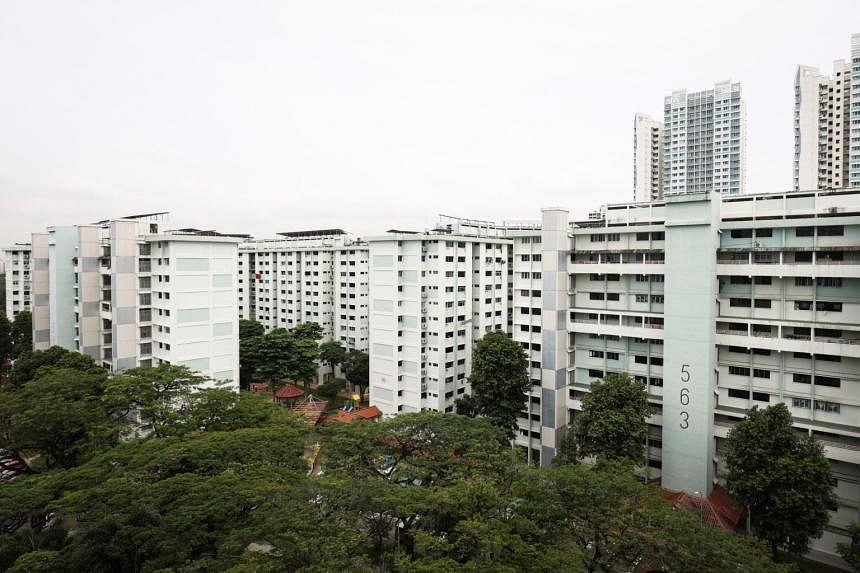
New SERS rehousing options for Ang Mo Kio flat owners will apply to similar projects in future: Desmond Lee

Blocks 562 to 565 in Ang Mo Kio Avenue 3 have been picked for the Selective En bloc Redevelopment Scheme (SERS).
(Photo: CNA/Cheryl Lin)

Tang See Kit
04 Jul 2022 


SINGAPORE: The new rehousing options made available to some flat owners in Ang Mo Kio as part of the Selective En bloc Redevelopment Scheme (SERS) will apply to a similar exercise in Marsiling and future acquisitions under the scheme, said National Development Minister Desmond Lee on Monday (Jul 4).

The Housing and Development Board (HDB) over the weekend announced that eligible home owners under SERS will be able to purchase a new replacement unit on a shorter 50-year lease, instead of a fresh 99-year one. A second option allows residents who are seniors to take up the lease buyback scheme for their existing flat and buy a new replacement flat of the same flat type on a short lease.

Saturday, July 2, 2022

The Big Read in short: Where did it all go wrong with the Sports Hub?

Illustration: Anam Musta'ein

In separate interviews with TODAY, former staff of Sports Hub Pte Ltd spoke about deep lying issues that plagued the project from the get-go. But everything boiled down to this: A disconnect between the interests of the Government and the private firms, and a partnership only in name that was pulled in multiple directions by a long list of stakeholders with different objectives.


Each week, TODAY’s long-running Big Read series delves into the trends and issues that matter. This week, we examine where it all went wrong with the running of the Singapore Sports Hub, which led to the termination of the public-private partnership. This is a shortened version of the full feature,​ which can be found here.

  • Sport Singapore (SportSG) announced on June 10 that it will be taking over full ownership of the Sports Hub from its private partner, Sports Hub Private Limited (SHPL)
  • Former staff of SHPL largely agree with this decision, saying that the partnership between the Government and private sector was flawed from the start 
  • Several of them say that the partnership was akin to a vendor-client relationship, and that the Government had given the private sector too much leeway to call the shots 
  • SHPL had also found it challenging to manage its various private partners, who were all jostling to make their own profits out of the venture 
  • Moving forward, the Government will have to strike a balance between maintaining the prestige of a world-class venue, and making the Sports Hub accessible to the community

Tuesday, June 21, 2022

Commentary: Why China is not rising as a financial superpower

Unlike the US and Japan, China’s economic rise has not resulted in the yuan becoming a global currency. Beijing has not found the confidence to lift capital controls and make the yuan fully convertible, says the Financial Times’ Ruchir Sharma.

Ruchir Sharma

21 Jun 2022


NEW YORK: China’s rise on the world stage is perhaps this century’s most frequently repeated news story. The country’s economic footprint has expanded spectacularly. Its widening military reach has made recent headlines.

Yet as an aspiring financial superpower, China is going nowhere.

This has not happened before. The United States rose as an economic force and then as a financial power, before the dollar became the world’s leading currency in the 1920s. Previous empires, from Britain to 15th century Portugal, followed a similar arc, as investor Ray Dalio recently showed.

China is breaking the mould, rising rapidly as an economic force but glacially as a financial power.

Sunday, June 19, 2022

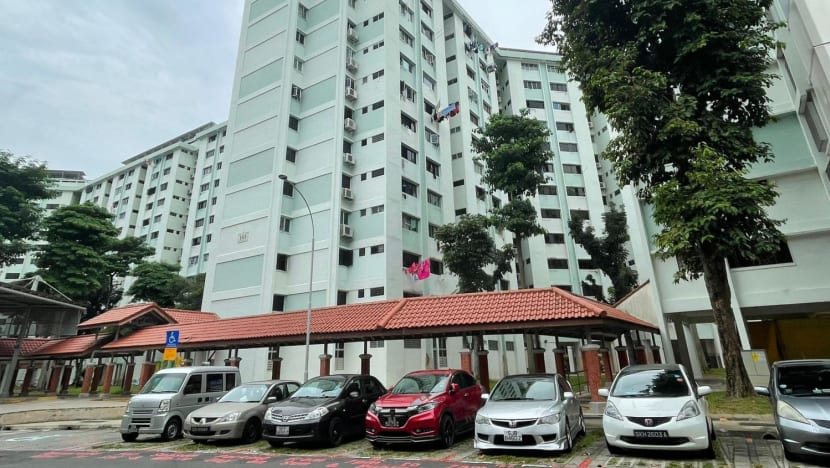
Some Ang Mo Kio residents dismayed by top-up for similar-sized Sers replacement units

The HDB announced in April that four Ang Mo Kio HDB blocks had been selected under Sers.
PHOTO: LIANHE ZAOBAO


Michelle Ng and Nellie Toh

15 JUN 2022


SINGAPORE - When part-time hairdresser Janice Ong learnt in April that her Ang Mo Kio Housing Board block was among the four picked for the Selective En bloc Redevelopment Scheme (Sers), she thought she would be getting a brand-new flat with little to no extra money out of her pocket.

So it came as a shock to the 54-year-old when she realised that she might have to fork out more than $100,000, if she were to pick a similar-sized four-room flat at the Sers replacement site.

"I thought I could live here for the rest of my life, but now that I've just finished paying for the flat, they want me to pay another $100,000," said Madam Ong, who moved into the flat at Block 562 Ang Mo Kio Avenue 3 around six years ago with her husband. Their two daughters and a son-in-law live with them.

Saturday, April 30, 2022

Hawkers say they have to raise prices to survive, as rising cost of ingredients hits hard

Jalelah Abu Baker

29 Apr 2022 


SINGAPORE: On Monday (Apr 25), chwee kueh seller Theresa Tan's chye poh (preserved radish) supplier told her that he will increase his prices.

A tin of chye poh, which she can easily go through in a day, will cost S$158 from May 1, up from S$130 now.

This additional cost for the ingredient, an essential in the making of the steamed rice flour cake dish, would come on top of others.

Speaking to CNA at her stall at Bendemeer Market and Food Centre on Wednesday, Ms Tan rattled off a list of ingredients that have become more expensive recently – cooking oil, sugar, garlic and onions.

As a result, Ms Tan will also raise her prices from May 1. Four pieces of chwee kueh will cost S$1.60, up from S$1.20, while eight pieces will cost S$3.20, up from S$2.40.

Monday, April 25, 2022

Singapore's core inflation rises to 10-year high in March

Gabrielle Andres

25 Apr 2022 


SINGAPORE: Singapore’s core inflation rose to a 10-year high of 2.9 per cent year-on-year in March, up from 2.2 per cent in February, official data released on Monday (Apr 25) showed.

The last time core inflation was at 2.9 per cent year-on-year was in March 2012.

The increase was driven by higher inflation for food and services, the Monetary Authority of Singapore (MAS) and the Ministry of Trade and Industry (MTI) said in a joint release.

Wednesday, December 8, 2021

Commentary: China's economy is faltering. The world just doesn't know it yet

As China's run of constant exponential economic growth hints at coming to an end, Morgan Stanley's Ruchir Sharma explains why its effect on the global economy will be underwhelming.


Ruchir Sharma

08 Dec 2021


NEW YORK CITY: China’s surprisingly rapid slowdown is eliciting familiar warnings that, as China goes, so goes the global economy. Only China may not matter as much as it once did.

Monday, October 11, 2021

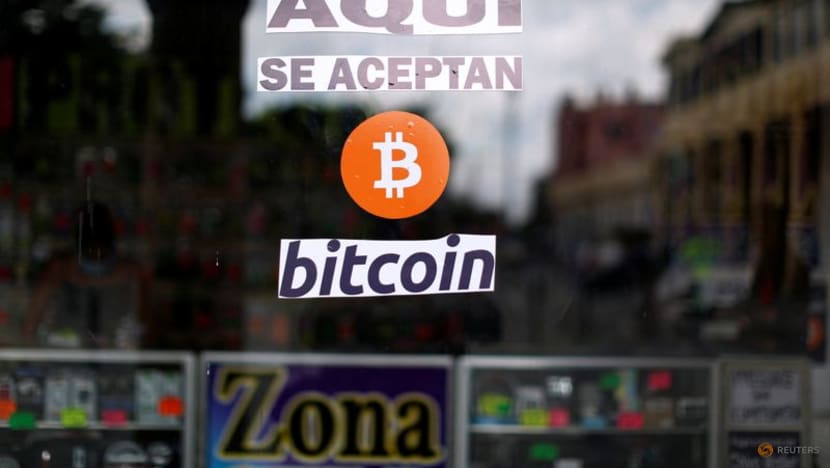
Commentary: Why is Bitcoin appealing to many despite the risks and uncertainties?

Is Bitcoin worth investing in? And will it really confer gains on people now that it’s reached new highs? MIT economist Daron Acemoglu unpacks its upsides and risks.

A sign reads, "Bitcoin accepted here", outside a store where the cryptocurrency is accepted
as a payment method in San Salvador, El Salvador on Sep 24, 2021.
(File photo: REUTERS/Jose Cabezas)


Daron Acemoglu

11 Oct 2021 


CAMBRIDGE: With the price of Bitcoin reaching new highs, and El Salvador and Cuba deciding to accept it as legal tender, cryptocurrencies are here to stay.

What implications will this have for money and politics?

Money depends on trust. It is accepted in exchange for goods and services only because people can confidently assume that others will accept it in the future.

This is as true for the US dollar as it is for gold. To argue that cryptocurrencies like Bitcoin are merely a confidence game – or a speculative bubble, as many economists have emphasised – is to ignore their popularity.

And yet, cryptocurrencies lack the stable institutional foundations needed to bolster the public’s trust in them. Trust thus ebbs and flows, making them fragile and volatile, as Bitcoin’s wild gyrations have amply demonstrated.

Moreover, with Bitcoin and other cryptocurrencies that rely on “proof-of-work” mechanisms, transactions must be continuously verified and logged in a decentralised ledger (in this instance based on blockchain).

This requires millions of computers to operate continuously to update and verify transactions – work that is incentivised by the opportunity to be rewarded with newly minted Bitcoin.

The energy consumed in these “mining” operations now exceeds that of a medium-sized country like Malaysia or Sweden. Now that the world has awoken to the dangers of climate change (and to the paltriness of our response to it so far), this massive waste should make Bitcoin highly unattractive.

Tuesday, October 5, 2021

South Dakota - Tax Haven?

[From The Washington Post Daily 202 newsletter:]

"...the rise of the Mount Rushmore state — and several others — as a harbor for shielding global wealth is interesting inasmuch as America has always lectured smaller countries about the necessity of unimpeachable financial hygiene and transparency...

From Sioux Falls, S.D., my colleagues Debbie Cenziper, Will Fitzgibbon, and Salwan Georges reported on a seven-year-old financial firm called “Trident Trust” that enticed clientele with “The South Dakota Advantage” — essentially laws making it easier to hide who owns what and where. 

Thursday, April 22, 2021

Car ownership revisited

 Every now and then, someone will ask, "Is it better to own a car or take taxi everywhere in Singapore?"

And someone or some news organisation will try to answer that question.

So the latest attempt summarises it thus:

At a glance, here’s how the monthly bill of the various options looks like:
  • Regular car ownership (Honda Civic): $1,589
  • Cheaper car model: $1,200+
  • Red plate: $1,278.78
  • Cabbing: $822.40

monthly car ownership costs car in singapore


Thursday, January 7, 2021

440,000 Singaporeans eligible for matched CPF savings scheme

A total of 440,000 Singaporeans aged 55 to 70 are eligible for a new savings scheme this year where the Government will match cash top-ups made to their Central Provident Fund (CPF) Retirement Accounts.

06 Jan 2021


SINGAPORE: A total of 440,000 Singaporeans aged 55 to 70 are eligible for a new savings scheme this year where the Government will match cash top-ups made to their Central Provident Fund (CPF) Retirement Accounts.

To qualify for the Matched Retirement Savings Scheme, the CPF members must have less than the prevailing Basic Retirement Sum in their accounts, said the CPF Board in a media release on Wednesday (Jan 6).

The Basic Retirement Sum this year is S$93,000.

Other eligibility criteria are: An average monthly income of not more than S$4,000, an annual value of residence of up to S$13,000 – which covers all Housing Board flats – and ownership of not more than one property.

About 53 per cent of CPF members between 55 and 70 years old are eligible for the grant, the CPF Board said.